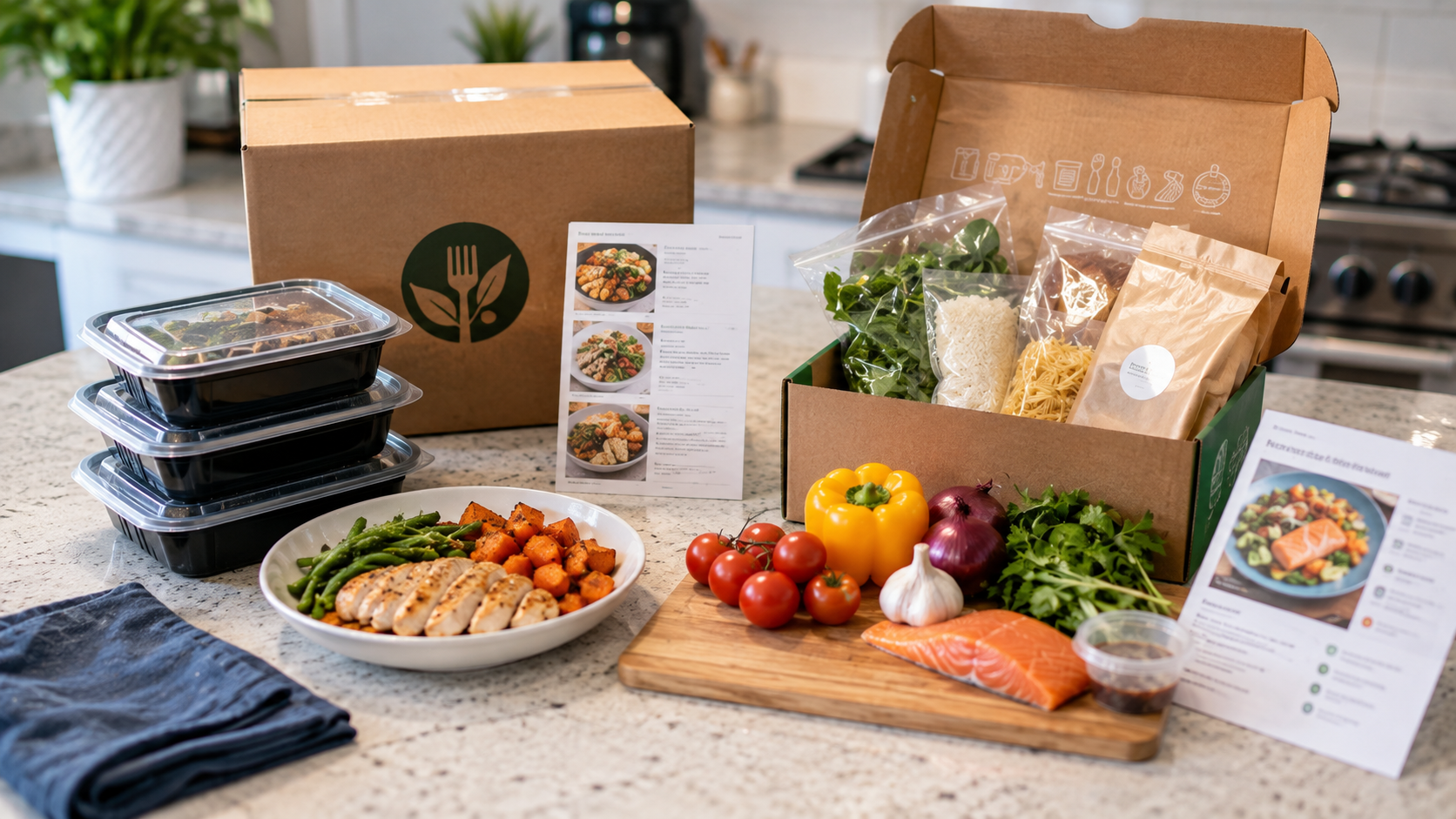
Making dinner at home can save you from another takeout order, but planning meals, shopping for ingredients, cooking, and cleaning all require time. Food delivery subscriptions can simplify the process, although they generally fall into two distinct categories: prepared meal delivery and meal kits.
Both can make weekly meals easier, but they solve different problems. Prepared meals prioritize speed, while meal kits preserve much of the home-cooking experience. Understanding that difference can help you choose a service you’ll actually use.
Prepared Meal Delivery Prioritizes Convenience
Prepared meal delivery provides food that has already been cooked or substantially prepared before it reaches your home.
Depending on the meal, you may simply need to refrigerate it until you’re ready to eat and then follow the heating instructions.
This approach can reduce several time-consuming parts of your routine, including meal planning, grocery shopping, ingredient preparation, cooking, and cleanup.
For someone regularly arriving home late or needing quick workday lunches, that convenience can be a major advantage.
Meal Kits Keep You in the Kitchen
Meal kits remove much of the planning and shopping but leave the actual cooking to you.
A typical delivery contains a recipe and measured or portioned ingredients. You’ll still chop, mix, sauté, bake, or perform whatever preparation the recipe requires.
That makes meal kits a useful middle ground.
You get the satisfaction of preparing dinner without having to decide what to cook or shop for every individual ingredient.
Which Option Saves More Time?
Prepared meals generally win on convenience.
Heating a completed meal requires considerably less effort than following a recipe from beginning to end. Cleanup may also be easier because fewer pots, pans, utensils, and cutting boards are involved.
Meal kits require a greater time commitment, but that isn’t necessarily a disadvantage.
If cooking helps you relax or you want to develop more confidence in the kitchen, the additional preparation can be part of the appeal.
Consider Your Actual Weekly Schedule
It’s easy to choose meals based on the week you wish you had rather than the one you actually experience.
If evenings frequently involve overtime, commuting, children’s activities, or other commitments, several ambitious meal kits could remain untouched in the refrigerator.
Prepared meals may fit unpredictable schedules better because there’s less work between opening the refrigerator and eating dinner.
Meal kits make more sense when you can consistently reserve enough time for cooking.
Compare the Complete Cost
Don’t judge either option solely by the advertised per-serving price.
Your actual weekly cost can include:
- Meal and serving quantities
- Delivery charges
- Minimum order requirements
- Premium meal upgrades
- Optional extras
- Applicable taxes or fees
Then compare the total with what you’re replacing.
A subscription that reduces restaurant deliveries or takeout could offer different value than one replacing inexpensive home-cooked meals.
Both Options Can Help With Portion Planning
Pre-portioned ingredients are one of the practical advantages of meal kits. Instead of purchasing an entire package of an ingredient needed only once, you receive an amount intended for the recipe.
Prepared meals make portioning even more straightforward because individual servings are already assembled.
Neither option automatically eliminates food waste, though.
An unused meal kit can spoil just as easily as groceries, while prepared meals still need to be eaten within their applicable storage and freshness guidelines.
Menu Variety Matters More Than You Think
A subscription can be convenient and affordable but still become frustrating if you struggle to find meals you want every week.
Review the available menu before signing up. Consider how frequently recipes change and whether enough selections match your preferences.
If you have dietary requirements, examine ingredient lists, nutrition information, serving sizes, dietary filters, allergen information, and food-handling practices carefully.
People managing food allergies or medically necessary dietary restrictions should rely on the provider’s current allergen and preparation information rather than menu labels alone.
Don’t Overlook Storage and Cleanup
A large prepared-meal order can consume substantial refrigerator or freezer space.
Meal kits also require storage, sometimes across several separate ingredient packages.
Take a quick look inside your refrigerator before selecting a large weekly plan.
Cleanup deserves similar attention. Meal kits can require cookware, knives, cutting boards, and mixing bowls. Prepared meals generally involve less kitchen cleanup, making them particularly appealing if washing dishes is one of the reasons you avoid cooking.
Subscription Flexibility Can Prevent Waste
Your meal requirements probably aren’t identical every week.
Travel, social plans, work schedules, and leftover food can change how many meals you need.
Before subscribing, check whether you can change meal quantities, select different dishes, skip a delivery, pause service, or cancel easily. Pay attention to cutoff dates as well, since changes may need to be submitted several days before delivery.
Flexibility can prevent you from paying for food you won’t have time to eat.
You Don’t Necessarily Have to Choose One
Prepared meals and meal kits can complement each other.
You might keep prepared meals available for your busiest workdays while using meal kits on evenings when you have more time to cook.
You can also combine either service with conventional grocery shopping.
The goal isn’t to replace every meal. It’s to remove the parts of weekly meal planning that create the most inconvenience for you.
Choose Based on What You Want to Simplify
The difference between prepared meal delivery and meal kits ultimately comes down to how involved you want to be.
Choose prepared meals when your priority is minimizing preparation, cooking, and cleanup. They’re especially useful for demanding schedules and occasions when convenience matters most.
Choose meal kits when you enjoy cooking but want to eliminate much of the recipe planning, ingredient measuring, and grocery shopping.
Before committing to either, compare the total price, portion sizes, weekly menus, dietary options, storage needs, delivery terms, and subscription flexibility.
The better option isn’t necessarily the cheapest or the fastest. It’s the one that fits naturally into your real weekly routine—and gets eaten rather than forgotten in the refrigerator.
Leave a Reply