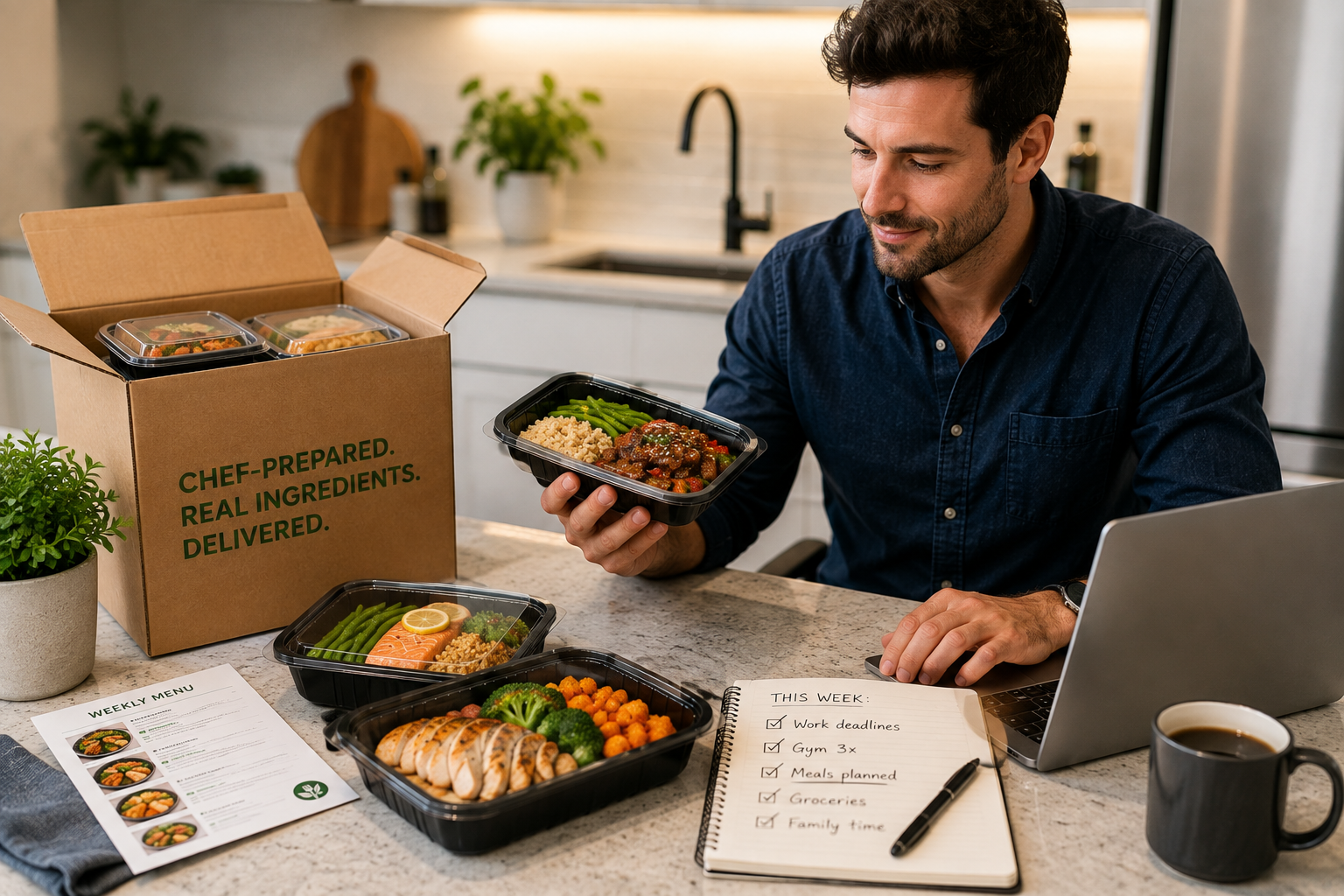
When workdays stretch into the evening, dinner can quickly become another task competing for limited time. Planning meals, buying groceries, preparing ingredients, cooking, and cleaning all add to the workload—even before you sit down to eat.
Prepared meal delivery services offer a different approach. Fully or substantially prepared meals arrive at your door and generally require little more than proper storage and reheating. For busy professionals, the appeal is obvious, but whether the convenience justifies the cost depends on your actual schedule and spending habits.
Look Beyond the Time Spent Cooking
The biggest time-saving advantage isn’t necessarily avoiding the stove.
Home cooking involves meal planning, recipe research, grocery shopping, ingredient preparation, cooking, and cleanup. Prepared meals can eliminate or substantially reduce several of those activities.
For someone working long days, eliminating a grocery stop or deciding what’s for dinner can make evenings noticeably easier.
The value will naturally be lower if you already enjoy cooking and have plenty of time for it.
Compare the Real Cost, Not Just the Meal Price
The advertised price per serving doesn’t always represent what you’ll actually pay.
When comparing services, consider:
- Meal prices
- Delivery fees
- Taxes and applicable charges
- Minimum order requirements
- Premium meal upgrades
- Food that goes uneaten
You’ll probably still need groceries for breakfasts, snacks, beverages, and meals you prepare independently.
Instead of comparing prepared meals with the cheapest dinner you could theoretically cook, compare them with what you actually spend during busy weeks.
If you’re regularly ordering restaurant delivery because you don’t have time to cook, prepared meals could produce a very different cost comparison.
Prepared Meals Can Replace Expensive Takeout Habits
Restaurant delivery offers tremendous flexibility. You decide what you want at the moment you’re hungry.
That convenience can also become expensive once menu prices, delivery charges, and other fees are included.
Prepared meal subscriptions require more planning because meals are selected before you eat them. However, their per-meal costs may be lower than frequently ordering restaurant delivery.
The better value therefore depends partly on what you’re replacing.
Prepared Meals and Meal Kits Solve Different Problems
Meal kits and prepared meals shouldn’t be treated as interchangeable.
Meal kits reduce recipe planning and grocery shopping but still require cooking. Prepared meals primarily require reheating or minimal finishing.
If you enjoy preparing dinner but dislike deciding what to cook, a meal kit may provide the right balance.
If your main priority is reclaiming time, prepared meals usually remove more work from your routine.
They Can Simplify Workday Lunches Too
Prepared meals aren’t limited to dinner.
They can be particularly convenient for remote workers who have easy access to a refrigerator and microwave. Office workers may also find them useful when suitable food storage and reheating facilities are available.
Having lunch ready can reduce impulse restaurant purchases and eliminate the morning task of preparing something to take to work.
Menu Variety Determines Long-Term Value
Convenience loses its appeal if you don’t want to eat the meals.
Before subscribing, browse several weeks of menus when possible. Look at cuisine variety, proteins, vegetables, side dishes, and how frequently selections change.
Also consider whether the menu provides enough dishes that genuinely appeal to you rather than simply offering a large number of choices.
Variety becomes increasingly important when you’re ordering multiple meals every week.
Make Sure the Portions Work for You
Serving sizes vary significantly between providers.
Review available calorie, protein, carbohydrate, and other nutritional information rather than assuming every “single serving” will match your appetite.
Starting with a smaller order can help you evaluate portion sizes before committing to a larger weekly subscription.
If you’re consistently adding substantial amounts of extra food to every meal, the effective cost and convenience may be different from what you initially expected.
Review Dietary and Allergen Information Carefully
Many meal services provide filters for dietary preferences, but menu labels shouldn’t be your only consideration.
Review complete ingredient lists and available allergen information. If you have food allergies, examine the provider’s preparation and cross-contact policies before ordering.
People following medically necessary diets should determine whether a service can genuinely accommodate their requirements rather than relying on broad dietary labels.
Don’t Forget Refrigerator Space
A week’s worth of prepared meals takes up room.
Before placing a large order, consider how much refrigerator or freezer space you realistically have. Follow the provider’s instructions for storage, freshness, and reheating after your delivery arrives.
This matters particularly in apartments, shared homes, and households already storing significant amounts of food.
Flexible Subscriptions Work Better for Changing Schedules
Professional schedules aren’t always predictable.
Meetings run late, travel comes up, and social plans change.
Look for services that let you adjust meal quantities, skip deliveries, pause your subscription, or cancel without unnecessary complications. Also check the deadline for making changes to an upcoming delivery.
Flexibility can prevent unused meals from turning convenience into food waste.
Consider a Hybrid Approach
You don’t have to replace every home-cooked meal.
Using prepared meals for your three or four busiest evenings while cooking on less demanding days may offer a better balance of convenience and cost. You could also use prepared meals primarily for workday lunches.
This approach lets meal delivery solve a specific scheduling problem without becoming responsible for your entire weekly diet.
So, Are Prepared Meals Worth the Cost?
For some busy professionals, absolutely—but their value depends less on the advertised meal price than on what they’re replacing.
Prepared meal delivery becomes particularly compelling when long workdays leave little time for shopping and cooking, you’re frequently spending money on takeout, or meal planning creates unnecessary stress.
It may offer less value if you enjoy cooking, have sufficient time to shop and prepare meals, can’t find enough dishes you like, or regularly have unpredictable plans that leave delivered meals uneaten.
The easiest way to decide is to test the concept rather than immediately committing to a large subscription. Start with a small order and evaluate the food quality, portions, total delivered cost, time saved, menu variety, and how many meals you actually eat.
Prepared meal delivery is worth paying for when it solves a real problem in your schedule and fits comfortably within your food budget. When those two conditions align, the service becomes less about avoiding cooking and more about buying back valuable time during demanding weeks.
Leave a Reply