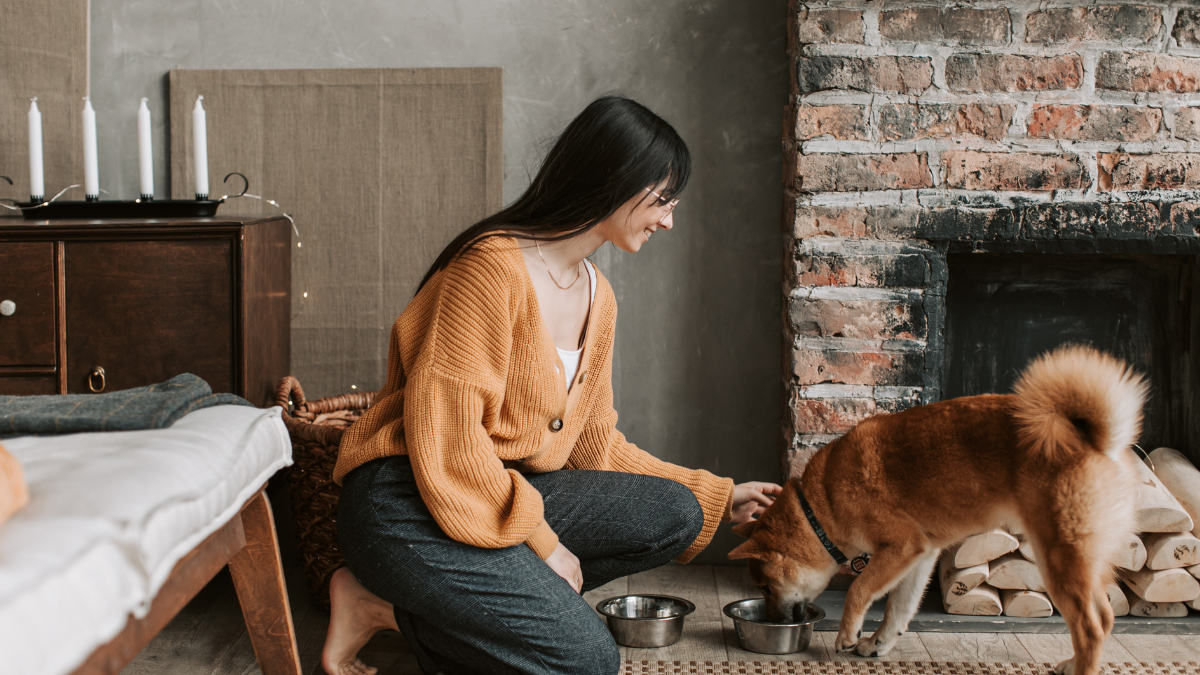
Bringing a new dog home is exciting, but that first day can feel considerably less chaotic when the essentials are already waiting.
You don’t need to fill your home with every dog product you see. Start with the basics that support feeding, sleeping, walking, training, grooming, play, identification, and cleanup. Once you get to know your dog’s habits and preferences, you can decide what else is genuinely useful.
Here are the supplies worth preparing before your new companion arrives.
1. Food and Water Bowls
Every dog needs a dependable place to eat and easy access to fresh water.
When selecting bowls, think beyond appearance. Look for an appropriate capacity for your dog’s size, stable construction that’s difficult to tip, food-safe materials, and surfaces that are easy to clean.
Make sure the bowls also fit comfortably into your designated feeding area without creating an obstacle in a busy walkway.
Some dogs may benefit from specialized designs, but a durable and easy-to-clean setup is a sensible starting point for many households.
2. Appropriate Dog Food
Food deserves careful consideration because nutritional needs can vary with age, life stage, size, and individual circumstances.
Check that the food is formulated for your dog’s appropriate life stage and review the feeding directions, ingredient information, and storage requirements.
If your dog has already been eating a particular food, avoid making an abrupt change simply because you’ve brought them home. Ask your veterinarian about an appropriate transition if you want or need to introduce something different.
3. A Properly Fitted Collar or Harness
A collar or harness helps you manage everyday walks and can provide a convenient location for identification.
Fit is more important than appearance. Your dog’s gear should remain secure without unnecessarily restricting movement or causing rubbing.
Check it regularly for:
- Frayed or damaged fabric
- Worn stitching
- Broken or weakened buckles
- Chewed areas
- Changes in fit
This is especially important with puppies. They’re growing quickly, so equipment that fits beautifully now may need adjustment surprisingly soon.
4. A Dependable Leash
From bathroom trips to neighborhood walks, a reliable leash quickly becomes one of your most-used dog supplies.
Choose one appropriate for your dog’s size and your typical walking environment. Consider the handle, length, attachment hardware, construction, and how comfortably you can hold it.
Inspect it periodically for wear, particularly if your new companion thinks leashes double as chew toys.
For a dog still learning how walks work, straightforward equipment can also help make your outings more predictable.
5. A Comfortable Dog Bed
After exploring a brand-new environment, your dog needs somewhere comfortable to settle down.
Choose a bed based on your dog’s body size and preferred sleeping position. A dog that loves stretching out may appreciate a spacious flat bed, while another might enjoy resting against raised edges.
Also consider cushioning, cover materials, available floor space, and—very importantly—washability.
A removable washable cover can make routine maintenance considerably easier.
6. A Crate or Designated Secure Space
Some dogs benefit from having a quiet area where they can rest without interruption.
That might be an appropriately sized crate, but a crate isn’t the only possibility. Depending on your dog’s temperament and your home’s layout, a gated area or another dog-safe space could work well.
If you use a crate, introduce it gradually and positively. It should function as a secure resting environment rather than somewhere your dog is forced to remain for inappropriate lengths of time.
7. Toys for Play, Chewing, and Enrichment
A starter toy collection can provide exercise, mental stimulation, interaction, and appropriate opportunities for chewing.
Consider including a mixture of:
- Fetch toys
- Chew toys
- Puzzle toys
- Interactive toys
- Food-dispensing toys
- Soft toys
You don’t need to buy everything immediately. Start with a few different types and see what captures your dog’s interest.
Most importantly, choose toys appropriate for your dog’s size and chewing habits. Inspect them frequently for damage and remove anything that develops loose pieces or other potential hazards.
8. Basic Grooming Supplies
Even relatively low-maintenance coats require routine care.
Your initial grooming kit might include an appropriate brush or comb, dog shampoo, towels, nail-care equipment, and dental-care supplies.
The correct grooming tools depend heavily on coat type. Short, long, curly, wire, and double coats have different needs.
If you’re unsure how to perform tasks such as nail care safely, a veterinarian or qualified grooming professional can provide guidance.
9. Training Treats and Rewards
Your first weeks together will involve plenty of learning—from bathroom routines to household expectations and basic behaviors.
Small treats can be convenient rewards during positive-reinforcement training because they’re quick to deliver. Remember to account for treats as part of your dog’s overall daily food intake.
And food isn’t your only option.
Some dogs are highly motivated by toys, play, attention, or enthusiastic praise. Learning what your individual dog finds rewarding can make training considerably easier.
Consistency across household members is important too. Clear expectations help your dog understand what’s being asked.
10. Cleanup and Waste Supplies
It’s not the glamorous part of welcoming a dog home, but you’ll be very glad you prepared for it.
Keep waste bags handy for walks and outdoor bathroom breaks. At home, have washable towels and cleaning supplies appropriate for your particular flooring and surfaces.
A basic cleanup station might contain:
- Waste bags
- A bag dispenser
- Washable towels
- Surface-appropriate cleaners
- A dedicated place to store everything
Puppies and newly adopted dogs may have occasional accidents while adapting to a new routine. Having supplies within easy reach makes those moments much less stressful.
Don’t Overlook Identification
Identification might be small, but it’s one of the most important things to arrange.
Consider an identification tag containing current contact information, and discuss permanent identification options with your veterinarian or an appropriate local pet-care professional.
Remember that identification is only useful when the associated contact information remains current. Update your details whenever necessary.
Shop for Your Individual Dog
Labels such as “small dog,” “large breed,” or “puppy” can provide a starting point, but they don’t tell you everything.
Consider your dog’s:
- Age
- Weight and body size
- Activity level
- Chewing habits
- Coat type
- Behavior
- Home environment
A powerful chewer has different toy requirements from a gentle player. A rapidly growing puppy may need equipment replaced or adjusted more frequently than an adult dog.
The individual animal—not simply the category printed on the package—should guide your choices.
Start With Essentials Instead of Buying Everything
It’s incredibly tempting to prepare for a new dog by buying half the pet store.
Resist that temptation!
Begin with the supplies necessary for your dog’s first days and weeks. As you learn whether your dog prefers a particular bed style, ignores certain toys, loves puzzles, or needs different grooming equipment, you can expand your collection intelligently.
This approach can save money while preventing your home from filling with products your dog never uses.
Make Safety Part of Your Routine
Dog supplies aren’t one-time purchases you can forget about after bringing them home.
Regularly inspect collars, harnesses, leashes, beds, toys, crates, bowls, and other equipment for loose components, sharp edges, broken hardware, exposed stuffing, damaged fabric, or pieces that could be swallowed.
Follow manufacturer recommendations for sizing, cleaning, intended use, and supervision, and replace damaged products when appropriate.
With the essentials prepared, your attention can stay where it belongs during those first days: helping your new dog settle in, learn the household routine, and become comfortable in their new home.
Leave a Reply