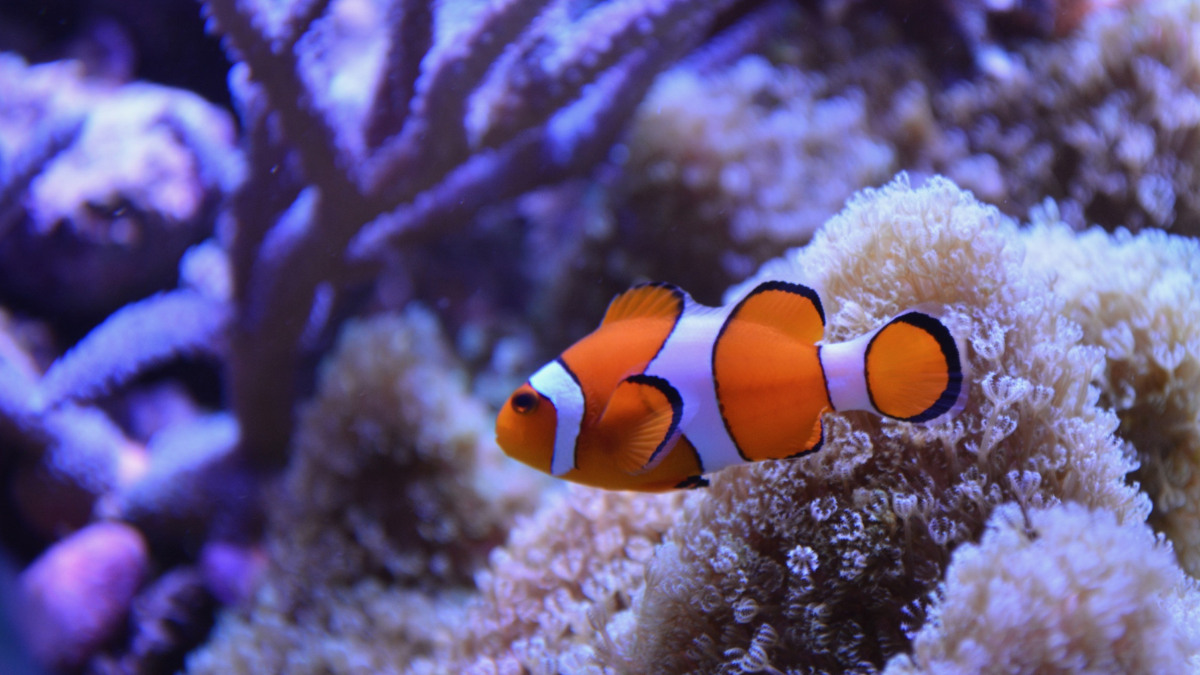
With its bright orange body, distinctive white bands, and engaging personality, the ORA Ocellaris Clownfish (Amphiprion ocellaris) is an instantly recognizable addition to a marine aquarium. Its manageable size, generally peaceful temperament, and adaptability to captive conditions can make it an appealing choice for aquarists building an established saltwater setup.
Because ORA Ocellaris Clownfish are captive-bred, they’re already accustomed to aquarium environments and prepared foods. However, easy-care status doesn’t mean maintenance-free. You’ll still need stable water conditions, appropriate nutrition, compatible tank mates, and a properly established marine aquarium.
Iconic Orange-and-White Appearance
The Ocellaris Clownfish features the classic coloration associated with clownfish: a vivid orange body divided by three contrasting white bands outlined in black.
Individual fish can naturally vary somewhat in their markings and color intensity, giving each specimen a slightly different appearance.
Visual Characteristics
- Scientific name: Amphiprion ocellaris
- Common names: Ocellaris Clownfish, False Percula Clownfish
- Body color: Bright orange
- Markings: Three white bands with black outlines
- Environment: Marine saltwater
The species is also called the False Percula Clownfish because of its close resemblance to the True Percula Clownfish.
The Advantages of a Captive-Bred Clownfish
The ORA Ocellaris has an important place in marine ornamental aquaculture. Ocellaris clownfish were among the marine aquarium species successfully propagated in captivity, helping demonstrate the possibilities of captive breeding for ornamental marine fish.
For you as an aquarist, the captive-bred background also offers practical advantages. These fish are accustomed to aquarium conditions and generally adapt readily to commonly offered prepared foods.
That can make the transition into a suitable home aquarium more straightforward, although proper acclimation and ongoing husbandry remain essential.
Size and Growth
ORA provides different sizing information according to the fish’s developmental stage.
Medium specimens measure approximately 1.5 inches and are generally around six to eight months old. Large specimens can exceed 2 inches at approximately one year of age.
Current retail specimens may be sold at smaller juvenile sizes, so don’t judge the space your fish will eventually require based solely on its size when purchased.
Creating the Right Aquarium Environment
Despite being considered relatively approachable among marine aquarium fish, the Ocellaris Clownfish still requires a properly established saltwater aquarium.
Basic Care Requirements
Important considerations include:
- Environment: Marine saltwater
- Care level: Easy
- Minimum aquarium size: 30 gallons
- Temperament: Generally peaceful
- Diet: Omnivorous
Stable conditions should remain one of your priorities. Proper aquarium maintenance and consistent water quality help create an appropriate environment for long-term care.
If you’re new to saltwater aquariums, make sure you understand marine aquarium cycling, filtration, salinity, water testing, and routine maintenance before bringing your fish home.
Generally Peaceful Temperament
The Ocellaris is considered one of the less aggressive clownfish species, making it a potential candidate for thoughtfully planned community marine aquariums.
That doesn’t mean every individual will behave identically.
Clownfish can become territorial, particularly after establishing a pair or claiming a preferred section of the aquarium. Consider available space, existing inhabitants, species compatibility, and individual behavior when selecting tank mates.
Introducing fish simply because they’re individually described as peaceful doesn’t automatically guarantee compatibility.
Feeding Your ORA Ocellaris Clownfish
Ocellaris clownfish are omnivores and can accept several types of aquarium foods.
Building a Varied Diet
Suitable options can include:
- Pelleted foods
- Flake foods
- Frozen foods
- Other appropriately sized marine fish foods
ORA indicates that approximately 1 mm pellets or similarly sized alternatives can be suitable.
Rather than relying exclusively on one food, consider providing appropriate variety while following feeding recommendations for the products you use. Observe how much your fish actually consumes so excessive food doesn’t remain in the aquarium and affect water quality.
Does an Ocellaris Clownfish Need an Anemone?
Here’s one misconception worth clearing up: your captive-bred Ocellaris Clownfish doesn’t require an anemone to live successfully in an aquarium.
Clownfish and sea anemones are famously associated in natural environments, but you shouldn’t add an anemone simply because you’ve purchased a clownfish.
Anemones can have specialized requirements involving lighting, water quality, aquarium maturity, and other husbandry considerations. If you’re interested in keeping one, research the requirements of that particular anemone independently before deciding whether your aquarium can support it.
Natural Distribution
Wild Amphiprion ocellaris populations originate from areas of the Indo-Pacific and Indo-Western Pacific.
Their natural distribution includes regions such as:
- Australia
- East Indies
- Melanesia
- Philippines
- Ryukyu Islands
Captive-bred ORA specimens provide an opportunity to keep this recognizable species without purchasing a wild-caught individual.
Pairing and Breeding Behavior
Clownfish have particularly interesting social and reproductive biology.
They are protandrous hermaphrodites, meaning individuals can transition from male to female under appropriate social circumstances. Within an established pair, the female typically becomes larger than the male.
Established pairs may spawn approximately every 10 to 14 days, with a female potentially producing nests containing around 350 eggs. Incubation can last approximately seven to eight days before hatching.
However, successfully maintaining adult clownfish and successfully breeding them are very different challenges. Raising larvae requires specialized feeding and husbandry beyond routine adult clownfish care.
If your primary goal is simply keeping a healthy Ocellaris, you don’t need to pursue breeding.
What to Consider Before Bringing One Home
The ORA Ocellaris may be considered relatively easy to care for within the world of marine fish, but it still requires preparation.
Before purchasing, make sure you have:
- An established saltwater aquarium
- Sufficient aquarium capacity
- Stable marine water conditions
- Appropriate filtration and maintenance practices
- Suitable food
- Compatible tank mates
- A plan for proper acclimation and ongoing care
You should also consider the mature needs of the fish rather than planning exclusively around the size of the juvenile specimen you see at the store.
Buying an ORA Ocellaris Clownfish From Petco
The ORA Ocellaris Clownfish (Amphiprion ocellaris) is available through Petco’s marine fish selection, although availability, specimen size, and pricing can vary by location and over time.
Because you’re purchasing a live animal, expect natural differences between individual fish. Color intensity, exact markings, size, and behavior may not look identical to product photographs.
Before purchasing, review the current listing and make sure your aquarium is fully prepared before bringing your clownfish home.
Final Thoughts
The ORA Ocellaris Clownfish (Amphiprion ocellaris) combines iconic orange-and-white coloration with the practical appeal of captive-bred marine fish. Its adaptable feeding habits, manageable size, and generally peaceful disposition help explain why the species has become so established in saltwater aquarium keeping.
You won’t need an anemone simply to keep an Ocellaris, but you will need a suitable marine environment and consistent care. Stable water conditions, appropriate feeding, compatible tank mates, and regular aquarium maintenance should remain priorities throughout the fish’s life.
If your saltwater aquarium is established and you’re ready for the responsibilities of marine fish care, explore Petco’s current ORA Ocellaris Clownfish availability and prepare your aquarium before welcoming one home.
Leave a Reply