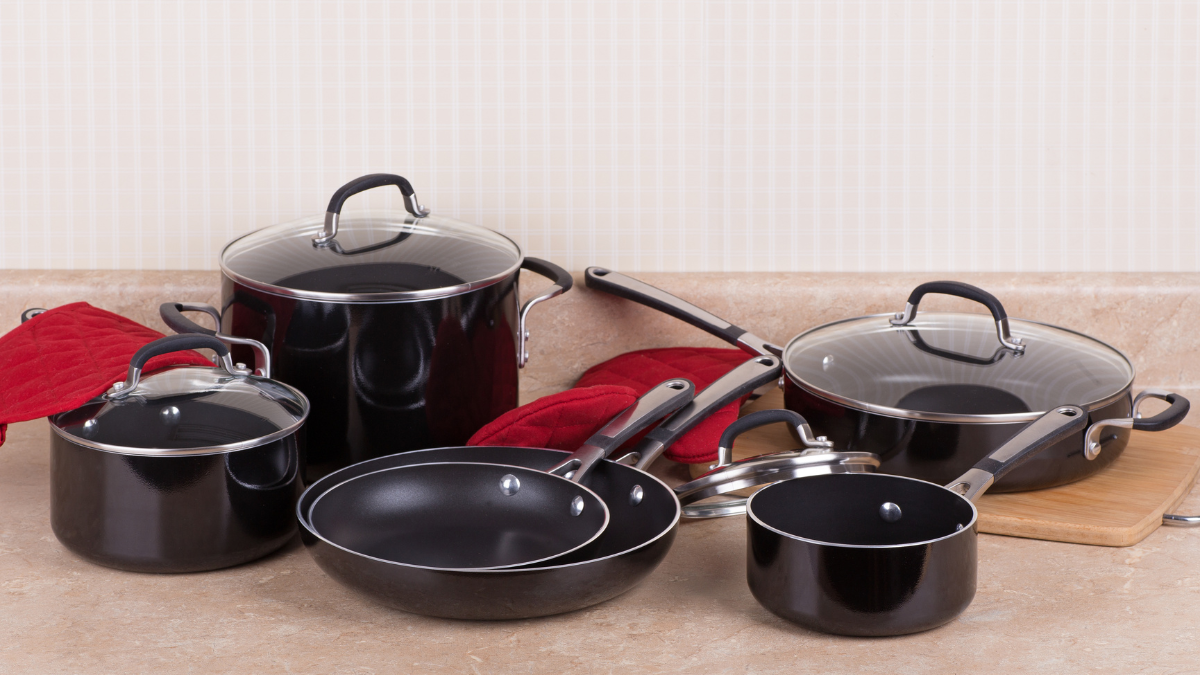
Choosing non-toxic cookware may feel complicated when you encounter terms such as ceramic, stainless steel, cast iron, and PFAS-free coatings. Each material behaves differently, and no single cookware type may be ideal for every recipe, cooking style, or budget.
Rather than relying on broad claims such as “completely safe” or “chemical-free,” it may be more useful to look at cookware materials, coatings, temperature recommendations, durability, and care requirements. Understanding these factors can help you compare options based on how you actually cook.
What Is Non-Toxic Cookware?
The term non-toxic cookware is commonly used when discussing pots and pans designed to minimize concerns about certain coatings or substances during normal cooking.
However, “non-toxic” is a broad marketing term rather than a guarantee that a product carries zero risk under every circumstance.
Cookware performance may depend on its material, construction, coating, cooking temperature, condition, and how it is maintained.
When comparing cookware materials, you may want to examine:
- What material forms the cooking surface
- Whether a coating is present
- Which substances the manufacturer states are absent
- Recommended maximum cooking temperatures
- Whether metal utensils are permitted
- Cleaning and maintenance requirements
- Whether damaged cookware should be replaced
Manufacturer specifications may provide more useful information than broad front-of-package claims.
Which Non-Toxic Cookware Materials Are Common?
Several cookware materials are frequently considered by shoppers looking for alternatives to conventional coated pans. Each comes with different cooking characteristics.
| Cookware type | Potential advantages | Possible considerations | May work well for |
|---|---|---|---|
| Stainless steel | Durable, versatile, generally coating-free | Food may stick without proper technique | Browning, sautéing, boiling |
| Ceramic-coated | Smooth cooking surface, often marketed without certain PFAS | Coating may wear with use | Eggs, pancakes, lower-oil cooking |
| Cast iron | Long-lasting and retains heat well | Heavy and requires maintenance | Searing, frying, oven cooking |
| Enameled cast iron | Heat retention without traditional seasoning | Heavy and may chip if mishandled | Soups, braises, slow cooking |
| Carbon steel | Responsive to temperature and develops seasoning | Requires seasoning and maintenance | Searing, frying, high-heat cooking |
Is Stainless Steel Cookware a Practical Option?
Stainless steel cookware may appeal to people who prefer a cooking surface without a traditional nonstick coating. Quality stainless steel cookware can potentially last for many years when maintained appropriately.
It is especially useful for browning meat, sautéing vegetables, boiling pasta, and preparing sauces. Stainless steel can also tolerate relatively high cooking temperatures, although specific recommendations depend on the manufacturer.
Its main drawback may be sticking. Preheating the pan appropriately and using some cooking fat can often make food easier to release.
Some stainless steel cookware contains nickel and chromium as part of the alloy. People with specific sensitivities may want to investigate a product’s composition before choosing cookware.
What Should You Know About Ceramic Cookware?
Ceramic cookware generally refers to either ceramic-coated cookware or cookware constructed primarily from ceramic materials. These categories should not automatically be treated as identical.
Ceramic-coated pans typically have a metal base with a smooth ceramic-style coating. They may provide convenient food release when new and are frequently promoted as alternatives to traditional nonstick coatings.
However, ceramic coatings might gradually lose some of their release performance. High heat, abrasive cleaners, metal utensils, and improper storage may contribute to faster wear depending on the product.
When considering ceramic cookware, check manufacturer information about:
- Coating composition
- PFAS claims
- Maximum recommended temperature
- Oven compatibility
- Dishwasher compatibility
- Recommended utensils
- Replacement guidance if the surface becomes damaged
What Does PFAS-Free Cookware Mean?
PFAS-free cookware generally refers to cookware marketed as being made without per- and polyfluoroalkyl substances in relevant components or coatings.
Claims can vary between manufacturers, so it may be helpful to determine exactly what a particular “PFAS-free” statement covers. A clearly defined material or coating disclosure may provide more useful information than vague language.
You might also encounter terms such as PFOA-free. PFOA is one substance within the broader PFAS family, so “PFOA-free” and “PFAS-free” should not automatically be treated as interchangeable.
Is Cast Iron Cookware Worth Considering?
Cast iron cookware has been used for generations because of its durability and heat retention. A properly maintained cast iron skillet may work for searing, frying, baking, and other high-temperature cooking methods.
Traditional cast iron does not require a synthetic nonstick coating. Instead, repeated seasoning can create a cooking surface that may become easier to use over time.
There are trade-offs. Cast iron is heavy, requires drying to limit rust, and may need periodic seasoning. Acidic ingredients can also interact with uncoated cast iron, particularly during longer cooking periods.
How Does Enameled Cast Iron Compare?
Enameled cast iron combines a cast iron core with an enamel cooking surface. It retains heat effectively but typically does not require the same seasoning routine as unfinished cast iron.
This type of cookware may work particularly well for soups, stews, sauces, and braised dishes.
The enamel surface can potentially chip or crack if cookware is dropped, subjected to certain forms of thermal shock, or handled improperly. Following manufacturer instructions may help preserve its condition.
What About Carbon Steel Cookware?
Carbon steel shares some characteristics with cast iron but is typically thinner and lighter. Once seasoned, the cooking surface may develop improved food-release properties.
Carbon steel can work well for:
- Searing meat
- Stir-frying vegetables
- Cooking eggs after sufficient seasoning
- High-temperature stovetop cooking
- Oven preparation when the handle and construction permit it
Like traditional cast iron, carbon steel generally requires careful drying and occasional seasoning to reduce the chance of rust.
Does Non-Toxic Cookware Mean Completely Risk-Free?
No cookware material should automatically be described as completely risk-free.
The way cookware is manufactured, used, cleaned, and maintained may affect its performance. Even a durable pan can deteriorate when used outside manufacturer recommendations.
How Can You Compare Non-Toxic Cookware Before Buying?
Instead of choosing cookware based only on a “non-toxic” label, consider several measurable characteristics.
1. Check the Cooking Surface
Determine whether the pan uses bare metal, enamel, ceramic coating, or another surface. If coated, look for specific information about the coating’s composition.
2. Review Manufacturer Claims Carefully
Look for clearly defined statements instead of assuming that similar phrases mean the same thing. For example, “PFOA-free” should not automatically be interpreted as “PFAS-free.”
3. Consider Your Cooking Temperature
Some cookware may be better suited to high-heat searing, while other products may perform better at low or medium temperatures.
4. Think About Maintenance
Stainless steel may require cooking technique to reduce sticking. Cast iron and carbon steel generally need seasoning. Ceramic-coated cookware may require gentler utensils and cleaning.
5. Examine Durability
A higher upfront price does not necessarily guarantee longer life. Construction quality, coating durability, maintenance, and cooking frequency may influence how long cookware lasts.
6. Check Compatibility
Before purchasing, confirm whether the cookware works with your stovetop, especially if you use induction. Oven-temperature limits should also be checked if you plan to move pans between the stovetop and oven.
How Can You Help Cookware Last Longer?
Proper care may extend the useful life of many cookware materials.
You can consider these basic habits:
- Follow the manufacturer’s temperature recommendations.
- Avoid overheating empty coated pans unless the manufacturer permits it.
- Use utensils appropriate for the cooking surface.
- Allow cookware to cool appropriately before washing.
- Avoid abrasive cleaners on surfaces that may scratch.
- Dry cast iron and carbon steel thoroughly after cleaning.
- Inspect coated cookware periodically for significant deterioration.
- Follow manufacturer instructions when deciding whether damaged cookware should be replaced.
Care requirements vary, so product-specific instructions should take priority over general advice.
Frequently Asked Questions About Non-Toxic Cookware
What type of non-toxic cookware may last the longest?
Stainless steel and cast iron may provide long service lives when appropriately maintained. Actual durability depends on construction quality, frequency of use, cooking methods, and care.
Is ceramic cookware naturally nonstick?
Ceramic-coated cookware may provide a relatively slick surface, particularly when new. Its food-release performance might change as the coating experiences normal wear.
Is stainless steel difficult to cook with?
There may be a learning curve. Proper preheating, temperature control, and cooking fat can help reduce sticking for many foods.
Does every kitchen need one cookware material?
Not necessarily. Some kitchens might benefit from combining materials—for example, stainless steel for browning, cast iron for heat retention, and a coated pan for foods that tend to stick.
When might cookware need replacement?
Replacement may be worth considering when a coated cooking surface is significantly peeling, flaking, deeply scratched, warped, or otherwise damaged.
Follow the manufacturer’s instructions because replacement recommendations may vary by product.
Finding the Right Cookware for Your Everyday Cooking Style
Finding non-toxic cookware does not have to depend on one material or a sweeping marketing claim. Stainless steel, ceramic-coated cookware, cast iron, enameled cast iron, and carbon steel each offer different characteristics that may suit different kitchens.
Focus on clearly disclosed materials, appropriate temperature use, durability, maintenance, and manufacturer care instructions.
Leave a Reply