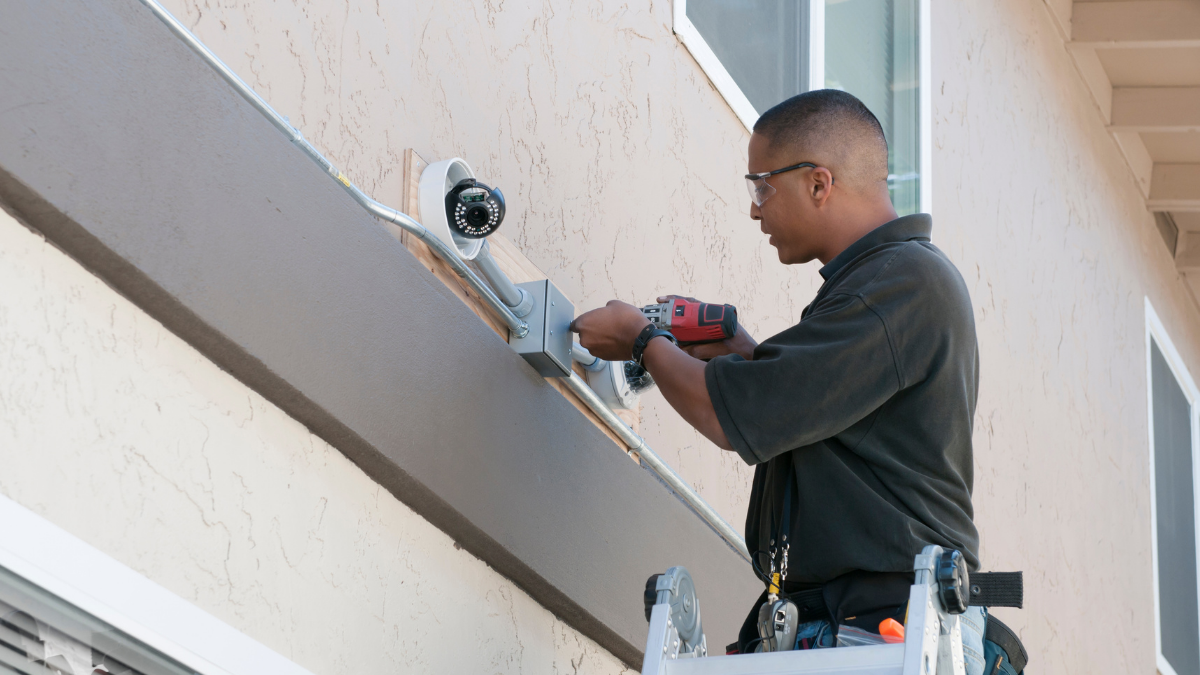
Security cameras and video doorbells can both help you keep an eye on activity around your home, but they’re designed for different purposes. A video doorbell primarily focuses on visitors and activity near an entrance, while security cameras can monitor a wider range of indoor and outdoor areas.
Understanding those differences can help you decide whether you need one, the other, or a combination of both.
What Is a Security Camera?
A security camera captures video of a selected area and can typically be installed in locations such as driveways, yards, garages, side entrances, hallways, and living spaces.
Depending on the device, features may include motion detection, night vision, live viewing, recorded footage, activity alerts, two-way audio, and customizable detection zones.
What Is a Video Doorbell?
A video doorbell combines a doorbell with a camera, microphone, and often a speaker. It’s normally positioned near an exterior entrance to monitor visitors and activity around the doorway.
Many models can send notifications when someone presses the button or when motion is detected. Two-way audio may also allow you to communicate with visitors without opening the door.
Coverage Is the Biggest Difference
The main distinction is where each device monitors.
A video doorbell specializes in entrance activity. A security camera provides greater placement flexibility and can monitor driveways, backyards, garages, side gates, or indoor spaces.
Neither automatically provides complete property coverage. Placement, viewing angle, lighting, obstructions, and device specifications all influence what you’ll actually see.
Compare Motion Detection and Alerts
Both types of devices commonly offer motion detection.
Some models can distinguish between people, vehicles, animals, or packages. Configurable activity zones may also help reduce unnecessary alerts caused by passing vehicles, sidewalks, or moving trees.
Detection capabilities vary, so consider the specific activity you want to monitor before choosing.
Look at Recording and Storage
Live viewing doesn’t necessarily mean footage will be saved.
Depending on the device, recordings may be stored in the cloud, on a memory card, or through another local storage system. Some recording features or longer video histories may require an ongoing subscription.
Check how recordings are triggered, how long they’re retained, whether continuous recording is supported, and what happens when internet service is unavailable.
Consider Power and Connectivity
Security cameras and video doorbells can use batteries, existing wiring, plug-in power, or other connections.
Battery-powered devices offer flexible placement but require periodic charging or battery replacement. Wired devices eliminate routine charging but may require more complicated installation.
Many devices also rely on Wi-Fi for alerts, remote viewing, and cloud features. Check network strength at the intended installation location, especially around exterior walls or areas farther from your router.
Don’t Overlook Privacy and Cybersecurity
Internet-connected cameras can capture sensitive information, making account security important.
Use strong, unique passwords, enable multi-factor authentication when available, and keep device software updated. Camera placement should also respect household privacy, neighboring properties, and applicable surveillance and audio-recording laws.
When a Video Doorbell Makes Sense
A video doorbell may be a good fit when your main priorities are:
- Monitoring your primary entrance
- Seeing visitors
- Receiving doorbell and motion notifications
- Communicating with people at the door
- Keeping an eye on deliveries
Visibility depends on the entrance layout and camera angle, so placement remains important.
When Security Cameras Make Sense
Security cameras may be better when you want broader monitoring.
You can position multiple cameras around driveways, yards, secondary entrances, garages, or selected indoor spaces. They’re also more flexible because they don’t have to be installed beside a doorway.
Can You Use Both?
Yes. The two devices can complement each other rather than compete.
A video doorbell can focus on your main entrance while strategically positioned security cameras monitor other parts of the property.
Avoid unnecessary overlap, however. More devices can mean additional costs, maintenance, and notifications without necessarily improving useful coverage.
Build a Home Monitoring Setup That Fits Your Needs
A video doorbell makes sense when entrance visibility and visitor communication are your priorities. Security cameras provide greater flexibility when you want to monitor several areas around your property.
Before buying either, compare video quality, field of view, night performance, storage, motion detection, power requirements, installation, subscription costs, and privacy features.
Neither option can guarantee that an incident will be prevented, so cameras are best considered alongside practical measures such as secure doors and windows, appropriate lighting, and good household security habits.
Leave a Reply