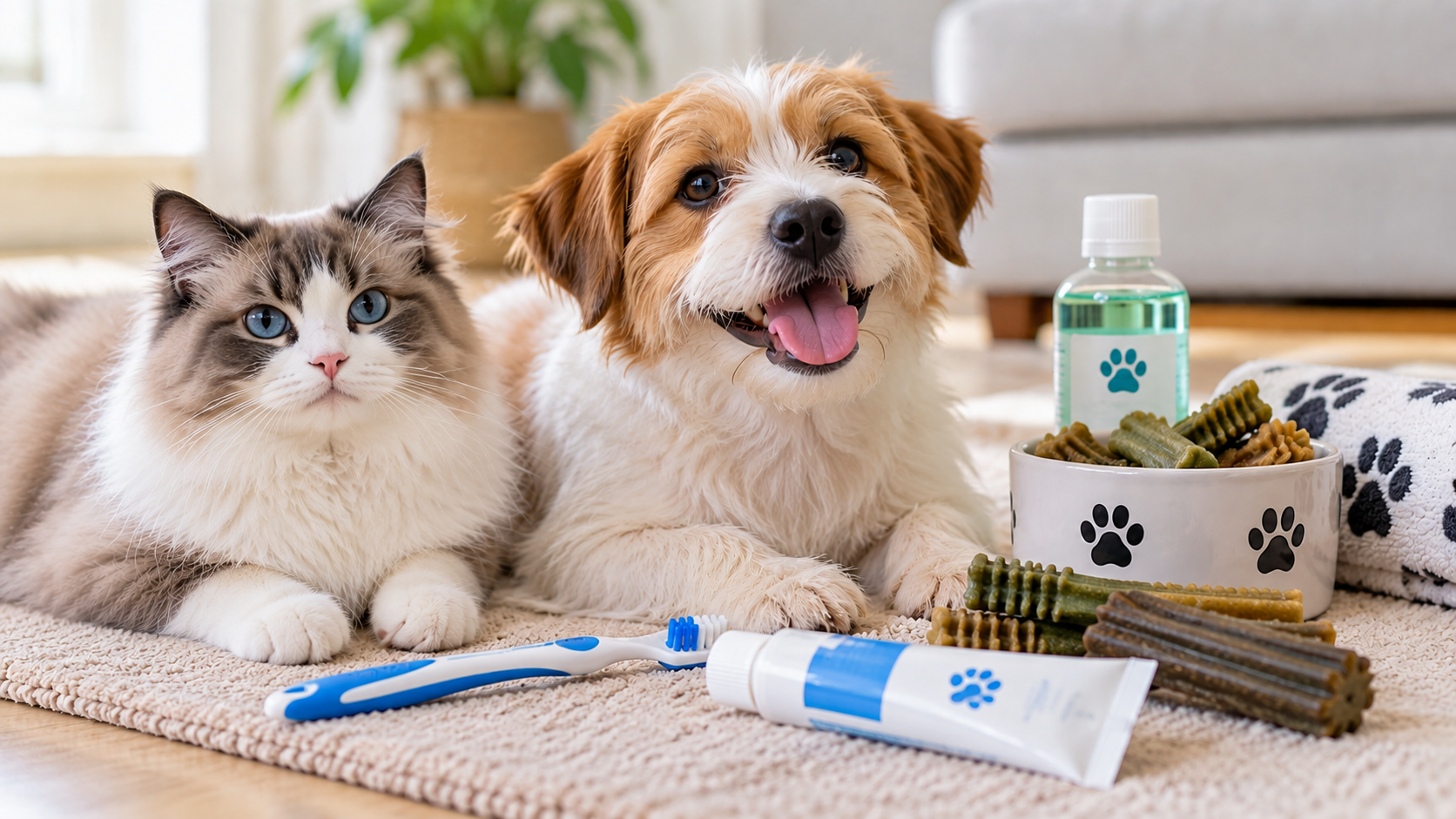
Good pet dental care starts with a routine you can maintain and products suited to your animal’s size, age, chewing habits, and oral condition.
For shoppers, the key question is not which product has the fanciest packaging. You need to know what the product is designed to do, what evidence supports its dental claims, and how easily it can fit into your pet’s routine.
What Should You Look for When Buying Pet Dental Care Products?
When comparing pet dental care options, start by identifying what you are trying to address. Some products are intended to help control plaque, some target tartar, and others are designed primarily to make home cleaning easier.
The Veterinary Oral Health Council (VOHC) maintains lists of accepted products for dogs and cats across categories such as dental diets, edible treats, water additives, gels, toothpastes, toothbrushes, and wipes.
The VOHC Seal indicates that submitted data met its standards for plaque or tartar control; VOHC states that it reviews submitted evidence rather than conducting the product testing itself.
That makes the VOHC Seal a useful factor when researching pet dental products, particularly when several products make similar oral-health claims.
Compare Products by Their Intended Use
| Product Type | Typical Role | Shopping Factors |
|---|---|---|
| Toothbrush | Physically removes plaque | Bristle softness, head size, handle design |
| Toothpaste | Supports tooth brushing | Pet-safe formula, flavor, directions |
| Dental chews | Chewing action may help control plaque or tartar | Pet size, chew size, ingredients, VOHC status |
| Dental treats | Convenient supplemental oral care | Calories, ingredients, feeding instructions |
| Water additives | Added to drinking water | Directions, pet acceptance, evidence supporting claims |
| Dental diets | Food formulated with dental benefits | Veterinary guidance, nutritional suitability, demonstrated dental claims |
These categories should not automatically be treated as interchangeable. A chew, for example, serves a different practical function from brushing.
Why Brushing Deserves Attention
For routine dog dental care, brushing is one of the primary home-care methods to research. AAHA recommends daily brushing to help reduce plaque accumulation and advises using a soft-bristled toothbrush designed for pets.
A pet toothbrush should be appropriately sized for your animal. A small brush head may make it easier to reach the teeth of small dogs and cats, while larger dogs may be easier to handle with a longer brush.
AAHA also notes that brushing removes plaque rather than established calculus, or hardened tartar.
If your pet already has inflamed gums, brushing can cause discomfort, so veterinary assessment may be needed before starting or restarting a brushing routine.
Choose Toothpaste Made for Pets
Pair the brush with pet toothpaste rather than toothpaste intended for people. AAHA specifically advises against human toothpaste for pets and recommends products formulated for animals.
When comparing toothpaste, check:
- Intended animal species
- Usage directions
- Ingredient information
- Product size
- Flavor
- Evidence supporting plaque or tartar claims
- VOHC acceptance, when applicable
Do not assume that two toothpastes provide identical dental benefits simply because their labels use similar language.
Are Dental Chews Worth Buying?
Dental chews for dogs can provide another form of at-home oral care. Chewing can mechanically affect plaque on tooth surfaces, although performance differs among products.
The current VOHC accepted-product list includes numerous edible dog chews with accepted claims relating to plaque, tartar, or both. VOHC also advises selecting the appropriate chew size according to the dog’s weight range stated on the package.
Before purchasing a chew, check its:
- Recommended weight or size range
- Feeding frequency
- Ingredients
- Calorie content
- Texture and hardness
- Accepted plaque or tartar claim
- Supervision instructions
Extremely hard objects can pose dental risks, so harder does not automatically mean better for cleaning teeth. AAHA advises pet owners about potential damage associated with inappropriate chew toys.
What About Cat Dental Care?
Cat dental care can require a different shopping strategy because some cats may resist having their mouths handled. Product format can therefore matter nearly as much as convenience for the owner.
VOHC currently lists accepted feline options across several categories, including dental diets, water additives, gels, sprays, powders, toothbrushes, wipes, and edible dental treats.
If brushing proves difficult, talk with your veterinarian about suitable alternatives rather than assuming a chew, treat, additive, or diet will provide the same function.
Gradual introduction may make brushing easier. Allowing your cat to become familiar with having its lips and mouth gently handled before introducing a toothbrush can make the process less abrupt.
Dental Chews vs. Toothbrushes vs. Water Additives
The best format depends partly on what you can use correctly and consistently.
Toothbrush and toothpaste: This approach gives you direct mechanical cleaning and lets you focus on individual tooth surfaces. It requires cooperation from your pet and regular effort.
Dental chews: These can be convenient for dogs that enjoy chewing. Look closely at sizing, calories, ingredients, and evidence behind dental claims.
Water additives: These require little direct handling of your pet’s mouth. Check the directions carefully and watch that your pet continues drinking normally after an additive is introduced.
Dental diets: These may be suitable for certain pets, although a diet change should account for the animal’s complete nutritional needs. Veterinary advice can help determine suitability.
No home product should be treated as a guaranteed replacement for veterinary dental assessment. AAHA notes that even daily brushing does not eliminate the possible need for professional examinations, dental radiographs, and treatment.
How Can You Evaluate Dental Claims?
Product packaging can contain terms such as “dental,” “oral care,” “fresh breath,” “plaque control,” and “tartar control.” These phrases do not necessarily represent the same benefit.
When researching a product, look for evidence tied to the exact claim. The VOHC Seal can indicate that submitted evidence met the council’s standards for plaque control, tartar control, or both.
Manufacturer statements should still be read as manufacturer claims unless independently supported.
Before purchasing, you can compare current pet dental care options and check their accepted plaque or tartar claims to see which format suits your pet’s daily routine.
Signs That Call for Veterinary Attention
Shopping for home-care products should not delay veterinary attention when your pet shows signs of an oral problem.
AAHA advises arranging a dental examination when signs such as bad breath, red gums, drooling, or difficulty eating occur. A professional examination can identify issues that a home-care product cannot diagnose or treat.
Dental procedures can involve areas below the gumline that cannot be properly assessed by looking at the visible tooth surface alone.
AAHA states that anesthesia allows veterinarians to take dental radiographs, probe for disease, and clean areas where infection can occur.
Building a Practical Dental Routine for Your Pet
A sensible purchasing decision starts with your pet rather than the product category. Think about your animal’s tolerance for brushing, chewing behavior, dietary needs, existing oral condition, and veterinary recommendations.
A toothbrush and animal-specific toothpaste may suit a cooperative pet. Dental chews can provide an additional option for some dogs, while certain cats may respond better to another veterinarian-recommended format.
Check labels carefully, verify dental claims, and look for recognized evidence such as VOHC acceptance when applicable.
Leave a Reply