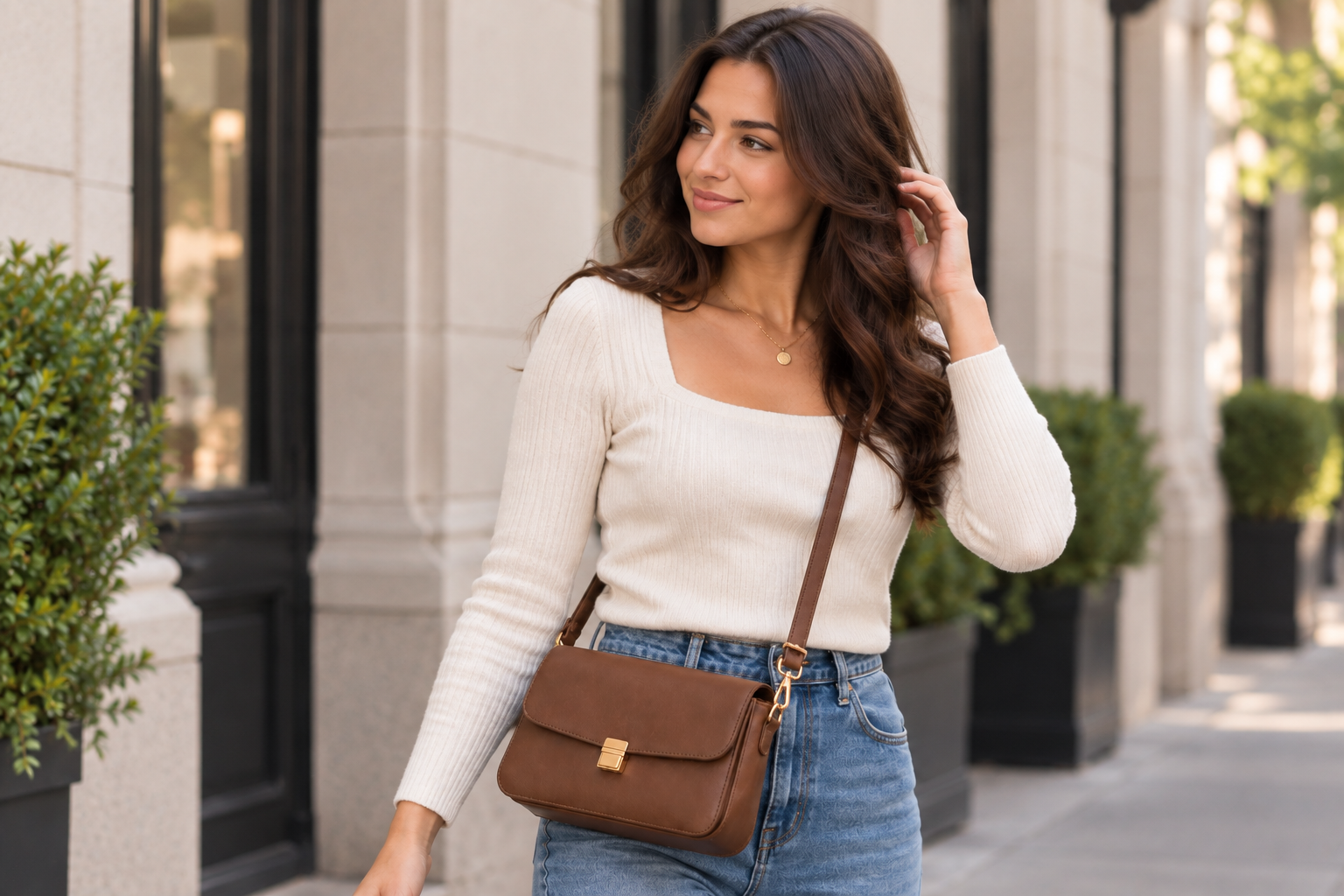
A crossbody bag can give you hands-free storage for daily errands, commuting, sightseeing, shopping, and casual outings. The strap runs across your torso, helping keep your belongings close while leaving your hands free.
Shopping for one can get tricky because designs differ in size, materials, strap construction, closure systems, internal organization, and overall weight.
Looking closely at these details can help you find a bag that fits your routine rather than choosing based on appearance alone.
What Should You Look for in a Crossbody Bag?
Before buying a crossbody bag, think about what you normally carry and where you plan to use it.
Someone carrying a phone, keys, and wallet may need a compact design, while commuters may prefer enough room for chargers, sunglasses, small notebooks, or other personal items.
Five areas deserve particular attention:
- Bag dimensions and capacity
- Strap length and adjustability
- Material and construction
- Closure and internal organization
- Empty bag weight
Checking these details can prevent you from ending up with a bag that looks suitable online yet feels awkward once loaded.
Choose a Size Based on What You Carry
Crossbody styles range from compact phone-sized designs to larger bags capable of holding several daily essentials.
Start by making a short list of the items you regularly carry. This gives you a practical reference when reviewing product dimensions.
Small Designs
A small crossbody purse may suit you if you typically carry:
- Smartphone
- Cardholder or compact wallet
- Keys
- Earbuds
- Lip balm
- Other small personal items
Compact bags can reduce unnecessary bulk, though limited storage may become frustrating if your daily carry changes frequently.
Medium Designs
A medium-sized design may provide space for a wallet, phone, sunglasses, charger, personal-care items, and a few small extras. This size can work well as an everyday bag because it balances storage capacity with portability.
Larger Designs
Larger models can make sense for commuting, sightseeing, or long days away from home. Check the dimensions carefully, especially if you plan to carry a tablet, water bottle, notebook, or other larger item.
Keep in mind that extra capacity can encourage you to pack additional items, increasing the total carrying weight.
Check the Strap Before Buying
The strap has a major effect on comfort and positioning. An adjustable strap lets you change where the bag sits against your body and can make the same design suitable with different outfits or outerwear.
Look at:
- Minimum and maximum strap length
- Strap width
- Attachment points
- Buckles or adjustment hardware
- Removable versus fixed construction
A wider strap can distribute weight across a larger area than a very narrow one. Actual comfort still depends on the bag’s loaded weight, strap material, fit, and how long you carry it.
Some models can also function as a shoulder bag when the strap is shortened. This can be handy if you prefer changing the carrying position during the day.
Compare Common Bag Materials
Material affects appearance, weight, cleaning requirements, water resistance, structure, and long-term maintenance.
Leather
Leather bags can develop changes in texture and appearance with use. Care requirements depend on the specific leather and finish, so manufacturer cleaning instructions should be checked before applying conditioners or cleaning products.
Synthetic Leather
Synthetic alternatives can provide a leather-like appearance without using animal leather. Construction and durability vary by product, so check the stated material composition instead of relying on appearance alone.
Nylon and Polyester
These synthetic fabrics are commonly used in lightweight casual bags. Fabric thickness, coating, stitching, and construction can affect performance.
If water resistance matters to you, check the manufacturer’s stated material properties. A fabric being synthetic does not automatically mean the finished bag is waterproof.
Canvas
Canvas can provide a casual look and structured feel. Cleaning instructions can differ according to fabric composition, dyes, coatings, and decorative elements.
Pay Attention to Storage Layout
Capacity tells you how much a bag may hold, while organization determines how easily you can reach those items.
A single large compartment can work if you carry very little. If you carry several small objects, zippered compartments can help separate items such as keys, cards, cables, or personal-care products.
Useful organization features can include:
- Main closure
- Interior pockets
- Exterior pockets
- Key clips
- Card slots
- Dividers
- Dedicated phone sections
Think about accessibility too. A pocket may be convenient for frequently used items, yet its position and closure can affect how securely those items are stored.
Crossbody Bag vs. Other Carrying Styles
Different bag formats suit different carrying habits.
| Bag Type | Typical Carrying Position | Main Buying Priority |
|---|---|---|
| Crossbody style | Across the torso | Strap fit and accessible storage |
| Shoulder style | Over one shoulder | Strap comfort and stability |
| Tote | Carried by handles or shoulder straps | Capacity and opening size |
| Backpack | Across both shoulders | Weight distribution and storage |
| sling bag | Across the torso or back | Compact storage and quick access |
The right format depends on how much you carry, how often you need access to your belongings, and how you prefer the weight to sit on your body.
Look Closely at Closures
Closure design affects accessibility and how securely your belongings remain inside the bag.
Common options include:
Zippers
Zippers create a defined closure across an opening. Check how smoothly the zipper operates and examine the surrounding stitching when inspecting a bag in person.
Magnetic Closures
Magnetic closures can provide quick access, though the amount of coverage varies considerably between designs.
Flaps
A flap covers the opening and may use a magnet, snap, buckle, or another fastening system. Some bags combine a flap with a zipper underneath.
Rather than choosing a closure by appearance alone, think about how frequently you need to open the bag during a typical day.
Examine Construction Details
Photos can tell you a lot if you know what to inspect.
Look closely at areas that experience repeated stress, including:
- Strap attachment points
- Handle attachments
- Seams
- Zippers
- Buckles
- Clasps
- Corners
- Lining
Product descriptions may identify hardware and materials, though durability claims should be treated as manufacturer statements unless supported by independent testing.
Think About Empty Weight
A bag can feel comfortable when empty and noticeably different once filled.
Check the listed product weight when the manufacturer provides it. Then account for the items you plan to carry.
Phones, portable batteries, water bottles, cosmetics, and other daily items can quickly increase total weight.
This is especially relevant if you expect to carry the bag for several hours at a time.
Match the Design to Your Routine
A useful purchase should fit the situations in which you plan to carry it.
Commuting
Prioritize secure closures, practical organization, comfortable straps, and enough capacity for your normal workday items.
Travel
Compact dimensions, secure storage, accessible pockets, and low empty weight may be helpful during sightseeing or airport trips.
Shopping and Errands
Easy access to your phone, keys, and payment items can be useful when your hands are occupied.
Casual Outings
You may prioritize appearance and compact proportions if you only need a few essentials.
Questions to Ask Before Purchasing
Before placing an order, check:
- What are the exact dimensions?
- What is the bag made from?
- How long is the strap?
- Is the strap removable?
- How many internal and external pockets are included?
- What type of closure does it use?
- What does the empty bag weigh?
- What cleaning method does the manufacturer recommend?
- Does the seller provide clear return information?
- Are product photos detailed enough to inspect the construction?
These questions can help you compare products based on practical characteristics instead of marketing language.
Should You Choose Fashion or Function?
You do not necessarily have to pick one over the other. Start with functional requirements, then narrow the selection according to your preferred appearance.
For example, determine the capacity, strap length, closure, and organization you need first. Once those requirements are established, compare colors, shapes, hardware, textures, and styling.
This approach can reduce the chance of buying an attractive design that does not suit your daily routine.
How Much Should You Spend?
There is no single price point that makes sense for every buyer. Pricing can vary according to material, construction, brand positioning, hardware, manufacturing methods, and design.
Instead of using price alone as an indicator of quality, compare measurable details such as dimensions, materials, closures, strap specifications, construction, care requirements, and return policies.
You can check current pricing and available crossbody bag styles from your preferred retailer after narrowing down the features that fit your needs.
Choosing a Crossbody Bag Based on Size, Comfort, and Storage
A crossbody bag can be a practical choice when you want hands-free carrying with easy access to daily essentials.
The best fit for your needs depends on capacity, strap configuration, material, organization, closure type, empty weight, and construction.
Start with the items you actually carry. Check product dimensions against those items, review strap measurements, inspect storage layout, and read material information carefully.
Comparing specific features gives you a clearer basis for deciding which design suits your daily routine.
Leave a Reply