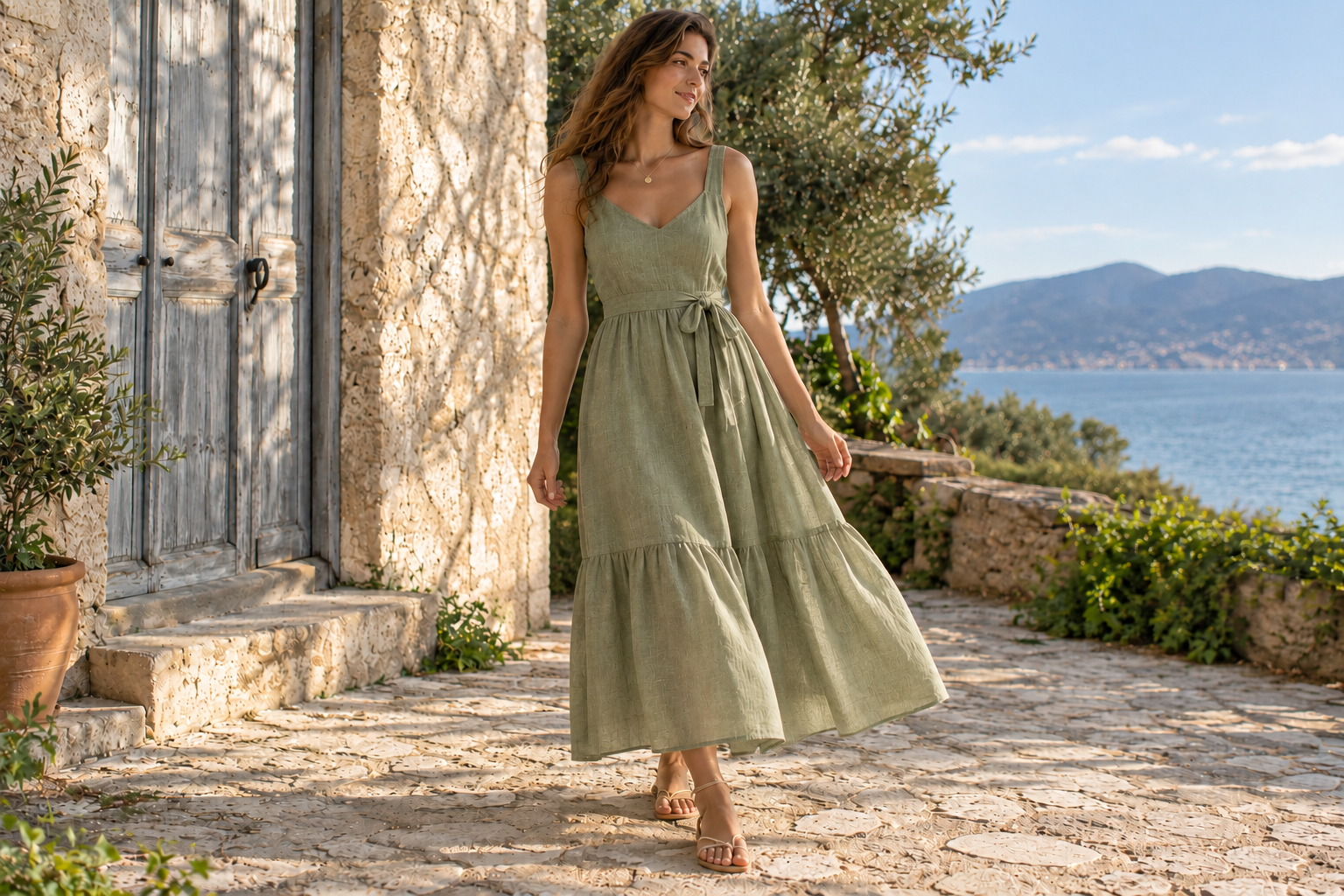
A linen dress can be a practical choice when you want lightweight clothing that feels comfortable in warm conditions.
Linen is made from flax fiber and is known for airflow, moisture management, and temperature regulation. Laboratory testing cited by the Alliance for European Flax-Linen & Hemp supports these performance characteristics.
Still, dresses made with linen can differ considerably in fabric composition, weight, construction, lining, fit, and care requirements. Before buying, checking these details can help you select a dress suited to your climate, wardrobe, and intended use.
How to Choose a Linen Dress Before Buying
Start with the fabric label rather than relying on the product name alone. A dress described as linen-inspired or linen-look may contain another fiber, while a 100% linen garment is made entirely from linen fiber.
Linen has documented ventilation, moisture-management, and temperature-regulating properties. Testing cited by the Alliance found that 100% linen performed strongly for air permeability and moisture movement compared with several commonly tested textiles.
A linen summer dress can therefore make sense for hot conditions, particularly when the garment uses a lightweight construction with enough room for air circulation.
Check the Fabric Composition
The first detail to inspect is the fiber percentage.
100% linen: Provides the characteristic texture and performance associated with linen. It may develop visible creases during wear.
Linen-cotton fabric: Combines linen with cotton. The exact feel and performance depend on the percentages and fabric construction.
Linen-viscose fabric: Can have a softer or different drape compared with some pure linen fabrics, though performance depends on construction and fiber ratios.
Do not assume that a fabric containing linen will behave exactly like 100% linen. Read the composition label before comparing two dresses.
Why Linen Works Well in Warm Conditions
Breathability is one reason shoppers research linen for seasonal clothing. Testing commissioned by the Alliance found strong ventilation and moisture-management performance in 100% linen samples.
Garment construction still matters. A tightly fitted or heavily lined dress may feel different from a loose, lightweight design even when both use linen.
Moisture Management
Linen can absorb moisture and spread it across the fabric surface, supporting evaporation. Laboratory testing cited by the Alliance documented this behavior in 100% linen textiles.
That characteristic can be useful when temperatures rise, though comfort will still depend on humidity, garment thickness, fit, and personal preference.
Temperature Regulation
Linen provides ventilation alongside moderate thermal resistance. This combination helps explain its use in clothing across different seasons.
You can therefore assess the fabric weight and construction instead of treating linen strictly as a summer-only material.
Linen Dress Lengths Compared
Dress length can affect styling, movement, coverage, and suitability for different settings.
| Dress Style | Typical Length | Useful For | Buying Detail to Check |
|---|---|---|---|
| Mini | Above knee | Casual warm-weather outfits | Coverage and fit |
| Knee-length | Around knee | Everyday wear | Hem placement |
| Midi | Below knee to lower calf | Work, travel, events | Skirt volume and proportions |
| Maxi | Near ankle or floor | Holidays, dinners, relaxed occasions | Hem length and movement |
A linen midi dress can suit shoppers seeking a balance between coverage and easy movement. Midi styles may work with sandals, flats, loafers, or low heels depending on the cut.
A linen maxi dress provides added leg coverage and can work well for holidays or casual events. Check the listed garment length carefully, especially if you are shorter or taller than the model shown on the product page.
How Fit Changes the Way Linen Feels
Fit deserves as much attention as fiber content.
Linen fabrics can vary from structured to fluid depending on yarn, weave, weight, finishing, and garment design. A fitted waist creates a different silhouette from a straight or relaxed cut.
For a women’s linen dress, useful measurements to check include:
- Bust
- Waist
- Hip
- Shoulder width
- Sleeve length
- Total garment length
Compare your measurements with the seller’s garment-specific size chart when one is provided. Standard size labels can differ between manufacturers.
Relaxed Fit
A relaxed cut leaves additional space around the torso and hips. This can support airflow and make movement easier.
Tailored Fit
A tailored design creates greater definition around the waist or upper body. Check for darts, seams, belts, elastic panels, or adjustable ties that influence the final fit.
Oversized Fit
Oversized designs intentionally use additional fabric. Review garment measurements carefully rather than automatically selecting your usual size.
Fabric Weight and Transparency Matter
Not every linen fabric has the same density.
Lightweight linen can feel airy in warm conditions, though pale or thin fabrics may have some transparency. Heavier linen can provide greater structure and coverage.
Before purchasing, inspect product photos and descriptions for information about:
- Fabric weight
- Lining
- Opacity
- Weave density
- Stretch
- Undergarment recommendations
A lined dress may provide additional coverage, though the lining material can affect airflow. Check its fiber composition as well.
Pure Linen vs Linen Fabrics With Other Fibers
Neither option automatically suits every buyer.
| Feature | 100% Linen | Linen Fabric With Other Fibers |
|---|---|---|
| Fiber content | Pure linen | Linen plus another fiber |
| Texture | Characteristic linen texture | Depends on added fiber |
| Creasing | Often visible during wear | Depends on composition |
| Drape | Depends on weave and weight | Can change significantly |
| Care | Follow garment label | Follow garment label |
When comparing linen clothing, use the actual fiber percentages rather than assuming every linen-containing garment has identical properties.
Details That Can Affect Everyday Use
Small construction details can change how practical a dress feels.
Pockets
Check their position and depth. Side-seam pockets can be convenient, though bulky contents may affect the way lightweight fabric hangs.
Buttons
Button-front designs can provide styling flexibility. Check product photos for button spacing and closure construction.
Adjustable Straps
Adjustable straps can help you alter the upper-body fit on sleeveless designs.
Elastic or Drawstring Waists
These features can provide some fit flexibility. Check where the waist sits and how much adjustment the design allows.
Lining
A lining can increase opacity. Look at the lining material because polyester, cotton, viscose, and other fabrics can influence the garment’s overall feel.
What About Linen Wrinkles?
Visible creasing is common with linen garments. Flax fibers have relatively low elasticity, so fabric can retain folds created through sitting, bending, or movement.
Some shoppers appreciate this relaxed appearance, while others prefer a smoother finish.
If creasing concerns you, inspect the care instructions and fabric composition before buying. A garment containing another fiber may behave differently from pure linen, though the exact result depends on its composition and construction.
How to Check Quality Before Purchasing
Product photos alone cannot tell you everything about garment construction.
Look closely at:
- Fiber percentages
- Stitching around seams
- Hem construction
- Button attachment
- Zipper placement
- Pattern alignment
- Lining information
- Garment measurements
- Care instructions
- Return conditions
If the retailer provides close-up fabric photographs, use them to examine weave and texture.
You can also check customer photographs when available, keeping in mind that individual reviews reflect personal experiences rather than controlled product testing.
Care Instructions Deserve Attention
Care requirements differ between garments, even when they share the same main fiber.
Always follow the manufacturer’s care label. Construction, dyes, finishes, trims, linings, and secondary fibers can affect suitable washing and drying methods.
Avoid assuming that every linen garment can be washed or dried using identical settings.
Questions to Ask Before Buying
Is the dress actually 100% linen?
Check the fiber composition. Product naming alone does not confirm fiber percentages.
Is linen suitable for hot weather?
Linen has documented breathability, ventilation, moisture-management, and thermoregulation characteristics that can support comfort in warm conditions.
Does linen wrinkle easily?
Linen can develop noticeable creases during normal wear. How visible they become depends partly on fabric construction, garment design, and any additional fibers.
Should you size up?
Not automatically. Compare your measurements with the garment’s size chart and assess the intended fit.
Is a lined dress better?
A lining can improve opacity or structure, though it may change airflow and weight. Check the lining material before deciding.
Buying Checklist for Your Next Linen Dress
Before placing an order, confirm:
- Exact fiber composition
- Garment measurements
- Dress length
- Fabric weight or thickness information
- Lining composition
- Closure type
- Pocket design
- Care requirements
- Return policy
- Intended fit
For purchase research, check current pricing and available linen dress styles from several retailers so you can compare fabric composition, construction, measurements, and care requirements before selecting one.
Is a Linen Dress a Good Match for Your Wardrobe?
A linen dress may suit you if breathability, natural fiber content, and warm-weather comfort are priorities.
Linen’s ventilation and moisture-management characteristics are supported by textile testing, though the experience of wearing a specific dress still depends heavily on fabric weight, construction, lining, and fit.
Focus on measurable product details rather than marketing language. Checking fiber percentages, garment measurements, fabric density, lining, and care instructions gives you a stronger basis for comparing options and finding a dress that fits your intended use.
Leave a Reply