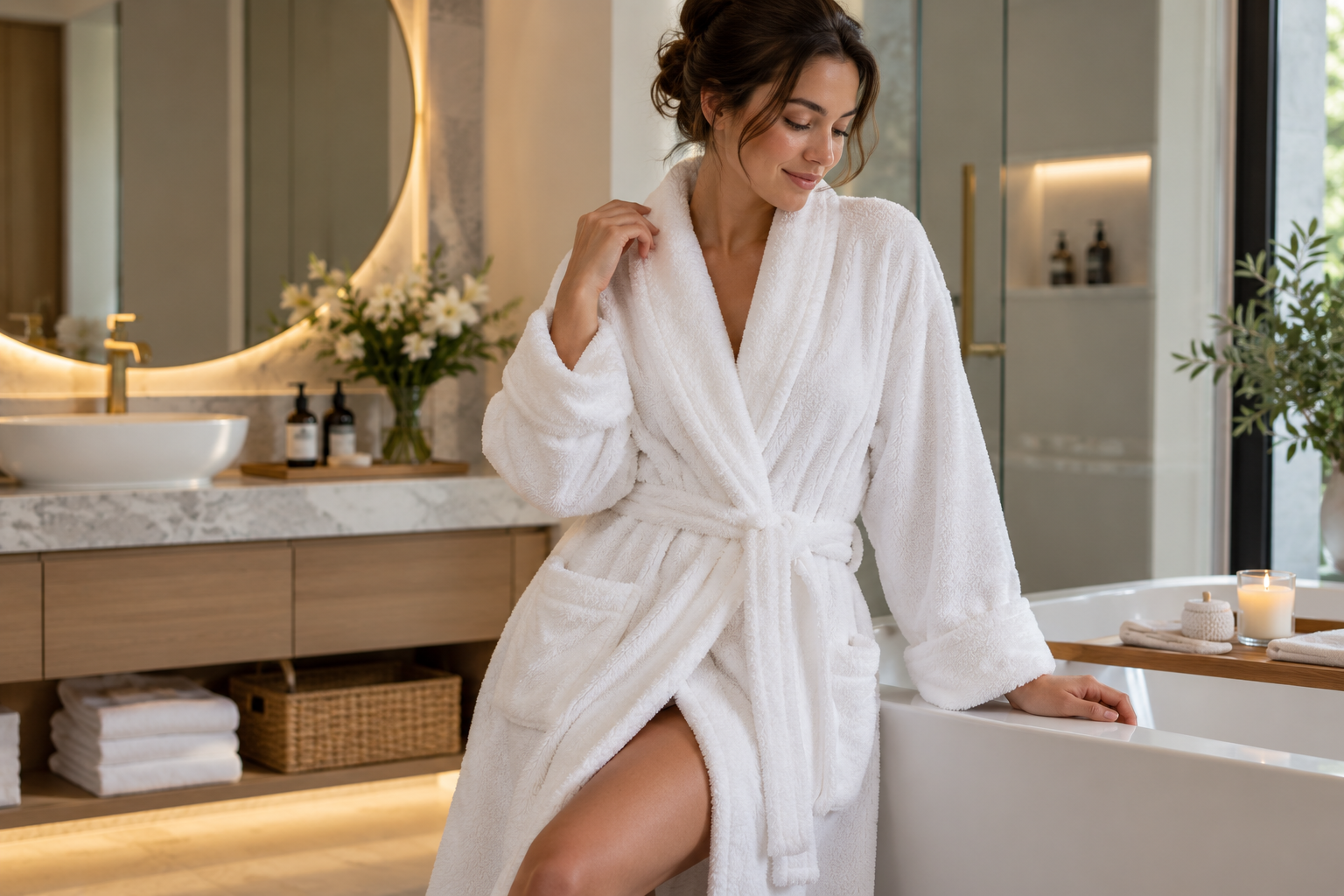
A bath robe can make the time after a shower, morning routine, or quiet evening at home feel easier and warmer.
Yet robes can differ significantly in fabric, weight, absorbency, length, construction, and care requirements. Knowing which details matter can help you select one that suits how and where you plan to wear it.
Some shoppers want an absorbent robe for drying off, while others prefer a lightweight layer for getting ready or relaxing indoors. This guide explains the main materials and design details so you can compare your options before buying.
What Should You Look for When Buying a Bath Robe?
Start by thinking about when you plan to wear your bath robe. A robe worn immediately after bathing has different requirements from one primarily used as comfortable indoor clothing.
Pay attention to:
- Fabric and fiber content
- Absorbency
- Fabric weight
- Length and coverage
- Sleeve design
- Pocket placement
- Belt construction
- Collar style
- Washing instructions
- Available sizing
Fabric deserves particular attention because it affects warmth, drying performance, texture, and maintenance.
Compare Bath Robe Materials Before Buying
Robes are produced from several materials, and each serves a slightly different purpose.
Cotton Bathrobe
A cotton bathrobe can be a practical choice if absorbency and breathability are priorities. Cotton fibers can absorb moisture, making cotton robes suitable for wearing after bathing.
The exact feel depends heavily on how the fabric is constructed. Some cotton robes have a looped texture similar to towels, while others use smoother or lighter fabric.
Check the fiber-content label instead of assuming every robe described as soft or absorbent is made entirely from cotton.
Terry Cloth Robe
A terry cloth robe uses fabric with loops that increase the surface area available for absorbing moisture. Terry construction is commonly associated with towels, which explains why this type of robe can work well after a shower or bath.
Terry fabric can feel substantial compared with thinner materials. If you live in a warm climate or dislike heavy clothing indoors, check the fabric weight before purchasing.
Waffle Robe
A waffle robe has a recognizable textured surface formed by small recessed squares. This construction can produce a lighter garment than thick terry styles, depending on the material and fabric weight.
Waffle designs can suit people who want coverage without a particularly heavy feel. They can also pack relatively neatly for travel when compared with bulky robes, although the actual packed size depends on the individual garment.
Plush Robe
A plush robe prioritizes a soft, cozy feel. Many versions use synthetic fibers such as polyester, though fiber content varies by manufacturer.
This style can suit cooler rooms and relaxed indoor wear. Keep in mind that softness does not automatically indicate strong water absorption. Check the material description and care label if you intend to use the robe directly after bathing.
Bath Robe Fabric Comparison
| Robe Type | Typical Character | Good Use Case | Detail to Check |
|---|---|---|---|
| Cotton | Breathable and absorbent | After bathing and daily wear | Fiber content |
| Terry | Looped, towel-like texture | Drying after showers | Fabric weight |
| Waffle | Textured and often lighter | Getting ready and travel | Thickness |
| Plush | Soft and insulating | Lounging in cooler conditions | Fiber composition |
Fabric construction, thickness, and fiber composition vary between manufacturers. Product labels are therefore a better source of garment-specific information than general fabric descriptions.
How Important Is Fabric Weight?
Weight affects how a robe feels during extended wear.
Thicker fabrics can provide additional insulation, though they may feel bulky and can take longer to dry. Lightweight fabrics are often easier to wear in warm indoor conditions and can require less storage space.
Instead of choosing solely by appearance, think about your climate and usual room temperature.
For humid or warm environments, a lightweight construction may feel comfortable. For cooler bedrooms and bathrooms, a heavier design may provide the insulation you prefer.
If a manufacturer publishes fabric weight or GSM information, you can use that specification as one point of comparison. Avoid assuming a higher number automatically means a better garment; ideal weight depends on intended use.
How Should a Bath Robe Fit?
A robe should provide enough room for comfortable movement without leaving so much excess fabric that it becomes awkward.
Check the manufacturer’s size chart before ordering. Sizing conventions differ, so your usual clothing size may not correspond directly with a particular robe.
Useful measurements include:
- Chest or bust
- Shoulder width
- Sleeve length
- Overall garment length
- Belt position
Think about what you might wear underneath as well. A robe used directly after bathing may require less layering room than one worn over pajamas.
Choosing the Right Length
Short robes can feel less restrictive and may suit warm conditions. Knee-length styles provide additional coverage without extending close to the floor. Long robes can provide extra leg coverage and warmth.
Your height affects where a stated garment length actually falls, so checking the listed measurement can be helpful when shopping online.
Should You Choose a Hood?
A hooded bathrobe provides additional head and neck coverage. It can be useful after washing your hair or when you prefer extra warmth.
A hood adds fabric, however, and may make the garment heavier around the shoulders. People primarily interested in a lightweight robe may prefer a shawl collar or simple neckline.
Look at hood construction as well. A very large hood may feel bulky, while a shallow hood may provide limited coverage.
Check the Collar, Belt, and Pockets
Small construction details can strongly affect daily usability.
Collar
Shawl collars provide additional fabric around the neck and chest. Flat or streamlined collars can feel lighter and create less bulk.
Belt
Most traditional robes use a removable tie belt. Check how securely the belt loops are attached and where they sit relative to your waist.
Some designs use an attached belt, which reduces the chance of losing it during washing.
Pockets
Pockets can be handy for carrying a phone or small personal items around the house. Their position matters. Pockets placed too low or too far toward the sides can be inconvenient to reach.
Shopping for a Bathrobe for Women
When comparing a bathrobe for women, avoid relying exclusively on size labels such as small, medium, or large. Measurements provide better information about likely fit.
You may also want to compare:
- Garment length
- Sleeve length
- Waist placement
- Pocket size
- Collar construction
- Fabric composition
- Washing instructions
Unisex robes can be another option, particularly when you prefer a straighter or roomier cut. Again, measurements are the safest comparison point.
What Makes a Robe Good for After a Shower?
For post-shower use, moisture management is usually a primary concern.
Cotton and terry constructions are commonly selected for this purpose because cotton fibers can absorb water. Thickness still matters, since a heavy absorbent garment may require additional drying time between uses.
A robe should not replace proper towel drying when you need to remove substantial water quickly. Instead, it can provide coverage and continue absorbing residual moisture while you get ready.
What Makes a Robe Suitable for Lounging?
A lounging robe does not necessarily need strong absorbency. Comfort, warmth, fit, and softness can take priority.
Look for a fabric that suits your indoor temperature. Lightweight cotton or waffle constructions can work in warmer rooms, while thicker fabrics may feel better during cooler periods.
Movement matters too. Sleeves that are extremely wide can interfere with cooking, washing your face, or handling household items. A secure belt and correctly positioned pockets can make everyday wear easier.
How Do You Check Quality Before Buying?
Product photographs alone rarely provide enough information to judge construction. Read the full product description and inspect any available close-up images.
Look for clear information about:
- Fiber composition
- Garment measurements
- Stitching and seam construction
- Belt attachment
- Pocket construction
- Care requirements
- Manufacturer sizing guidance
If those details are missing, comparing the garment with another option that provides clearer specifications can reduce uncertainty.
How Should You Care for a Bath Robe?
Always follow the manufacturer’s care label because laundering requirements depend on the fibers, construction, dyes, and finishes used.
Some robes can be machine washed and tumble dried, while others may require lower temperatures or gentler treatment.
Before washing, check the pockets and secure or remove a detachable belt so it does not become heavily tangled with other laundry. Avoid assuming every fabric can tolerate the same washing temperature or drying method.
Common Bath Robe Buying Mistakes
One common mistake is selecting a robe entirely by appearance. A visually appealing garment can still be poorly suited to your intended use.
Another is ignoring measurements. Robes are designed to fit loosely, yet excessive fabric can become uncomfortable.
You should also avoid treating softness and absorbency as interchangeable qualities. A very soft synthetic garment can be comfortable for lounging without performing like an absorbent cotton design after bathing.
Finally, check maintenance requirements before purchasing. A robe that requires care you are unlikely to follow may not suit everyday use.
Frequently Asked Questions
What material is good for a bath robe after showering?
Cotton is commonly used when absorbency is important. Terry construction can increase the fabric’s absorbent surface through its looped structure. Check the actual fiber composition because not every towel-like robe uses the same material.
Is a thick robe always better?
No. Thick fabric can provide warmth, but it can also increase garment weight and drying time. A lighter robe may suit warm climates, travel, or people who dislike bulky indoor clothing.
Should a robe fit loosely?
A robe generally needs enough ease for comfortable movement and overlap at the front. Excessively loose sizing can create unnecessary bulk, so compare your measurements with the manufacturer’s size chart.
Are waffle robes good for warm weather?
Their textured construction is often available in lightweight designs that can suit warmer conditions. Actual comfort still depends on fiber content, fabric weight, and personal temperature preferences.
How often should a robe be washed?
There is no single washing schedule suitable for every garment or household. Frequency depends on how the robe is used, how much moisture it absorbs, and the manufacturer’s care instructions. Allowing a damp robe to dry fully between uses is sensible.
Choosing a Bath Robe That Fits Your Routine
The right bath robe depends on its intended role in your daily routine. If you plan to put it on directly after bathing, focus on absorbency, fabric construction, and drying requirements.
If lounging is the main purpose, prioritize temperature, softness, weight, and freedom of movement.
Compare fiber content and actual garment measurements rather than relying solely on marketing descriptions. Details such as pockets, belt placement, sleeve length, and washing instructions can make a noticeable difference after regular use.
When you have narrowed down the fabric and fit you prefer, check current bath robe styles and product specifications to compare available options before purchasing.
Leave a Reply