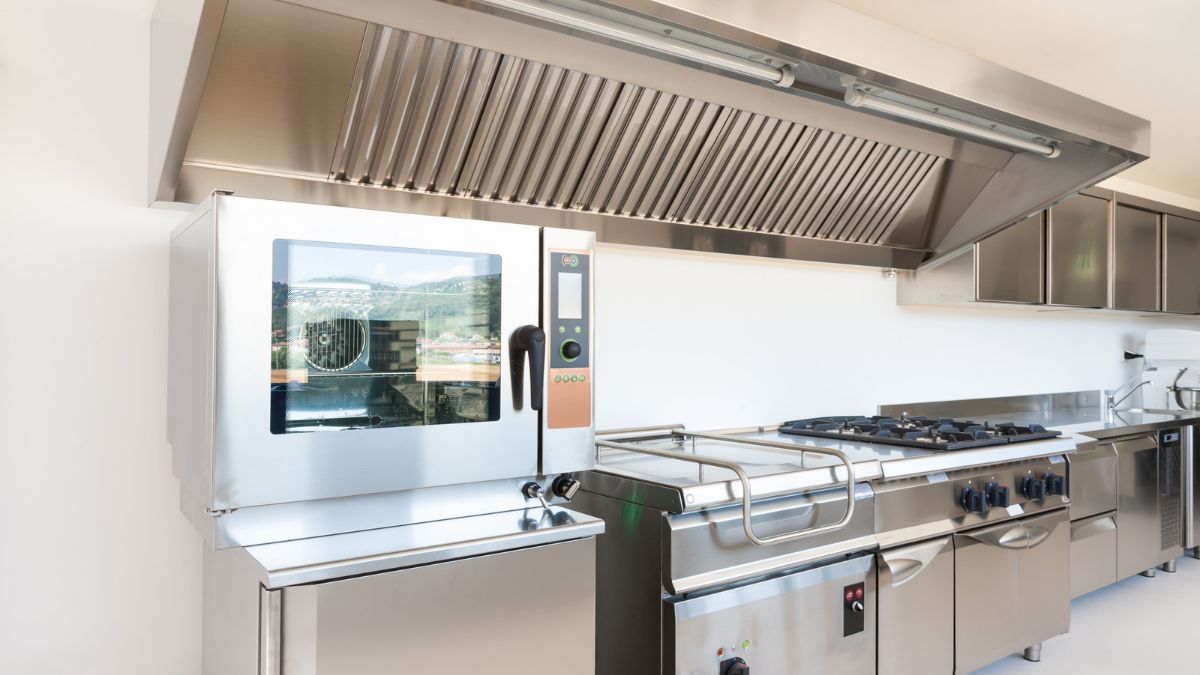
Commercial cooking equipment can take up a large share of your kitchen budget and floor space. The right setup depends on what you cook, how often you prepare it, and how much food your team must produce during busy service.
Before comparing appliances, check the utilities and ventilation your location can support. Then match your menu items to their cooking methods. This can help you identify the equipment you actually need instead of filling the kitchen with appliances that may rarely be used.
Build the Core Cooking Line
A commercial range is a versatile starting point for many kitchens. Depending on the configuration, it may combine open burners with an oven, griddle, or charbroiler.
When comparing ranges, consider:
- Number and type of burners
- Oven capacity
- Overall dimensions
- Cleaning access
- Gas or electrical requirements
Commercial ovens come in several styles. Conventional ovens handle general baking and roasting, while convection ovens circulate heated air with a fan to support more consistent cooking for suitable foods.
Combination ovens add steam to convection heat, offering flexibility for varied menus. However, they may require additional water, drainage, cleaning, and maintenance.
Specialized pizza, deck, or conveyor ovens may make sense when particular foods account for a large share of orders.
Think about workflow as well as individual appliance capacity. Your equipment should support a smooth progression from food preparation to cooking, holding, plating, and service.
Add Equipment Your Menu Will Use
Once the main cooking line is planned, consider appliances that support frequently ordered dishes.
Griddles provide a flat surface for eggs, pancakes, burgers, sandwiches, vegetables, and similar foods. Compare the cooking area with your expected peak demand. Temperature control, heat recovery, grease collection, and cleaning access are also important.
Charbroilers provide direct high-heat cooking. Look at cooking area, heat output, grease management, and ventilation requirements.
For fried foods, compare fryers based on:
- Batch capacity
- Recovery time
- Oil handling
- Filtration options
- Cleaning requirements
A countertop fryer may handle occasional demand, while a larger floor model may be more practical for continuous production.
Steamers can be useful for vegetables, seafood, and other foods suited to steam cooking. Check water supply, drainage, maintenance, and any manufacturer recommendations for water treatment.
Commercial microwaves can handle reheating and quick preparation tasks. Choose a model rated for your expected workload and large enough for the containers your kitchen regularly uses.
Specialty equipment such as salamanders, sandwich presses, and rice cookers can be valuable when they support popular dishes. If an appliance would only be used occasionally, determine whether existing equipment can perform the same task first.
Check Capacity, Space, and Utilities
Size equipment for peak production rather than average sales. An appliance that performs well during slower periods may become a bottleneck when several orders arrive at once.
Measure the equipment and the surrounding workspace. Allow enough room for doors, drawers, cleaning, staff movement, and required clearances.
You should also check the delivery route. Measure doors, hallways, elevators, and other access points before ordering large equipment.
For each appliance, confirm its utility requirements, including:
- Gas type and pressure
- Electrical voltage and amperage
- Water supply
- Drainage
Compare published energy information when available. Purchase price is only one expense. Energy use, maintenance, cleaning, and repairs can influence the long-term cost of operating the equipment.
Plan for Safety and Maintenance
Commercial cooking equipment can generate significant heat, smoke, steam, and grease. Ventilation, fire protection, and clearance requirements vary by appliance and local regulations.
Review these requirements with qualified professionals before finalizing your layout. Adding or replacing equipment may require changes to an existing hood or ventilation system.
Cleaning should also influence your choice. Removable components, accessible grease trays, and smooth surfaces can make routine sanitation easier.
Before purchasing, check the manufacturer’s recommended maintenance schedule, warranty terms, replacement-part availability, and local service options. Include installation, maintenance, staff training, and cleaning supplies when planning your budget.
Choose Equipment Around Your Workflow
Create your final shortlist based on the dishes you prepare most often, peak production needs, available space, and utilities. Compare cleaning and maintenance requirements alongside capacity and price.
Before ordering, walk through the proposed layout with your kitchen team. Verify dimensions, connections, ventilation, and working clearances.
A focused setup gives your cooks the equipment they need without overcrowding the kitchen. By choosing appliances around your actual menu and workflow, you can create a cooking line that is practical, efficient, and easier to manage during busy service.
Leave a Reply