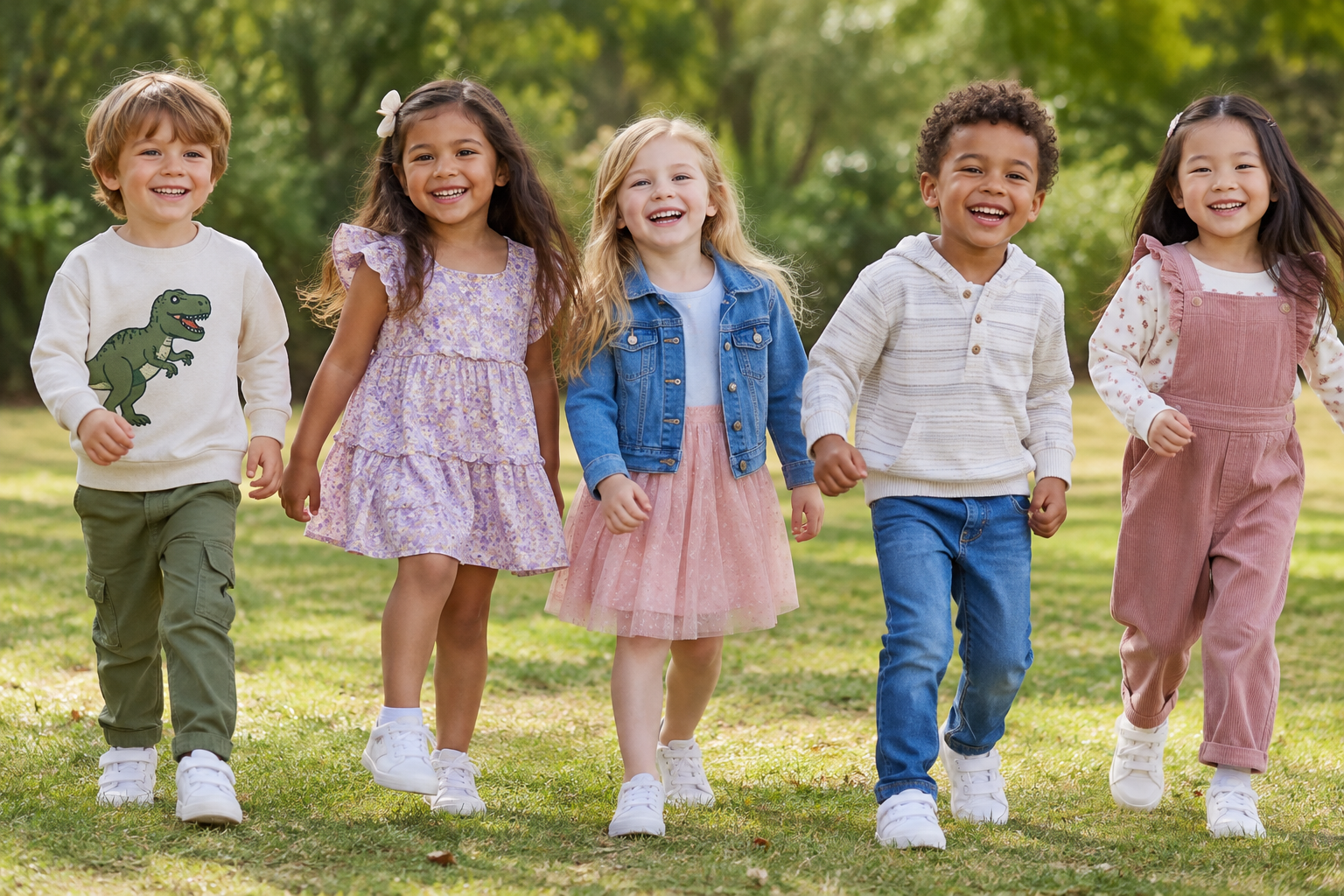
Shopping for kids’ clothes can involve quite a few decisions, from choosing the right size to checking fabric, construction, care requirements, and seasonal suitability.
Looking closely at materials, sizing information, closures, seams, and care labels can help you compare options before buying.
What to Look for When Buying Kids’ Clothes
Good kids’ clothes should suit your child’s activities, the weather, and your usual laundry routine. Instead of choosing clothing based primarily on appearance, check how each item is made and how practical it will be during regular use.
When comparing children’s clothing, pay attention to fabric composition, sizing guidance, seams, closures, washing instructions, and design. These details can help you decide which pieces suit school, playtime, outings, or time at home.
Check the Fabric Composition
Fabric has a noticeable effect on how clothing feels and performs. Common materials include cotton, polyester, wool, linen, viscose, and elastane. Many garments combine two or several fibers to achieve particular characteristics.
Cotton is commonly used for T-shirts, pajamas, dresses, and casual clothing. Polyester appears in many active and outerwear pieces, while elastane is often added to provide stretch.
Parents interested in organic cotton kids clothes should read the product label and any certification information supplied by the manufacturer.
The word “organic” should refer to the fiber or certification specified rather than being treated as a general indication of overall product quality.
Compare Materials Based on Use
| Material | Common Characteristics | Often Used For |
|---|---|---|
| Cotton | Soft, breathable, absorbent | T-shirts, pajamas, casual clothing |
| Polyester | Quick-drying, wrinkle-resistant | Activewear, jackets |
| Wool | Insulating, temperature-regulating | Sweaters, winter clothing |
| Linen | Breathable, lightweight | Warm-weather shirts, dresses |
| Elastane | Stretchy and flexible | Leggings, fitted garments |
The fiber content alone does not tell you everything about a garment. Fabric weight, knit or construction, finishing, and overall garment design can affect comfort and durability too.
How Do Kids Clothing Sizes Work?
One of the harder parts of online shopping is determining which size to order. Kids clothing sizes can differ among manufacturers, so an age label should generally be treated as a starting point rather than a universal measurement.
Check the retailer or manufacturer’s size chart and compare it with your child’s current measurements. Depending on the garment, useful measurements can include height, chest, waist, hips, and inseam.
If your child falls between two sizes, check the product’s cut and fit description before deciding. Choosing a larger size may provide additional growing room, although an oversized garment can sometimes affect comfort or movement.
Look at the Garment Shape
Two shirts labeled with the same size can fit differently. One might have a relaxed cut, while another may be designed for a closer fit.
Product descriptions may identify clothing as slim, regular, relaxed, oversized, cropped, or another fit type. Reading this information alongside the size chart gives you a clearer idea of what your child will receive.
What Makes Kids Everyday Wear Practical?
For kids everyday wear, practical details can matter as much as style. Children may spend the day sitting, running, climbing, playing, or moving between indoor and outdoor environments.
Features worth checking include elasticated waistbands, adjustable waist details, easy-to-use fasteners, functional pockets, stretch, reinforced areas, and machine-washable fabrics. The right features depend on your child’s age and how the garment will be used.
You can also check the care label before buying. Clothing requiring complicated washing or drying routines may be less convenient for frequent use.
How to Evaluate Durable Kids Clothes
Finding durable kids clothes requires looking beyond fabric thickness. Stitching, seam construction, closures, fabric quality, and the intended use of the garment all matter.
Inspect product photos closely when shopping online. Look at areas that frequently experience wear, such as knees, elbows, waistbands, hems, and pocket openings. Detailed product descriptions may also explain construction features or care requirements.
Durability can vary significantly even among garments made from similar fibers, so avoid assuming that a particular material automatically means longer wear.
Boys and Girls Clothing: Focus on Fit and Function
When shopping for boys and girls clothing, you can compare items based on measurements, fit, function, fabric, and your child’s preferences rather than relying entirely on the category name.
T-shirts, hoodies, sweaters, jeans, joggers, shorts, pajamas, and many other everyday pieces may have similar practical requirements regardless of the section where they are sold.
For active days, you may prioritize freedom of movement and straightforward care. For formal occasions, fabric appearance, garment structure, and fit may carry greater weight.
What Clothing Does a Child Actually Need?
Buying several versatile pieces can make everyday dressing simpler. The exact quantity depends on how frequently you do laundry, your local climate, school requirements, activities, and how quickly your child is growing.
Rather than purchasing large quantities in advance, check current measurements periodically. Children grow at different rates, making long-term size predictions unreliable.
Seasonal Clothing Deserves Extra Attention
Weather should influence both fabric and garment design. Lightweight, breathable materials may be suitable during warmer periods, while colder conditions can require insulating layers and weather-appropriate outerwear.
Layering can be useful when temperatures change throughout the day. A base layer, mid-layer, and suitable outer layer allow clothing to be adjusted as conditions change.
For rainwear and winter outerwear, read manufacturer descriptions carefully. Terms describing water resistance, waterproofing, insulation, or other performance characteristics should be checked against the product’s stated specifications rather than assumed from appearance.
Safety Details Parents Should Check
Safety deserves attention when buying clothing for younger children. Check garments for loose buttons, damaged fasteners, long cords, or detachable decorative components that could present hazards.
In the United States, the Consumer Product Safety Commission has requirements covering areas such as drawstrings on certain children’s outerwear, small parts in applicable products, and flammability requirements for children’s sleepwear. Requirements differ by product type and market, so product labels and applicable local safety guidance are useful references.
Should You Pay Extra for Better Fabric?
A higher price does not automatically indicate better construction, comfort, or durability. Likewise, a lower-priced garment is not automatically unsuitable.
Compare what you can verify: fiber composition, construction details, care requirements, sizing information, return policies, and features relevant to your child’s activities. Cost per wear can also be useful when deciding between items your child may wear frequently and clothing intended for occasional use.
When you’re ready to compare choices, check current kids’ clothing styles, sizing information, materials, and pricing from the retailer before purchasing.
Questions to Ask Before Choosing Kids’ Clothes
Before placing an order, ask:
- Does the size chart match your child’s current measurements?
- Is the fabric appropriate for the season?
- Can your child move comfortably in the garment?
- Are the washing instructions practical for your household?
- Do closures and waistbands suit your child’s age?
- Are seams and high-wear areas constructed well?
- Does the retailer provide clear return or exchange information?
- Will your child realistically wear the item often enough to justify the cost?
Making a Practical Choice for Your Child
Choosing kids’ clothes becomes easier when you focus on measurable details instead of relying on age labels, appearance, or marketing language.
A well-planned purchase should suit your child’s current measurements, daily activities, and your household’s clothing-care routine. Comparing those factors across several options can help you find clothing that makes sense for regular use.
Leave a Reply