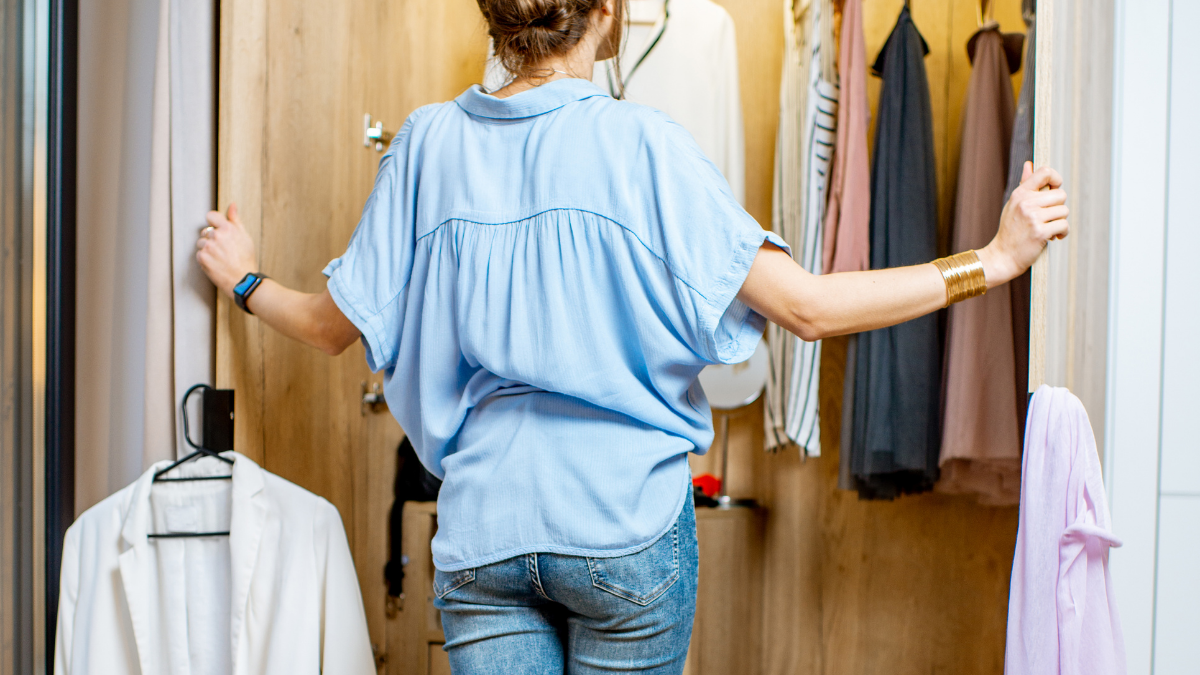
Getting dressed shouldn’t feel like solving a puzzle every morning. When your closet contains dependable pieces that naturally work together, creating an outfit becomes faster, easier, and considerably less stressful.
You don’t need an enormous wardrobe to make that happen. A thoughtfully chosen collection of everyday staples can give you plenty of combinations for work, weekends, errands, travel, and casual plans.
Of course, there’s no universal essentials list. Your climate, lifestyle, workplace, and personal style should always lead the way. Think of these 10 pieces as a flexible starting point you can make entirely your own.
1. A Comfortable Basic T-Shirt
Few pieces work harder than a great T-shirt.
Wear it with jeans for an effortless weekend look, tuck it into trousers when you want something slightly more polished, or layer it beneath a sweater or jacket when temperatures drop.
When choosing yours, pay attention to neckline, sleeve length, fabric weight, fit, and care requirements.
Neutral shades are famously easy to coordinate, but don’t feel restricted to them. A favorite color can be just as versatile when it complements several pieces already in your closet.
2. A Reliable Pair of Jeans
There’s a reason jeans remain an everyday favorite: they can adapt to an impressive number of situations.
Instead of chasing whichever denim silhouette is currently trending, choose a rise, leg shape, and wash that you genuinely enjoy wearing.
Your ideal pair should work with several T-shirts, sweaters, shirts, jackets, and shoes. Change those surrounding pieces and the same jeans can carry you through errands, casual lunches, travel days, and relaxed social plans.
That’s exactly the kind of versatility an everyday wardrobe needs.
3. A Casual Button-Up Shirt
One shirt, plenty of possibilities.
Wear a casual button-up completely buttoned, tuck it into trousers, leave it open over your favorite T-shirt, or use it as a lightweight layer.
Simple colors and understated patterns can be especially easy to mix and match, although the best choice is ultimately whatever complements the rest of your wardrobe.
Pay attention to fabric, too. A crisp shirt creates a different impression from a softer, more relaxed design.
4. Versatile Everyday Pants
Even devoted denim fans can benefit from another option.
Chinos, relaxed trousers, straight-leg pants, or another comfortable silhouette can immediately expand your outfit choices.
Look for something casual enough to wear with a T-shirt but polished enough to pair with a sweater, collared shirt, or jacket.
If one pair of pants works for several parts of your week, you’ve found an everyday winner.
5. A Simple Sweater
When you need warmth without complicating your outfit, reach for a dependable sweater.
Crewnecks, V-necks, cardigans, and other uncomplicated designs can all work beautifully. The right choice depends on your personal style and the clothing you usually wear underneath.
For maximum versatility, look for a sweater you can wear on its own, layer over a T-shirt or shirt, and comfortably fit beneath your favorite jacket or coat.
And don’t forget your climate. Choose a fabric weight you’ll realistically have opportunities to wear.
6. A Casual Sweatshirt
Some days simply call for comfort.
A sweatshirt earns its place in an everyday wardrobe through weekends, errands, travel, working from home, and those wonderfully relaxed days when dressing up isn’t happening.
Simple designs generally coordinate easily with jeans, casual trousers, shorts, and other staples.
Think about silhouette as well. Whether you prefer fitted, classic, or oversized styles, choose proportions that complement the bottoms you already wear.
7. A Lightweight Jacket
A good jacket can transform a basic T-shirt-and-jeans combination in seconds.
It’s also incredibly useful when temperatures fluctuate throughout the day.
Choose an outer layer that comfortably accommodates your usual T-shirts, shirts, or lightweight sweaters underneath. Its color should also coordinate with several of your most frequently worn bottoms.
The easier it is to throw on without reconsidering your entire outfit, the more useful it becomes.
8. Comfortable Casual Shoes
Your most versatile outfit isn’t particularly practical if you can’t comfortably walk around in it.
Everyday shoes should balance comfort, fit, style, weather suitability, and versatility.
Rather than buying footwear for one specific outfit, look for pairs that complement several jeans, trousers, shorts, skirts, dresses, or whatever else makes up your everyday rotation.
The ultimate test is wonderfully simple: can you grab them on your way out without wondering whether they’ll work?
9. A Practical Seasonal Layer
Here’s where a wardrobe checklist needs to adapt to real life.
If you experience cold winters, your essential might be a warm coat or heavier knit. If you live somewhere consistently warm, breathable overshirts or lightweight layers may be considerably more useful.
Choose seasonal pieces that coordinate with your core wardrobe rather than sitting separately from it.
This allows your favorite everyday combinations to keep working as the weather changes.
10. A Slightly More Polished Piece
Even the most casual wardrobe benefits from one easy way to turn things up a notch.
That doesn’t necessarily mean formalwear.
Your polished staple could be a simple dress, skirt, pair of trousers, collared shirt, structured jacket, or another piece that fits your personal style.
The goal is to have something ready when your usual casual combination feels just a little too relaxed for dinner, work, or a social occasion.
Make Your 10 Essentials Work Together
Owning these categories isn’t what makes a wardrobe versatile. Making them interact is.
Imagine one basic T-shirt:
- Pair it with jeans and casual shoes.
- Wear it beneath an open button-up.
- Combine it with trousers and a lightweight jacket.
- Layer a sweater over it when temperatures drop.
One garment suddenly contributes to several completely different outfits.
Apply that thinking across your closet and you’ll get significantly more mileage from every piece.
Build Around Colors You Love Wearing
A coordinated color palette makes this process even easier.
Choose a few foundation colors that work naturally together, then introduce accent shades you genuinely enjoy. Your wardrobe doesn’t have to become completely neutral to be versatile.
When shopping, simply ask: What do I already own that works with this color?
If several answers immediately come to mind, you’re on the right track.
Let Comfort, Fit, and Fabric Make the Final Call
An “essential” isn’t essential when you never want to wear it.
Pay attention to how clothing feels when you sit, walk, bend, and move. Ignore the number on the label when necessary and concentrate on the actual fit.
Fabric deserves equal attention. Consider breathability, stretch, texture, weight, warmth, and washing requirements.
Everyday clothing should fit into your everyday routine—including laundry day.
Make the List Your Own
Don’t love jeans? Replace them.
Never wear button-ups? Skip one.
Live somewhere hot enough that sweaters rarely leave storage? Choose a more useful lightweight layer instead.
Wardrobe essentials aren’t rules. They’re building blocks.
Start with the pieces you already wear constantly, identify what’s missing, and add new staples gradually. When your clothes fit comfortably, coordinate naturally, and suit your real routine, even a relatively small wardrobe can produce an impressive number of effortless outfits.
Leave a Reply