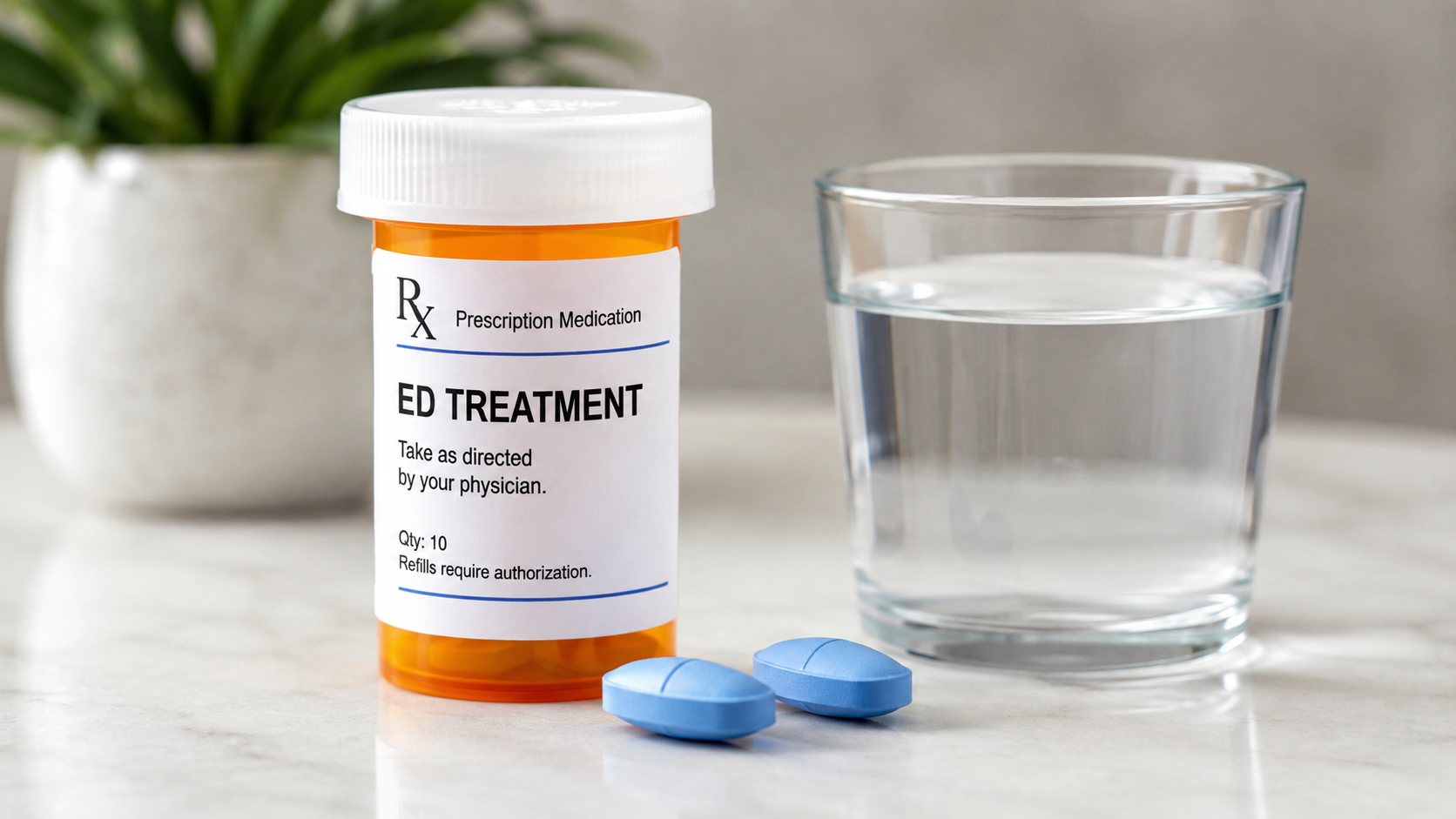
Erectile dysfunction (ED) can affect men at different ages and may develop from physical, psychological, hormonal, or lifestyle-related factors.
Prescription ED treatment gives patients access to medically reviewed therapies designed to help improve the ability to get or maintain an erection. Treatment usually begins with a medical assessment.
A healthcare professional may review symptoms, current medications, existing health conditions, blood pressure, lifestyle habits, and possible causes of ED before recommending treatment.
ED can sometimes be associated with diabetes, cardiovascular disease, high blood pressure, hormonal conditions, certain medications, anxiety, depression, or stress.
What Is Prescription ED Treatment?
Prescription ED treatment refers to medications and medical therapies prescribed after evaluation by a licensed healthcare professional.
Treatment may focus on improving blood flow, addressing an underlying health condition, managing hormone levels, or dealing with psychological factors linked to erectile difficulties.
One commonly prescribed category is PDE5 inhibitors. These medicines increase blood flow to the penis in response to sexual stimulation.
They do not automatically create an erection without sexual arousal.
Common prescription oral medicines include:
- Sildenafil, commonly known by the brand name Viagra
- Tadalafil, commonly known by the brand name Cialis
- Vardenafil
- Avanafil, commonly known by the brand name Stendra
A healthcare professional can determine which medicine and dosage may suit a patient’s medical history and current medications.
How Do Prescription ED Medications Work?
PDE5 inhibitors support the natural process involved in achieving an erection. During sexual stimulation, the body releases nitric oxide.
This helps relax certain muscles and allows increased blood flow into the penis.
PDE5 inhibitors enhance this process, which may make achieving and maintaining an erection easier for some patients.
Individual results may vary depending on the cause of ED, health conditions, medication use, and other factors.
Different ED medications can vary in:
| Factor | What It May Affect |
|---|---|
| Onset time | How soon the medication may begin working |
| Duration | How long its effects may remain available |
| Dosage | The prescribed amount and dosing schedule |
| Food interactions | How meals may affect certain medications |
| Side effects | Headache, flushing, indigestion, nasal congestion, or other reactions |
| Drug interactions | Compatibility with current medications |
A licensed healthcare professional can help select an option based on these factors.
Sildenafil for Erectile Dysfunction
Sildenafil is a widely prescribed oral ED medication. It belongs to the PDE5 inhibitor drug class and helps increase penile blood flow during sexual stimulation.
The medication is generally taken before planned sexual activity according to a clinician’s instructions. Certain meals may affect how quickly sildenafil takes effect.
Patients should follow their prescribed dosage rather than changing the amount independently.
Tadalafil for Erectile Dysfunction
Tadalafil is another PDE5 inhibitor used for erectile dysfunction. Depending on the prescription, tadalafil can be used when needed before sexual activity or taken at a lower daily dose.
Its longer duration of activity may suit patients seeking greater flexibility around timing.
The right dosing schedule depends on medical history, health conditions, and professional guidance.
Vardenafil and Avanafil
Vardenafil and avanafil are additional prescription ED medications from the PDE5 inhibitor class.
Their onset, duration, dosing instructions, side-effect profiles, and interactions may differ from sildenafil and tadalafil.
A clinician may recommend one based on individual medical factors and treatment response.
Are Prescription ED Pills Safe?
Prescription ED medications can be appropriate for many patients when used under medical supervision, yet they are not suitable for everyone.
PDE5 inhibitors may be unsafe for people taking nitrate medications, which are often prescribed for chest pain.
Combining nitrates with certain ED medications can cause a dangerous drop in blood pressure.
Patients should tell their healthcare professional about prescription drugs, over-the-counter medicines, supplements, and existing health conditions before beginning ED medication.
Medical guidance is especially important for people with cardiovascular problems, very low blood pressure, certain eye conditions, kidney disease, liver disease, or other significant medical concerns.
Possible Side Effects of ED Medication
Side effects depend on the medication and individual response. Possible effects associated with oral ED medicines may include:
- Headache
- Facial flushing
- Nasal congestion
- Indigestion
- Dizziness
- Muscle aches
- Back discomfort
- Temporary visual changes
Serious reactions are uncommon, yet urgent medical care may be needed for an erection lasting longer than four hours or sudden hearing or vision loss.
Patients experiencing severe symptoms should seek immediate medical attention.
What Happens if ED Pills Do Not Work?
Oral medication is one treatment approach. Some patients may respond better to another therapy.
Medical alternatives can include:
Injectable ED Medication
Certain prescription medicines can be injected into the penis to increase blood flow and produce an erection.
A healthcare professional should provide instructions before a patient uses injectable treatment.
Urethral Medication
Some ED medicines can be administered through a small suppository inserted into the urethra. This method may be prescribed when oral medication is unsuitable.
Vacuum Erection Devices
A vacuum erection device uses a tube and pump to draw blood into the penis. A tension ring can then help maintain the erection temporarily.
Penile Implants
Penile implants involve surgery and are generally discussed after less invasive treatment methods have been tried.
Inflatable and semirigid devices are among the available implant types.
Can Testosterone Treat Erectile Dysfunction?
Low testosterone may contribute to ED in some patients. Testosterone therapy may be prescribed when testing confirms low hormone levels and a clinician determines treatment is appropriate.
Testosterone treatment is not automatically appropriate for every person experiencing ED.
Medical testing can help determine if a hormone issue is contributing to symptoms.
Lifestyle Changes May Support ED Treatment
A prescription may form one part of an ED management plan. Healthcare professionals may recommend lifestyle changes that support cardiovascular and sexual health.
These may include:
- Quitting smoking
- Limiting alcohol
- Increasing regular physical activity
- Maintaining a healthy body weight
- Following a balanced eating plan
- Avoiding recreational drugs
- Managing stress
NIDDK notes that lifestyle habits can influence erectile function, particularly when cardiovascular health or blood circulation plays a role.
Can Stress or Anxiety Cause Erectile Dysfunction?
Yes. Stress, anxiety, depression, relationship concerns, and other emotional factors may contribute to erectile difficulties or make existing symptoms harder to manage.
Counseling or therapy may be recommended when psychological factors appear to play a role. Treatment can sometimes combine medical therapy with psychological support.
Why Is a Medical Assessment Important?
ED may occasionally signal another health issue. Diabetes, high blood pressure, cardiovascular disease, neurological conditions, hormonal problems, and medication side effects are among the possible causes.
A professional assessment may help identify contributing factors rather than treating symptoms alone.
During an appointment, a clinician may ask about:
- How long ED symptoms have occurred
- Frequency of erectile difficulties
- Current prescription medicines
- Existing medical conditions
- Sexual health history
- Lifestyle habits
- Stress or mental health concerns
Testing may be recommended when a clinician suspects diabetes, hormone changes, cardiovascular problems, or another medical cause.
Prescription ED Treatment vs Nonprescription Products
Prescription ED medications have established dosing standards and are provided under professional supervision. Products marketed online as herbal or “natural” sexual enhancement supplements may not have the same level of medical oversight.
NIDDK advises discussing supplements and alternative products with a healthcare professional before using them for ED.
Patients seeking treatment online should use licensed medical services and legitimate pharmacies.
Frequently Asked Questions About Prescription ED Treatment
Do you need a prescription for ED medication?
Many established oral ED medications, including sildenafil and tadalafil, require a prescription depending on the country and local regulations.
Which ED medicine works best?
There is no single medication that suits every patient. The appropriate treatment depends on medical history, other medicines, treatment goals, side effects, and individual response.
Does ED medication increase sexual desire?
PDE5 inhibitors primarily affect blood flow. They do not directly increase sexual desire, and sexual stimulation is generally needed for the medication to assist with an erection.
Can ED treatment be used every day?
Some treatment plans may involve daily dosing, particularly certain tadalafil prescriptions. Daily use should occur only when prescribed by a healthcare professional.
Can younger adults experience erectile dysfunction?
Yes. ED can occur at different ages. Psychological stress, medication use, lifestyle factors, hormonal problems, medical conditions, and blood-flow issues may contribute.
When should you talk with a doctor?
Medical advice may be appropriate when erectile problems continue, happen frequently, cause concern, or occur alongside other symptoms. Professional evaluation may identify a treatable underlying cause.
Finding an Appropriate Prescription ED Treatment
Prescription ED treatment can include oral medications, injections, urethral medicines, hormone therapy in selected cases, vacuum devices, and surgical treatments.
The appropriate choice depends on the cause of ED, medical history, existing medications, treatment preferences, and response to previous therapies.
With proper assessment, patients can discuss treatment options, possible side effects, drug interactions, and health factors that may influence treatment results.
Starting with a licensed healthcare professional allows ED symptoms to be evaluated safely.
Leave a Reply