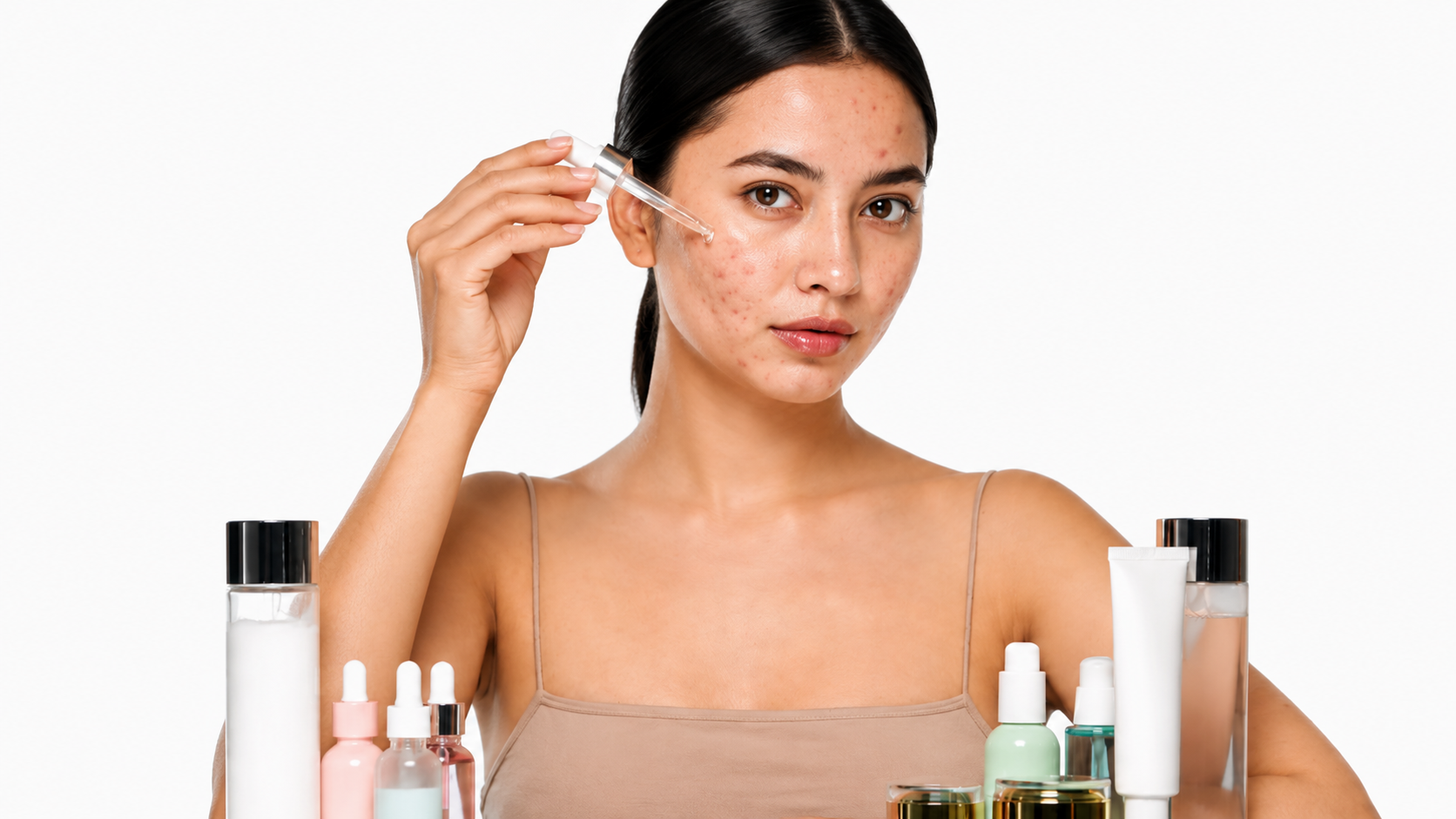
Dealing with breakouts can make choosing skincare feel surprisingly complicated. With cleansers, serums, spot treatments, moisturizers, and exfoliants competing for attention, it can be difficult to know what your skin actually needs.
The right acne skincare products can help manage excess oil, keep pores clear, support the skin barrier, and reduce the appearance of existing blemishes.
The key is not necessarily using more products. A simple routine built around suitable active ingredients and consistent use may be easier on acne-prone skin and more practical for everyday care.
What Are Acne Skincare Products?
Acne skincare products are cleansers, treatments, moisturizers, and other topical products formulated to address factors associated with breakouts.
Depending on the formula, they may help remove excess oil, unclog pores, reduce acne-causing bacteria, or calm visible redness.
Common products include:
- Facial cleansers
- Salicylic acid treatments
- Benzoyl peroxide products
- Adapalene or other topical retinoids
- Niacinamide serums
- Lightweight moisturizers
- Non-comedogenic sunscreens
- Hydrocolloid acne patches
Your ideal combination may depend on your skin type, acne severity, sensitivity, and other products you already use.
Which Ingredients Should You Look for in Acne Skincare Products?
Understanding active ingredients can make shopping for acne skincare products much easier. Different ingredients target different aspects of acne.
| Ingredient | What It May Help With | Commonly Found In |
|---|---|---|
| Salicylic acid | Clogged pores and excess oil | Cleansers, toners, treatments |
| Benzoyl peroxide | Acne-causing bacteria and inflamed pimples | Cleansers, gels, spot treatments |
| Adapalene | Clogged pores and recurring breakouts | Topical acne treatments |
| Niacinamide | Oiliness and visible redness | Serums and moisturizers |
| Azelaic acid | Acne, redness, and post-acne marks | Creams, gels, serums |
| Ceramides | Supporting the skin barrier | Moisturizers and cleansers |
Introducing active ingredients gradually may help reduce dryness and irritation.
Salicylic Acid for Clogged Pores
Salicylic acid is a beta hydroxy acid commonly used in acne treatment products. Because it can penetrate oily pores, it may help loosen dead skin cells and debris that contribute to blackheads and whiteheads.
People with oily or combination skin often find salicylic acid particularly useful. However, using several exfoliating products at the same time may cause dryness or irritation.
Benzoyl Peroxide for Inflamed Breakouts
Benzoyl peroxide is another widely used ingredient in skincare for acne-prone skin. It works differently from salicylic acid and can help reduce bacteria associated with acne.
It is available in cleansers, leave-on treatments, and spot products at different concentrations. Higher concentrations are not automatically better, especially if your skin is sensitive.
Benzoyl peroxide can cause dryness and may bleach towels, pillowcases, or clothing, so careful application is important.
Retinoids for an Acne-Prone Skincare Routine
Topical retinoids such as adapalene can help prevent pores from becoming clogged and may reduce recurring acne over time. Unlike products designed only for individual pimples, retinoids are generally used across acne-prone areas.
Because retinoids can initially cause dryness, peeling, or irritation, gradual introduction is often recommended. Daily sunscreen is especially important when your skincare routine includes ingredients that can make skin more sensitive to sunlight.
Why Moisturizer Still Matters for Acne-Prone Skin
Skipping moisturizer because your skin feels oily can sometimes backfire. Many acne skincare products contain active ingredients that can dry or irritate the skin.
A lightweight moisturizer can help maintain the skin barrier and improve comfort while using acne treatments.
Look for descriptions such as:
- Non-comedogenic
- Oil-free
- Fragrance-free
- Lightweight
- Suitable for sensitive or acne-prone skin
Ingredients such as ceramides, glycerin, and hyaluronic acid may provide hydration without requiring a heavy formula.
How to Build a Morning Acne Skincare Routine
Your morning routine does not need numerous steps. Keeping it simple may reduce the chance of irritation.
A basic routine could include:
- Gentle cleanser: Remove sweat, oil, and residue without aggressively stripping the skin.
- Acne treatment: Apply an appropriate treatment based on your skin’s needs and product directions.
- Moisturizer: Add hydration and support your skin barrier.
- Broad-spectrum sunscreen: Use SPF 30 or higher to protect your skin from ultraviolet exposure.
Sunscreen is particularly valuable if you have post-acne marks because sun exposure can make discoloration more noticeable.
How to Build an Evening Acne Skincare Routine
Evening skincare gives you another opportunity to cleanse your skin and use treatments suited to your routine.
A straightforward routine might look like this:
- Remove makeup and sunscreen.
- Wash with a gentle facial cleanser.
- Apply your chosen acne treatment as directed.
- Finish with a non-comedogenic moisturizer.
Avoid introducing several powerful active ingredients simultaneously. Adding products individually makes it easier to identify which formulas work well for your skin and which ones cause irritation.
Should You Use Acne Spot Treatments?
Spot treatments can be convenient when you have an occasional inflamed blemish. Benzoyl peroxide, salicylic acid, and hydrocolloid patches are common choices.
However, spot treatments are not always enough for people who regularly develop acne across larger areas. In these cases, a preventive treatment applied appropriately to acne-prone areas may be more useful than repeatedly treating individual pimples.
Common Mistakes When Using Acne Skincare Products
Even well-formulated products can cause problems when used incorrectly. One common mistake is assuming stronger treatments will produce faster results.
Try to avoid:
- Scrubbing acne aggressively
- Picking or squeezing pimples
- Using too many exfoliating acids together
- Frequently switching products
- Applying more treatment than directed
- Skipping moisturizer because your skin is oily
- Forgetting daily sun protection
Acne treatments generally require consistent use before meaningful changes become noticeable.
How Long Do Acne Skincare Products Take to Work?
Acne usually does not disappear overnight. Depending on the ingredient and severity of your breakouts, improvements may take several weeks or longer.
Some products, particularly retinoids, can initially cause irritation or changes in breakouts as your skin adjusts. Following product directions and introducing new treatments gradually may make the routine easier to tolerate.
How Do You Choose Products for Different Skin Types?
Not everyone with acne has oily skin. Acne can occur alongside dry, combination, sensitive, or mature skin.
Oily skin: Lightweight moisturizers and ingredients such as salicylic acid may be useful.
Dry skin: Gentle cleansers, hydrating moisturizers, and careful use of acne treatments can help minimize additional dryness.
Sensitive skin: Fragrance-free products and gradual introduction of active ingredients may reduce irritation.
Combination skin: You may need lighter products on oily areas and additional hydration where your skin tends to feel dry.
Paying attention to how your skin responds is often more useful than following a complicated routine designed for someone else’s skin type.
Can Acne Skincare Products Help With Acne Marks?
Some ingredients used for acne may also improve the appearance of post-acne discoloration over time. Azelaic acid, retinoids, niacinamide, and certain exfoliating acids are commonly found in products designed for this purpose.
Daily sunscreen also matters because UV exposure can contribute to persistent discoloration.
Deep acne scars are different from temporary post-acne marks and may require professional procedures rather than over-the-counter skincare alone.
When Should You See a Dermatologist?
Over-the-counter acne skincare products may be enough for mild breakouts, but professional treatment can be important for persistent or severe acne.
Consider consulting a dermatologist or other qualified healthcare professional if you experience:
- Painful cysts or nodules
- Acne that is leaving scars
- Widespread or persistent breakouts
- Significant skin irritation
- Acne that does not improve with appropriate over-the-counter care
- Breakouts that substantially affect your quality of life
A healthcare professional can evaluate possible causes and determine whether prescription treatment or another approach may be appropriate.
A Simple Approach to Choosing Acne Skincare Products
Finding effective acne skincare products does not require filling your bathroom cabinet with complicated formulas. Start with the basics: a gentle cleanser, an appropriate acne treatment, a moisturizer, and daily sunscreen.
Look at active ingredients rather than marketing claims, introduce treatments gradually, and give your routine enough time to work. Most importantly, adjust your skincare based on how your skin responds.
Leave a Reply