A good anti-aging skincare for men routine does not need to involve a crowded bathroom shelf or a complicated ten-step process.
Consistent basics can help your skin look smoother, more hydrated, and refreshed as it changes with age. Daily sun exposure, dryness, shaving, stress, and normal changes in collagen can all affect how your skin looks over time.
The key is choosing products that match your skin type and using them consistently. Cleansing, moisturizing, applying sunscreen, and gradually introducing targeted ingredients such as retinoids or vitamin C may help address common concerns like fine lines, uneven tone, and rough texture.
Anti-Aging Skincare for Men Starts With Consistent Daily Care
Skin naturally changes as you get older. Collagen and elastin production may gradually decline, while years of sun exposure can contribute to visible lines, discoloration, and changes in texture.
An effective routine focuses on supporting your skin rather than trying to stop aging altogether. Your priorities can include keeping your skin hydrated, protecting it from ultraviolet (UV) radiation, maintaining the skin barrier, and selecting targeted ingredients based on your concerns.
Consistency matters more than using a large number of products at once.
What Are Common Signs of Skin Aging in Men?
Skin aging looks different from person to person. Genetics, sun exposure, lifestyle, skincare habits, and environmental factors can all influence when changes become noticeable.
Common changes may include:
- Fine lines around the eyes and forehead
- Deeper-looking wrinkles
- Uneven skin tone
- Dark spots from accumulated sun exposure
- Rough or dry texture
- Reduced firmness
- Dull-looking skin
- More noticeable pores
These changes are normal. Skincare can focus on maintaining healthy-looking skin and reducing the appearance of certain concerns rather than trying to eliminate every sign of aging.
A Simple Morning Anti-Aging Skincare Routine
Your morning routine can focus primarily on hydration and protection.
1. Wash With a Gentle Facial Cleanser
Cleansing helps remove excess oil, sweat, and residue that accumulate on your skin.
Choose a gentle cleanser suitable for your skin type. If your skin tends to feel tight or dry after washing, consider a creamier or hydrating formula.
Men with oily skin may prefer a lightweight gel or foaming cleanser that does not leave the face feeling stripped.
Use lukewarm rather than very hot water, which may contribute to dryness.
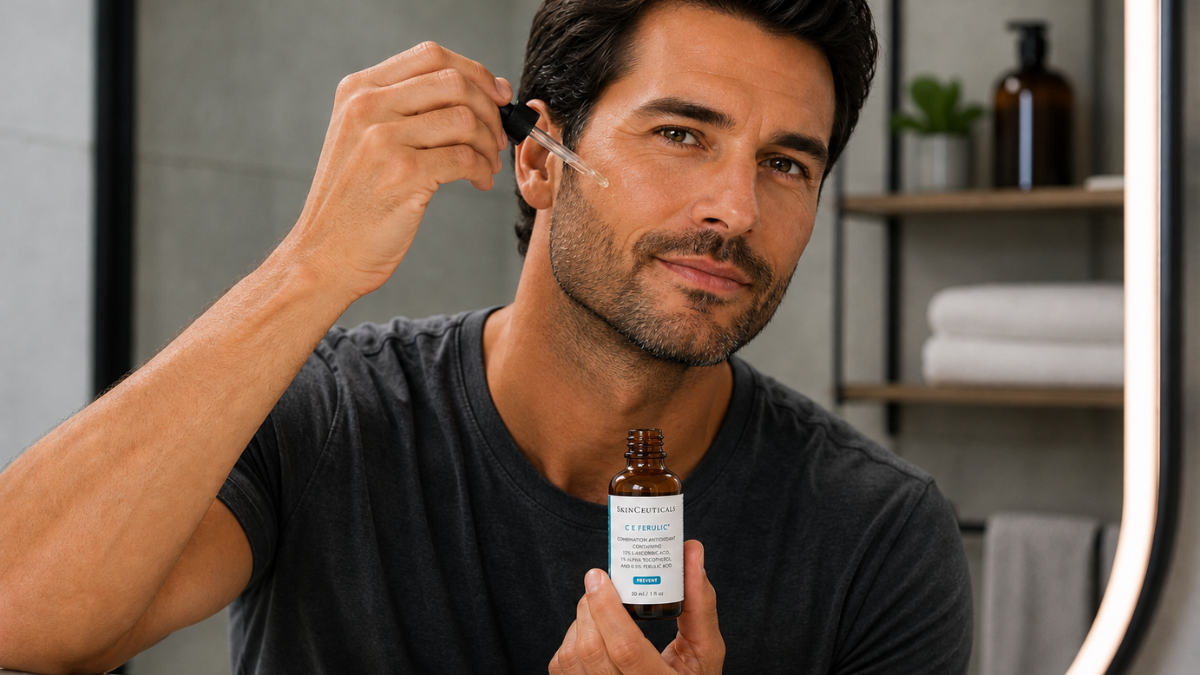
2. Consider a Vitamin C Serum
Vitamin C is an antioxidant commonly included in skincare products designed to address dullness and uneven tone. It may also help protect skin from oxidative stress caused by environmental exposure.
Apply a small amount after cleansing and before moisturizer. If you have sensitive skin, consider starting with a lower concentration or using it less frequently while your skin adjusts.
3. Apply a Facial Moisturizer
Moisturizer helps maintain hydration and support your skin barrier.
Look for ingredients such as:
- Ceramides
- Glycerin
- Hyaluronic acid
- Squalane
- Niacinamide
Your ideal texture depends on your skin. Lightweight lotions may suit oily or combination skin, while richer creams can feel more comfortable on dry skin.
4. Finish With Broad-Spectrum Sunscreen
Daily sunscreen is one of the most important components of an anti-aging skincare for men routine.
UV radiation contributes to premature visible skin aging and can increase the risk of skin cancer. Choose a broad-spectrum sunscreen with SPF 30 or higher and apply it to exposed skin before going outdoors.
Remember commonly missed areas such as your ears, neck, and hairline. Reapplication is particularly important when spending extended periods outside, sweating, or swimming.
What Should Your Evening Skincare Routine Include?
Nighttime provides an opportunity to cleanse away the day and use targeted skincare ingredients.
A straightforward evening routine might look like this:
| Step | Product | Main Purpose |
|---|---|---|
| 1 | Gentle cleanser | Removes oil, sunscreen, and daily buildup |
| 2 | Retinoid or targeted treatment | Addresses specific skin concerns |
| 3 | Moisturizer | Supports hydration and the skin barrier |
| 4 | Eye cream, optional | Adds hydration around the eye area |
You do not necessarily need every product. A cleanser, suitable treatment, and moisturizer can provide a manageable foundation.
How Can Retinoids Fit Into Your Routine?
Retinoids are vitamin A derivatives frequently used in anti-aging skincare. Depending on the specific product, they may help improve the appearance of fine lines, uneven pigmentation, and skin texture over time.
Retinol is available in many over-the-counter products, while stronger retinoids may require a prescription.
If you are new to retinol, introduce it gradually. You might begin using it once or twice a week at night before slowly increasing frequency if your skin tolerates it.
Retinoids can cause dryness, peeling, redness, or irritation, particularly when first introduced. Using moisturizer and avoiding several potentially irritating products in the same routine may make the adjustment easier.
Which Anti-Aging Ingredients Are Worth Knowing?
You will encounter plenty of ingredients while shopping for men’s skincare products, but a few are especially common in routines targeting visible signs of aging.
Retinol
Retinol may help improve the appearance of fine lines and uneven texture with consistent use.
Vitamin C
Vitamin C provides antioxidant benefits and may support a brighter, more even-looking complexion.
Niacinamide
Niacinamide is a form of vitamin B3 that may support the skin barrier while helping improve the appearance of uneven tone and texture.
Hyaluronic Acid
Hyaluronic acid attracts water and can help skin feel hydrated and temporarily appear plumper.
Ceramides
Ceramides are naturally present in the skin barrier. Skincare products containing ceramides can be useful for maintaining moisture, particularly if your skin is dry or easily irritated.
Alpha Hydroxy Acids
Alpha hydroxy acids, or AHAs, exfoliate the skin’s surface and may improve the appearance of dullness and uneven texture. Start slowly because frequent exfoliation can cause irritation.
Do Men Need Special Anti-Aging Products?
Not necessarily.
Although some products are specifically marketed as skincare for men, ingredients and formulation generally matter more than gender-specific packaging.
Your skin type, concerns, sensitivity, shaving habits, and preferred product texture are more useful factors when selecting products.
For example, someone with oily skin may prefer gel-based moisturizers regardless of how a product is marketed. Someone dealing with dryness may benefit from richer creams containing ceramides or other moisturizing ingredients.
Choose products based on what your skin actually needs.
How Does Shaving Affect an Anti-Aging Routine?
Regular shaving can influence how your skin feels, particularly if you experience razor burn, dryness, or ingrown hairs.
To make shaving gentler:
- Shave after your skin has been exposed to warm water.
- Use shaving cream or gel to reduce friction.
- Use a clean, sharp razor.
- Avoid repeatedly passing the razor over the same area.
- Apply a gentle moisturizer afterward.
- Avoid strongly fragranced aftershaves if they irritate your skin.
If you use retinol or exfoliating acids, pay attention to how your skin responds around shaving days. Combining shaving with several irritating products may leave sensitive skin uncomfortable.
How Often Should You Exfoliate?
Exfoliation can remove dead surface skin cells and help improve the appearance of rough or dull skin. However, more exfoliation does not necessarily mean better results.
Depending on your skin and the product, once or twice weekly may be enough when getting started.
Avoid aggressively scrubbing your face. Chemical exfoliants such as AHAs and beta hydroxy acids (BHAs) can provide an alternative to abrasive physical scrubs, although they can still cause irritation when overused.
If your face becomes persistently red, flaky, tender, or uncomfortable, reduce your exfoliation frequency and simplify your routine.
What Routine Works for Different Skin Types?
Your anti-aging skincare routine should reflect how your skin behaves.
Oily Skin
Look for lightweight, non-comedogenic products. Gel cleansers and lighter moisturizers may feel more comfortable while still providing necessary hydration.
Dry Skin
Prioritize gentle cleansing and richer moisturizers containing ingredients such as ceramides, glycerin, or hyaluronic acid. Avoid excessive exfoliation that may worsen dryness.
Sensitive Skin
Introduce new active ingredients one at a time. Fragrance-free formulas and simple ingredient lists may be useful when your skin reacts easily.
Combination Skin
You may need lighter products on oilier areas and additional moisture where your skin feels dry.
Common Anti-Aging Skincare Mistakes to Avoid
Even a thoughtfully chosen routine can become irritating when too many products are introduced at once.
Common mistakes include:
- Skipping sunscreen
- Starting several active ingredients simultaneously
- Using retinol too frequently at first
- Over-exfoliating
- Scrubbing the face aggressively
- Washing with very hot water
- Ignoring the neck and ears when applying sunscreen
- Switching products before giving your routine reasonable time
- Assuming expensive products automatically perform better
A simpler routine can make it easier to identify which products work well for your skin.
Can Lifestyle Habits Support Healthy-Looking Skin?
Skincare products are only one part of maintaining your skin.
Helpful everyday habits can include getting adequate sleep, eating a balanced diet, staying physically active, avoiding smoking, limiting excessive alcohol consumption, and protecting your skin from prolonged sun exposure.
Hydration also supports normal body functions, although drinking extra water should not be viewed as a replacement for topical moisturizer or sunscreen.
When Should You See a Dermatologist?
Consider speaking with a dermatologist if you experience persistent irritation, unexplained skin changes, severe acne, troublesome pigmentation, or a spot or mole that changes in size, shape, or color.
Professional guidance can also be useful if over-the-counter products are not addressing your concerns or you are interested in prescription retinoids and in-office treatments.
A dermatologist can recommend options based on your skin type, medical history, and individual goals.
Making Anti-Aging Skincare Part of Your Daily Routine
Effective anti-aging skincare for men can be surprisingly straightforward. Start with the fundamentals: gentle cleansing, consistent moisturizing, and broad-spectrum SPF 30 or higher every day.
Once those habits are established, ingredients such as retinol, vitamin C, niacinamide, or exfoliating acids can be introduced gradually according to your skin’s needs.
Avoid chasing instant transformations or adding every trending ingredient to your routine. Skin changes take time, and some active ingredients require weeks or months of consistent use before visible differences may appear.
A manageable routine that you can follow regularly is usually more practical than an elaborate routine you abandon after a few days.
Leave a Reply