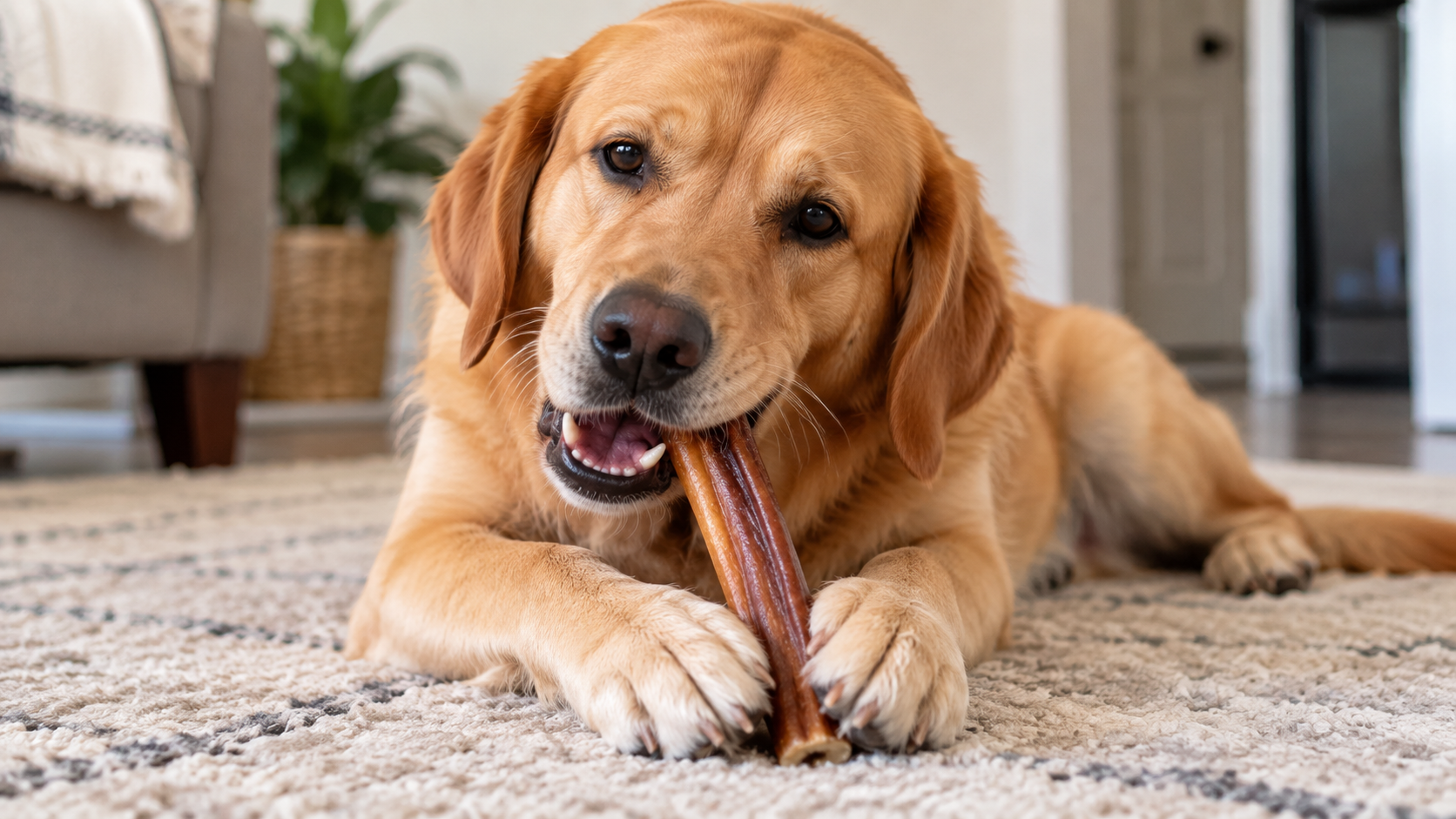
If your dog loves chewing, bully sticks for dogs may be one option worth researching. These edible treats are typically made from dried bull or steer pizzle and are sold in different lengths, thicknesses, and shapes.
They can keep dogs occupied while satisfying their natural urge to chew, yet the right product depends on your dog’s size, chewing habits, diet, and dental condition.
Before buying a pack, look beyond length and price. Ingredient labeling, thickness, calorie content, processing, and your dog’s chewing behavior can all affect which product makes sense.
What Are Bully Sticks for Dogs?
Bully sticks are edible animal-based chews generally made from bull or steer pizzle. Many products contain one ingredient: beef. They are dried or otherwise processed to create the firm texture dogs gradually soften while chewing.
Unlike rawhide, bully sticks are considered digestible. They also tend to soften during chewing instead of breaking into sharp splinters.
However, large pieces can still create choking or gastrointestinal obstruction risks, particularly for dogs that swallow chews rather than slowly gnawing them.
For shoppers comparing natural dog chews, checking the ingredient list is a sensible starting point. Products marketed as flavored or enhanced may contain additional ingredients, so read the package rather than assuming every bully stick contains beef alone.
Why Do Dog Owners Buy Bully Sticks?
One practical reason is chewing time. Depending on thickness and your dog’s chewing strength, a bully stick may take considerably longer to finish than a small biscuit.
This can make them useful when you want an edible chew that keeps your dog occupied. Dogs that chew aggressively may finish thinner sticks quickly, while thicker or braided versions can take longer.
Bully sticks may also interest shoppers looking for single ingredient dog treats. Still, check the label because recipes and processing methods can differ between manufacturers.
Can Chewing Help With Dental Hygiene?
Chewing creates mechanical friction against the teeth. The American Kennel Club notes that chewing can help scrape plaque and buildup from a dog’s teeth.
That makes bully sticks relevant when comparing them with dog dental chews, although they should not replace routine dental care. Tooth brushing and veterinary dental examinations remain important parts of maintaining your dog’s oral health.
How to Choose the Right Bully Stick
A good purchase should match your dog’s body size and chewing style rather than relying on package claims alone.
Check the Ingredient List
Start by reading the ingredients. If you specifically want a simple beef chew, look for a product that clearly identifies its animal source and does not include unnecessary flavorings or additives.
Match Thickness to Your Dog’s Chewing Style
Thickness can matter as much as length.
A light or moderate chewer may do well with a standard stick. An aggressive chewer may finish that same product rapidly and could benefit from a thicker version.
Braided options can provide another format for dogs that quickly work through straight sticks. However, no shape eliminates choking risks, so supervision remains necessary.
Select an Appropriate Size
Avoid giving a large dog a very small chew that could easily be swallowed whole. The chew should be large enough for your dog to hold and gnaw rather than gulp.
As it becomes shorter, pay closer attention. The AKC advises taking the remaining nub away before a dog can swallow it and notes that a holder can help with dogs prone to biting off or swallowing large pieces.
Look at Processing and Packaging
When comparing long lasting dog chews, examine the manufacturer’s information about processing, storage, and handling.
Animal-based treats can carry bacteria. A published study examining 26 bully sticks detected several types of bacteria in some samples, though the sample was small and should not be interpreted as representing every product currently sold.
Washing your hands after handling animal-based treats is a sensible hygiene practice.
Are Bully Sticks High in Calories?
They can contain a meaningful number of calories, especially for smaller dogs.
A 2013 study found an average of about 15 calories per inch among the bully sticks analyzed, with measured values ranging from 9 to 22 calories per inch.
The five sticks analyzed for calories averaged 88 calories each. Because the sample was small and products vary, these figures work better as context than as a calorie count for every product. Check manufacturer nutrition information when available.
That matters if you’re comparing bully sticks with other healthy dog treats. Treat calories need to fit into your dog’s overall diet rather than being treated as nutritionally invisible extras.
Dogs with weight-management needs or medical dietary restrictions may need a different chew or a veterinarian-approved feeding plan.
Bully Stick Types Compared
| Type | Potential Fit | Shopping Consideration |
|---|---|---|
| Standard straight | Moderate chewers | Easy to find in several lengths |
| Thick | Strong chewers | May take longer to consume |
| Braided | Dogs needing extended chewing activity | Usually bulkier than straight versions |
| Thin | Small or gentle chewers | Strong chewers may finish quickly |
| Low-odor | Indoor chewing | Odor reduction does not necessarily mean odor-free |
| Short pieces | Smaller dogs | Pay close attention to swallowing risk |
Rather than automatically choosing the thickest product, select a format appropriate for your dog’s mouth size, chewing strength, and eating habits.
Are Bully Sticks Suitable for Puppies?
Bully sticks for puppies may be suitable for some young dogs that can safely chew solid treats. The AKC states that puppies can have bully sticks once they can chew hard food or treats independently.
Still, puppies vary greatly in size, dental development, and chewing behavior. Pick a suitably sized chew and supervise the entire session.
If your puppy tries to swallow large sections, remove the chew. Puppies with dental issues, digestive concerns, or special diets should be assessed by a veterinarian before introducing a new edible chew.
Bully Sticks vs. Rawhide
One common buying question is how bully sticks compare with rawhide.
Rawhide can be difficult to digest, and swallowed pieces may create an obstruction risk. Bully sticks are generally digestible and soften during chewing, though large swallowed sections can still cause choking or blockage.
Neither option should be handed to a dog without monitoring.
How Often Can You Give Your Dog a Bully Stick?
There isn’t one feeding schedule that suits every dog. Frequency depends on factors such as:
- Body weight and daily calorie needs
- Size and calorie content of the chew
- Activity level
- Regular diet
- Other treats given during the day
- Digestive tolerance
- Medical or weight-management needs
Because bully sticks can add substantial calories, giving an entire large stick frequently may not suit every dog. For specific feeding guidance, particularly for dogs with health or weight concerns, ask your veterinarian.
How to Give a Bully Stick Safely
Supervision is one of the simplest precautions you can take. Watch how your dog handles a new chew before assuming it can be left unattended.
Take the chew away if your dog starts tearing off large pieces or if the remaining section becomes small enough to swallow. A purpose-made holder may help reduce the chance of gulping the final piece.
Wash your hands after handling animal-derived treats and keep them away from surfaces used to prepare human food.
Good hygiene is especially relevant in households with young children, older adults, pregnant people, or anyone with a weakened immune system.
What Should You Check Before Buying?
When comparing products, focus on information that directly affects suitability for your dog:
- Clearly stated ingredients and animal source
- Appropriate length and thickness
- Available calorie information
- Manufacturer handling and storage directions
- Packaging condition
- Your dog’s chewing strength
- Your dog’s dietary needs
Price per stick can be useful, yet pack size alone does not tell you how long each chew will last. A thicker product that suits your dog’s chewing behavior may provide different value than a larger pack of thin sticks.
Frequently Asked Questions
Are bully sticks fully edible?
Yes, bully sticks are designed as edible chews and are generally digestible. However, swallowing a large piece can still create a choking or intestinal obstruction risk.
Do bully sticks splinter?
They generally soften and wear down as dogs chew rather than splintering in the same manner as some hard chews. That does not remove the need for supervision.
Why do bully sticks smell?
They are animal-derived products, so some natural odor can remain after processing. Low-odor versions are available, although odor levels can differ by manufacturer and product.
Can dogs eat a whole bully stick?
A dog may gradually consume most of one, but the final small piece can become a swallowing hazard. Remove the remaining nub once it becomes small enough for your dog to gulp.
Are thicker bully sticks better?
Not automatically. Thickness should match your dog’s size and chewing strength. A heavy chewer may benefit from a thicker option, while a smaller or gentler chewer may need something easier to manage.
Choosing a Bully Stick That Fits Your Dog
The best purchase starts with your individual dog. Check ingredients, size, thickness, calorie information, and manufacturer instructions before buying. Then observe how your dog actually chews the product.
Bully sticks can provide an edible chewing activity, yet they still require sensible portioning and supervision.
Leave a Reply