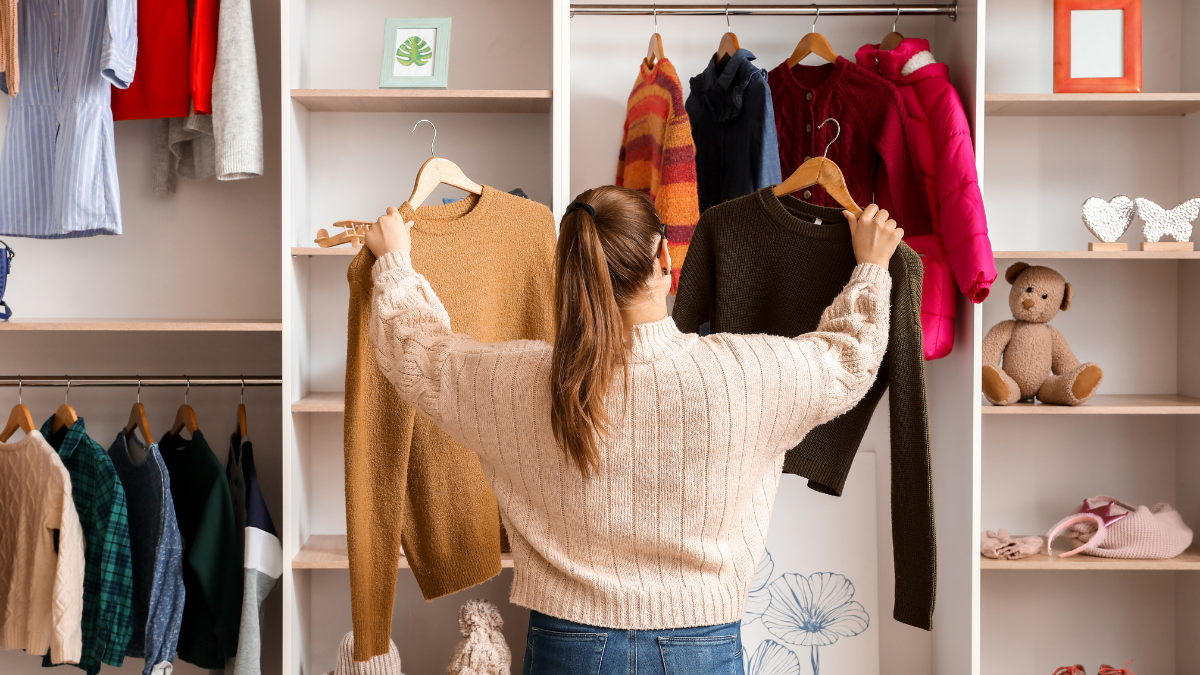
A versatile casual wardrobe isn’t about owning more clothes. It’s about having more ways to wear the clothes you already own.
When your favorite tops work with several bottoms, your layers coordinate naturally, and your shoes complement multiple outfits, getting dressed becomes much easier. You can create noticeably different looks without constantly adding new pieces to your closet.
Ready to make your wardrobe work a little harder? These eight simple strategies can help.
1. Build Around Colors That Work Together
Color is one of the easiest places to start.
Choose a few dependable base colors that coordinate naturally. Neutrals can provide a flexible foundation, but don’t feel like everything has to be black, white, gray, or beige. Bring in colors you genuinely enjoy wearing.
The trick is connection.
Before adding a new color to your wardrobe, picture it with several pieces you already own. A simple T-shirt becomes far more useful when it works with your favorite jeans, casual pants, shorts, skirts, and layering pieces.
You don’t need everything to match. You simply want enough overlap that creating outfits doesn’t feel like solving a puzzle every morning.
2. Choose Tops and Bottoms That Play Well Together
A versatile shirt shouldn’t have only one perfect partner.
Look for tops you can pair with multiple bottoms and bottoms that work with different shirts, sweaters, and layers.
Depending on your personal style, useful options might include:
- Basic T-shirts
- Long-sleeve shirts
- Casual button-ups
- Simple sweaters
- Sweatshirts
- Lightweight knitwear
You certainly don’t need all of them.
Choose the categories you genuinely wear, then focus on pieces that give you several outfit possibilities rather than one predetermined look.
The same thinking applies to jeans and casual pants. Straight-leg denim, relaxed jeans, chinos, or casual trousers can all provide versatility when they coordinate with multiple tops and shoes.
3. Use Layers to Transform Simple Outfits
Here’s where basic clothing becomes much more interesting.
Take your favorite T-shirt and jeans. Wear them alone and you’ve got an easy casual outfit.
Now add an open button-up.
Tomorrow, switch it for a cardigan.
Next time, throw on a lightweight jacket.
The foundation barely changed, but the overall outfit did.
Useful layering pieces can include cardigans, overshirts, uncomplicated sweaters, lightweight jackets, and other easy outer layers that complement several outfits.
Just make sure your layers suit your climate. The most versatile jacket in the world won’t help much if it’s too warm to wear where you live.
4. Find Jeans and Pants You Can Dress Up or Down
Great everyday bottoms act as anchors for the rest of your wardrobe.
Look for jeans and pants that feel comfortable enough for casual days but can also look more put-together when paired with different tops, layers, and footwear.
Imagine one pair of jeans with a T-shirt and casual shoes. Then picture those same jeans with a button-up, sweater, or polished jacket.
If both versions work, you’ve found a useful multitasker.
Fit matters here too. Rather than choosing a silhouette solely because it’s currently popular, find a rise and shape that feel comfortable and complement the tops you already wear.
5. Let Your Shoes Change the Mood
You don’t always need different clothes to create a different look.
Sometimes, changing your shoes is enough.
A casual pair can keep jeans and a sweater feeling relaxed, while different footwear can make the same combination feel noticeably more polished.
When shopping for shoes, think beyond the outfit you’re wearing at that moment.
Ask yourself how many jeans, pants, dresses, skirts, shorts, or other everyday pieces you could realistically pair them with.
And don’t sacrifice comfort for theoretical versatility. Shoes that coordinate with everything but hurt after twenty minutes probably won’t become wardrobe heroes.
6. Use Accessories to Refresh Familiar Combinations
Accessories are an easy way to keep simple clothing from feeling repetitive.
Depending on your personal style, experiment with:
- Bags
- Belts
- Scarves
- Hats
- Jewelry
A belt can change the proportions of an outfit. A bag can introduce a contrasting color or texture. Jewelry can make an uncomplicated T-shirt feel more finished.
This is especially useful if your everyday wardrobe consists largely of simple staples.
You don’t need to change the entire outfit when a small detail can give it a different personality.
7. Shop With Your Existing Closet in Mind
Before buying something new, mentally take it home.
What will you wear it with?
Try the three-outfit test. If you can’t immediately create at least three outfits using clothing you already own, reconsider whether the item will be genuinely useful.
Also ask:
- Does it coordinate with my existing colors?
- Can I wear it in multiple settings?
- Does it work with shoes I already have?
- Can I layer it?
- Is the fabric practical for my lifestyle?
- Will I realistically wear it regularly?
This simple habit can prevent those frustrating purchases that look fantastic in isolation but somehow never work with anything else.
8. Build for Your Lifestyle, Fit, and Climate
Versatility is personal.
If you work from home, comfortable casual clothing and lightweight layers may earn the most wear. If your routine moves between relaxed and slightly dressier environments, pieces that transition between the two may be more valuable.
Climate matters just as much.
A wardrobe filled with heavy sweaters isn’t particularly versatile in consistently warm weather. Likewise, lightweight tops alone won’t provide much flexibility during a cold winter.
Pay attention to fabric, too. Consider breathability, stretch, weight, comfort, seasonal suitability, and care requirements.
And never underestimate fit. Two pieces can coordinate beautifully in color but still feel awkward together when their proportions clash. Think about how tops interact with the rise and silhouette of your bottoms and whether outer layers fit comfortably over your usual clothes.
Make Versatility Feel Like Your Style
A versatile wardrobe doesn’t have to become boring.
Bold colors, prints, unusual silhouettes, and trend-inspired pieces can absolutely belong in your closet. In fact, those distinctive items become easier to wear when they’re surrounded by flexible pieces that complement them.
The goal isn’t to make every garment basic. It’s to make sure enough of your wardrobe works together that getting dressed stays easy.
Start with what you already own. Coordinate your colors, experiment with layering, reconsider different shoe and accessory combinations, and identify the pieces you genuinely wear repeatedly.
Then shop selectively to fill the gaps.
When more of your clothes work together, a smaller wardrobe can suddenly produce far more outfits—and those “I have nothing to wear” mornings become a whole lot easier.
Leave a Reply