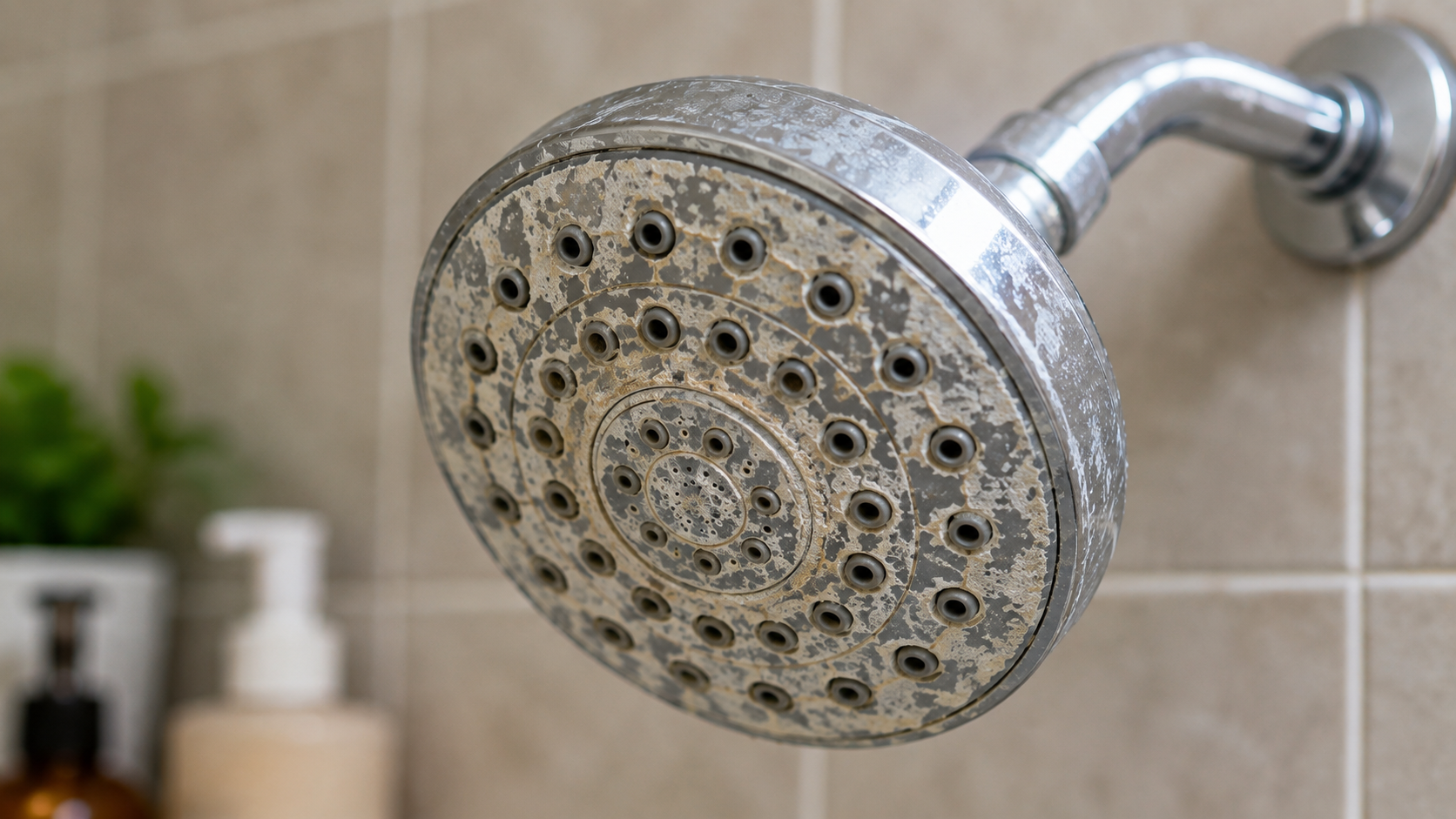
Hard water contains elevated levels of dissolved minerals, primarily calcium and magnesium. While it may not always be obvious from the tap, these minerals can leave noticeable evidence throughout your home.
From white deposits on faucets to stiff laundry and reduced water flow, recognizing the signs can help you decide whether water testing or treatment is worth considering.
White Scale Appears on Faucets and Fixtures
One of the easiest signs to recognize is white, chalky buildup around faucets, showerheads, sinks, and drains.
When hard water evaporates, calcium and magnesium deposits remain behind. Over time, these deposits can develop into stubborn scale, especially in areas frequently exposed to splashes or standing water.
If the buildup returns soon after cleaning, your water may contain significant mineral concentrations.
Dishes and Glasses Look Cloudy
Hard water can leave spots, streaks, or a cloudy film on glasses and dishes after washing.
The problem occurs when dissolved minerals remain behind as water dries. Even a dishwasher may struggle to deliver spotless glassware when mineral concentrations are high.
Repeated cloudy residue can therefore be another practical clue that your home’s water is hard.
Soap Doesn’t Lather Easily
Does it seem like you need more soap, shampoo, or detergent than expected?
Calcium and magnesium can react with soap and make it harder to produce a satisfying lather. You may compensate by using additional products, increasing household consumption without necessarily improving cleaning performance.
Soap Scum Builds Up Quickly
Hard water can also contribute to persistent soap scum.
Look for residue on:
- Shower doors
- Bathtubs
- Bathroom tiles
- Sinks
- Faucets
The minerals interact with soap to create a stubborn film that can require frequent cleaning.
If your freshly cleaned bathroom quickly develops another layer of residue, the water itself could be contributing to the problem.
Skin and Hair Feel Different After Bathing
Some people notice changes in how their skin and hair feel after showering with hard water.
Mineral residue may leave skin feeling dry or tight. Hair can sometimes feel dull, coated, or harder to manage.
These experiences vary from person to person, so they should not be used alone to determine whether you have hard water. However, they may provide another clue when combined with visible mineral buildup elsewhere.
Laundry Feels Stiff or Looks Dull
Your washing machine can reveal hard-water problems too.
Minerals can accumulate within fabric fibers during repeated washing. Towels and clothing may gradually feel rough or stiff instead of soft.
Colors can also appear less vibrant over time.
If changing detergents or adjusting your washing routine does not solve the problem, your water quality may be worth investigating.
Water Flow Starts to Decline
Hard water doesn’t only leave deposits on visible surfaces. Scale can accumulate inside showerheads, faucet aerators, pipes, and other plumbing components.
As those deposits increase, they may restrict water flow.
Cleaning a clogged showerhead or aerator might temporarily improve performance. If the problem repeatedly returns, mineral accumulation could be occurring throughout the system.
Appliances Develop Mineral Scale
Any appliance that regularly handles water may be affected.
Common examples include:
- Water heaters
- Coffee makers
- Dishwashers
- Washing machines
Mineral deposits can accumulate on internal components and affect performance over time. Water heaters are particularly important because sediment and scale can interfere with efficient heat transfer.
Regular descaling may help individual appliances, but repeated buildup suggests the underlying water supply deserves attention.
You’re Constantly Cleaning the Same Deposits
A little residue around a faucet isn’t unusual. The bigger warning sign is how quickly it returns.
If you regularly scrub faucets, shower doors, sinks, and tiles only to see chalky deposits reappear, the problem may extend beyond ordinary household dirt.
Frequent scale removal can become both time-consuming and frustrating, making water testing a practical next step.
Your Water Source Can Make a Difference
Water hardness varies considerably between locations.
Groundwater can pick up calcium and magnesium as it travels through mineral-rich rock and soil. As a result, some homes supplied by wells or groundwater sources may experience noticeable hardness.
Municipal water can also be hard, depending on the local water source and treatment system.
How Can You Tell If You Really Have Hard Water?
Visible symptoms can provide clues, but water testing offers a more reliable answer.
Testing measures mineral concentrations and helps determine the actual hardness level of your water. Knowing that level can help you evaluate whether treatment makes sense and what type of system may be appropriate.
If you’re seeing several warning signs—persistent scale, cloudy dishes, stiff laundry, soap scum, and declining water flow—testing can help determine whether hard water is the common cause.
Addressing the source rather than repeatedly cleaning the symptoms may ultimately make maintaining your home much easier.
Leave a Reply