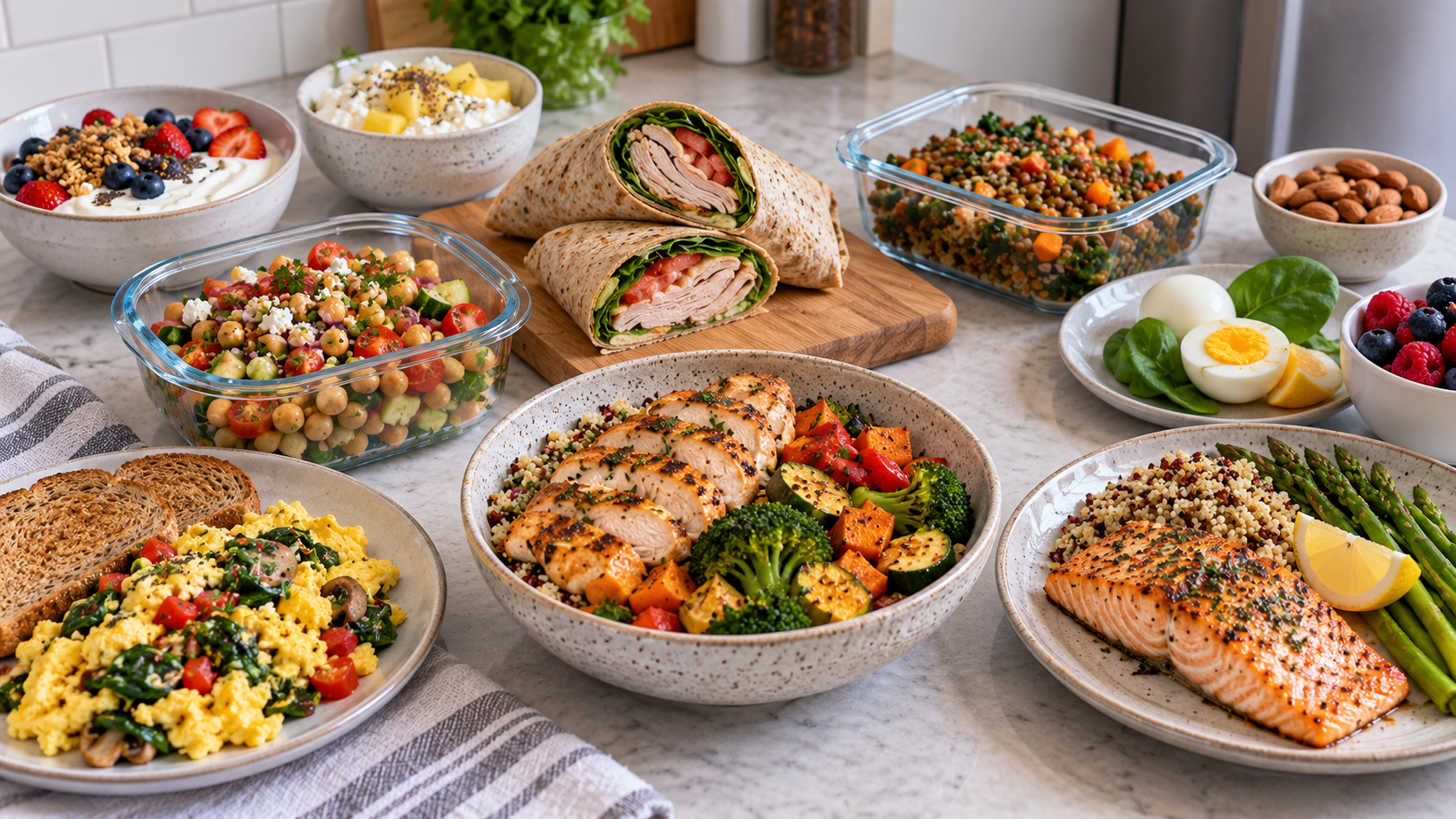
Eating more protein doesn’t have to mean preparing complicated meals every day. A practical weekly menu can start with familiar protein sources and combine them with vegetables, grains, fruit, or other foods you already enjoy.
The key is planning around your actual schedule. Cook when you have time, prepare versatile ingredients in batches, and keep convenient options available for particularly busy days.
Chicken and Roasted Vegetable Bowl
Cooked chicken makes an easy foundation for lunch or dinner. Pair it with roasted vegetables and rice, quinoa, potatoes, beans, or another preferred side.
Changing the vegetables, seasonings, herbs, or sauce can create variety without requiring you to prepare an entirely different meal.
Turkey and Vegetable Wrap
For a portable lunch, combine cooked turkey with leafy greens, tomatoes, cucumber, and your preferred spread in a wrap.
You can add avocado, beans, seeds, or shredded vegetables for additional flavor and texture. Keep perishable ingredients properly refrigerated until you’re ready to eat.
Salmon With Vegetables and Grains
Salmon can be paired with vegetables and rice, quinoa, potatoes, or another grain for a straightforward dinner.
Preparing multiple portions at once can also provide meals for later in the week. Make sure leftovers are cooled, stored, and reheated using appropriate food-safety practices.
Egg and Vegetable Breakfast
Eggs offer plenty of flexibility for busy mornings. Scrambled eggs, omelets, and baked egg dishes can be combined with spinach, mushrooms, peppers, tomatoes, onions, or other vegetables.
Add fruit, toast, potatoes, or beans depending on your appetite and preferences.
Greek-Style Yogurt Bowl
A yogurt bowl requires virtually no cooking and works well for breakfast or a quick snack.
Combine yogurt with fruit, oats, nuts, seeds, or granola. Protein and added-sugar amounts vary considerably between products, so check nutrition labels when comparing options.
Lentil and Vegetable Bowl
Lentils provide a convenient plant-based protein source for bowls, soups, salads, and other dishes.
Combine cooked lentils with vegetables and a grain or another preferred carbohydrate source. Preparing a larger batch can give you a versatile ingredient to use in several meals throughout the week.
Chickpea Salad
Combine chickpeas with chopped vegetables, leafy greens, herbs, and your favorite dressing for a simple lunch.
You can serve the mixture on its own, inside a wrap, or alongside bread, crackers, or grains. Using the same ingredients in several ways can reduce preparation without making every meal feel identical.
Tofu and Vegetable Stir-Fry
Tofu and mixed vegetables can create a quick plant-based dinner. Serve them with rice, noodles, quinoa, or another side.
Precut or frozen vegetables can shorten preparation time further. If you’re using packaged sauces, review nutrition and ingredient information when sodium, sugar, or allergens are important considerations.
Bean and Grain Bowl
Beans and grains offer another flexible combination for lunches and dinners.
Start with your preferred beans and add rice, quinoa, vegetables, herbs, salsa, or other toppings. Changing seasonings and toppings can transform the same basic ingredients into different meals.
Chicken and Bean Chili
A large pot of chicken and bean chili can provide several meals from one cooking session.
Combine chicken, beans, tomatoes, vegetables, and seasonings, then portion leftovers for future lunches or dinners. You can also adjust the beans, vegetables, protein source, and spice level to suit your preferences.
High-Protein Pasta Bowl
Some pasta varieties contain more protein than others, particularly those made with legumes or other protein-containing ingredients.
Pair pasta with chicken, turkey, seafood, beans, lentils, tofu, or cheese and add vegetables and sauce. Check nutrition labels rather than relying solely on front-of-package descriptions because serving sizes and protein amounts can vary.
Keep Convenient Protein Snacks Available
Simple snacks can help add variety to your weekly menu. Depending on your preferences, convenient options can include:
- Yogurt
- Cottage cheese
- Hard-cooked eggs
- Edamame
- Nuts and seeds
- Cheese
- Roasted chickpeas
Not every snack needs to be especially high in protein. Your overall diet, appetite, and nutritional needs matter more than maximizing protein at every eating occasion.
Use Batch Cooking to Save Time
Instead of preparing complete meals in advance, consider batch-cooking versatile components.
Cooked chicken, tofu, lentils, grains, beans, and roasted vegetables can be divided among several meals and combined with different sauces, vegetables, and toppings.
This gives you the convenience of meal prep while allowing enough variety to keep the weekly menu interesting.
Keep Ready-to-Heat Options for Busy Days
There may be days when even assembling a quick meal isn’t convenient. Ready-to-heat meals can provide another option.
If protein is one of your priorities, check the nutrition label for protein per serving and confirm how many servings the package contains. Also consider the overall nutritional profile, including fiber, sodium, saturated fat, carbohydrates, vitamins, and minerals.
Build a Menu Around Your Real Routine
A high-protein weekly menu doesn’t need to be complicated. Start with protein sources you enjoy, pair them with foods from other food groups, and choose preparation methods that fit the time you actually have available.
Protein needs vary from person to person, and more isn’t automatically better. Rather than focusing exclusively on protein, aim for meals that provide variety and fit your individual nutritional needs. A combination of home-cooked, batch-prepared, and convenient ready-to-heat options can make eating well during a busy week much easier to maintain.
Leave a Reply