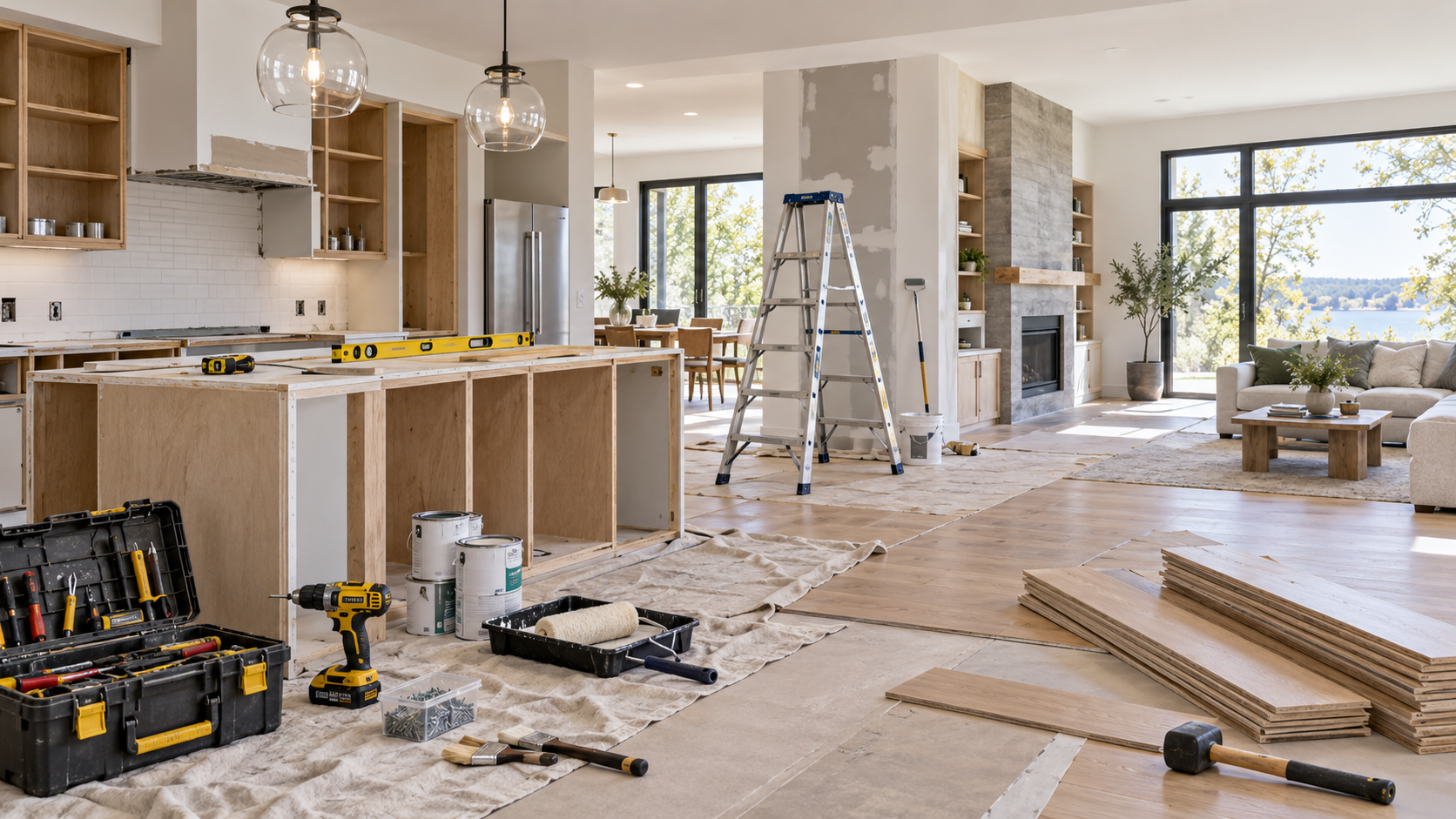
From updating an outdated kitchen to refreshing a bathroom or improving energy efficiency, renovation projects can range from simple cosmetic changes to major structural upgrades.
Successful renovations usually begin with careful planning. Before choosing finishes or hiring contractors, you should understand your priorities, create a realistic budget, and decide which improvements will make the biggest difference in your daily life.
Taking time to plan may also help you avoid unexpected expenses, project delays, and unnecessary changes once construction begins.
Home Renovation Planning Starts With Clear Priorities
Before beginning a renovation, identify what you want to accomplish.
Some homeowners renovate to modernize an aging property, while others want additional storage, better functionality, improved comfort, or a refreshed interior design.
Walk through your home and make a list of areas that need attention. Separate essential repairs from optional upgrades.
For example, essential improvements may include:
- Repairing damaged flooring
- Replacing outdated electrical systems
- Fixing plumbing problems
- Addressing roof leaks
- Improving ventilation
- Replacing damaged windows or doors
Optional upgrades may include:
- New countertops
- Modern lighting fixtures
- Decorative wall treatments
- Updated cabinetry
- Custom shelving
- New paint colors
Prioritizing improvements helps you focus your renovation budget on projects that matter most.
Create a Realistic Home Renovation Budget
Your renovation budget should include more than materials and contractor labor. Permits, demolition, disposal fees, delivery charges, inspections, design services, and unexpected repairs can all affect the final cost.
Depending on the size and complexity of the project, renovation costs can vary significantly.
Common project ranges may include:
- Interior painting: about $1,000 to $5,000+
- Flooring installation: around $2,000 to $10,000+
- Bathroom renovation: approximately $5,000 to $30,000+
- Kitchen renovation: roughly $10,000 to $60,000+
- Window replacement: around $300 to $1,500+ per window
- Major whole-home renovation: $50,000 to $200,000+ depending on size and scope
These figures are general estimates rather than guaranteed prices. Labor rates, materials, property size, location, permits, and structural conditions may significantly change your final cost.
Consider keeping part of your budget available for unexpected expenses. Hidden water damage, electrical issues, plumbing problems, or structural repairs sometimes become visible only after demolition begins.
Decide Which Rooms Need Renovation First
You do not always need to renovate your entire house at once. Tackling one area at a time can make the project easier to manage financially and practically.
Kitchen Renovation
The kitchen is often one of the most heavily used areas of a home. Improvements can focus on storage, lighting, countertops, appliances, cabinetry, or workflow.
Possible kitchen upgrades include:
- Cabinet refinishing or replacement
- New countertops
- Energy-efficient appliances
- Updated backsplash
- Improved lighting
- Additional pantry storage
- New flooring
- Modern faucets and sinks
If the existing layout works well, keeping plumbing and major appliances in their current locations may help reduce construction costs.
Bathroom Renovation
Bathroom improvements can range from replacing fixtures to completely changing the layout.
Popular bathroom renovation ideas include:
- Walk-in showers
- Updated vanities
- New faucets
- Water-efficient toilets
- Improved ventilation
- Tile flooring
- Shower storage niches
- Better lighting
Before selecting decorative finishes, make sure waterproofing, plumbing, drainage, and ventilation are properly addressed.
Living Room Renovation
Living room improvements often focus on comfort and appearance rather than major structural work.
You might consider:
- New flooring
- Interior painting
- Built-in storage
- Updated lighting
- Fireplace improvements
- Larger windows
- Accent walls
Small changes such as fresh paint, improved lighting, and new flooring can dramatically change the appearance of a living space.
Bedroom Renovation
Bedrooms may benefit from improvements that make them more comfortable and organized.
Options include:
- Closet systems
- New flooring
- Ceiling fans
- Updated lighting
- Soundproofing
- Window treatments
- Fresh paint
Choose Durable Home Renovation Materials
Selecting materials based only on appearance can lead to disappointing results. Consider durability, maintenance requirements, moisture resistance, and expected lifespan.
For example, areas exposed to moisture may require different materials than bedrooms or living rooms.
Common flooring choices include:
- Luxury vinyl plank
- Laminate
- Hardwood
- Engineered wood
- Porcelain tile
- Ceramic tile
Countertop materials can include:
- Quartz
- Granite
- Solid surface
- Laminate
- Butcher block
Higher-priced materials are not automatically the best choice for every property. A durable, easy-to-maintain material that fits your lifestyle may offer better long-term value.
Compare DIY Projects With Professional Work
Some renovation tasks are manageable for homeowners with basic tools and experience.
DIY-friendly projects may include:
- Painting walls
- Installing shelves
- Replacing cabinet hardware
- Installing certain light fixtures where permitted
- Adding decorative molding
- Updating door handles
More complicated work should typically be handled by qualified professionals.
Professional assistance may be appropriate for:
- Electrical upgrades
- Plumbing modifications
- Structural changes
- Roofing
- Gas lines
- Major HVAC work
- Load-bearing wall removal
Attempting complicated work without proper training can create safety problems and may violate local building requirements.
Get Multiple Contractor Estimates
If your renovation requires professional help, compare several contractors before making a decision.
Ask each contractor for a detailed estimate showing:
- Labor costs
- Material costs
- Project timeline
- Payment schedule
- Permit responsibilities
- Cleanup responsibilities
- Warranty information
Avoid making decisions based exclusively on the lowest estimate. Experience, communication, licensing requirements, insurance coverage, references, and workmanship should also influence your choice.
You should also clarify how unexpected changes will be handled. Having a written change-order process may prevent disagreements about additional costs.
Check Permits Before Construction Begins
Certain renovation projects may require local permits.
Projects that commonly require permits can include:
- Electrical modifications
- Plumbing changes
- Structural alterations
- Room additions
- Major roofing projects
- Window openings
- HVAC installation
Requirements vary by location, so you should check with your local building authority before construction begins.
Skipping required permits may create complications during inspections, insurance claims, or future property sales.
Improve Energy Efficiency During Renovation
Renovation provides an opportunity to make your home more energy efficient.
Potential improvements include:
- Better insulation
- Energy-efficient windows
- LED lighting
- Smart thermostats
- Efficient heating and cooling systems
- Weather sealing
- Energy-efficient appliances
Some improvements may help reduce energy consumption while making your home more comfortable.
You can also consider water-saving fixtures such as low-flow showerheads, efficient faucets, and modern toilets.
Focus on Storage and Functionality
A beautiful renovation should also make everyday life easier.
Look for opportunities to add functional storage.
Ideas include:
- Built-in shelving
- Pantry cabinets
- Under-stair storage
- Closet organizers
- Bathroom vanity storage
- Kitchen drawer organizers
- Garage shelving
Small organizational improvements can sometimes have a greater impact on daily convenience than expensive decorative upgrades.
Avoid Changing Plans Too Frequently
Changing materials or layouts after work begins can increase both costs and construction time.
Before ordering materials, confirm important details such as:
- Flooring type
- Cabinet layout
- Paint colors
- Countertops
- Plumbing fixtures
- Appliances
- Lighting fixtures
- Hardware
Planning these choices early allows contractors to coordinate materials and schedules more efficiently.
Think About Long-Term Home Value
Not every renovation needs to maximize resale value, especially if you plan to remain in the property for many years. Still, considering long-term usefulness can help you make more practical decisions.
Improvements that may appeal to future buyers include:
- Updated kitchens
- Modern bathrooms
- Improved storage
- Durable flooring
- Energy-efficient systems
- Functional outdoor areas
- Improved lighting
- Updated electrical and plumbing systems
Highly customized designs may be perfect for your lifestyle but may not appeal to every future buyer. Balancing personal preferences with timeless features can help keep your renovation flexible.
Building a Better Space Through Thoughtful Renovation
You do not necessarily need to transform every room at once. Focusing on the most important improvements first can make the renovation easier to manage while still creating noticeable changes.
Before construction begins, define your priorities, compare costs, research contractors, verify permit requirements, and finalize major design choices.
Careful preparation may help reduce delays and unexpected expenses while creating a home that better supports your everyday needs.
With a practical plan and well-chosen improvements, your renovation can create a more comfortable, functional, and enjoyable space for years to come.
Leave a Reply