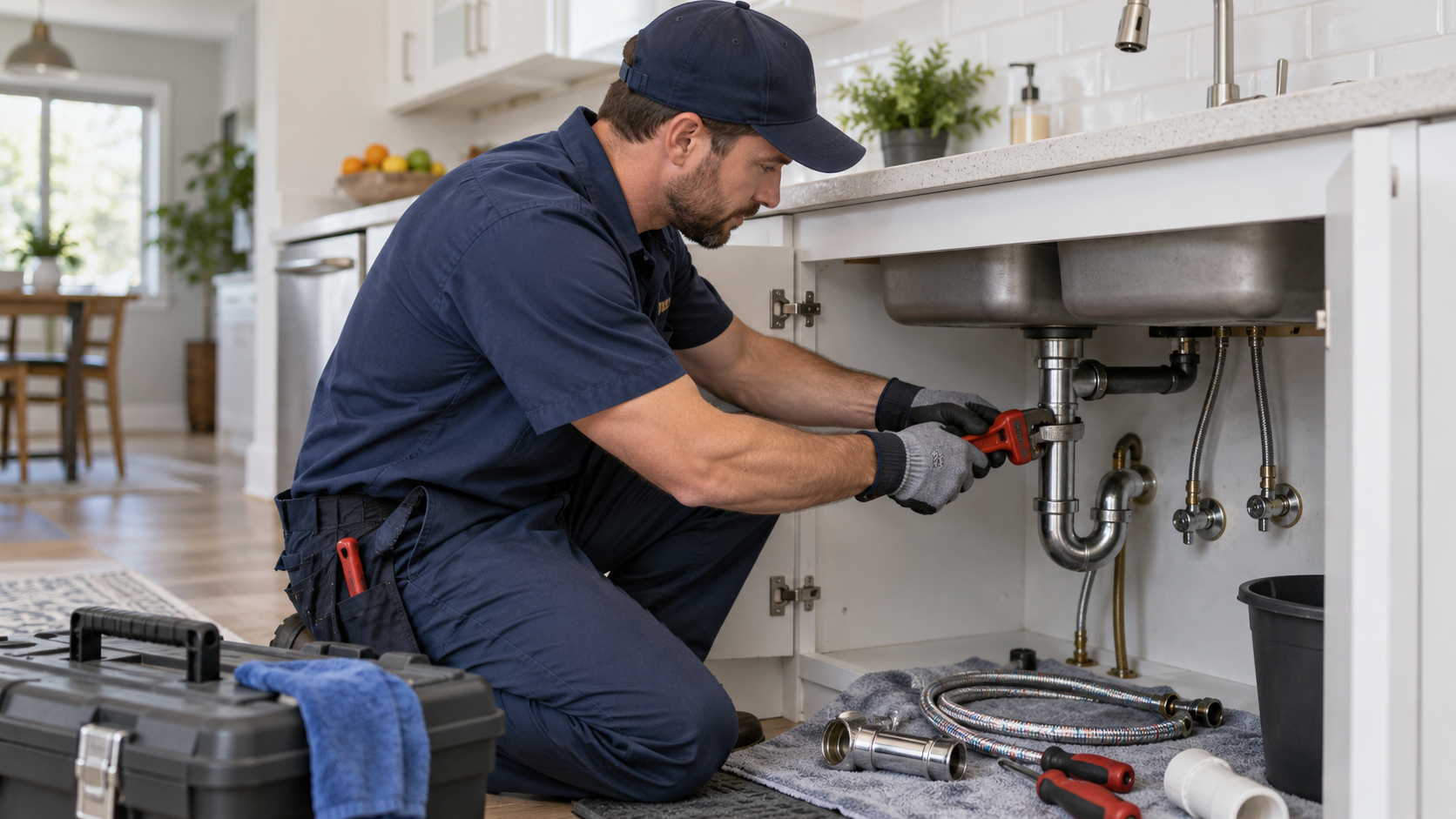
Plumbing problems can range from a slowly dripping faucet to a major pipe leak that requires immediate attention.
Professional plumbing services may help homeowners address these issues safely while reducing the chance of further water damage, costly repairs, or disruptions to daily routines.
From routine maintenance and drain cleaning to pipe repairs and water heater work, plumbers handle many essential systems inside a home.
What Are Plumbing Services?
Plumbing services include the installation, maintenance, inspection, and repair of pipes, drains, fixtures, water heaters, and other parts of a property’s water and drainage systems.
A professional plumber may help with:
- Leaking faucets and pipes
- Clogged sinks, showers, and toilets
- Drain cleaning
- Toilet repairs and installation
- Water heater repairs
- Pipe replacement
- Garbage disposal issues
- Sewer line problems
- Fixture installation
- Emergency plumbing repairs
The exact services available may vary depending on the plumber, location, and type of property.
Common Signs You May Need a Plumber
Some plumbing problems are easy to notice, while others may develop gradually.
Common warning signs include:
- Unusually low water pressure
- Water stains on walls or ceilings
- Persistent dripping sounds
- Slow-moving drains
- Frequently clogged toilets
- Unpleasant drain odors
- Unexpected increases in water usage
- Rust-colored or cloudy water
- No hot water
- Water collecting beneath sinks or appliances
Addressing plumbing problems early may help limit property damage and prevent smaller issues from becoming more complicated.
Plumbing Repair for Leaks
Leaks are among the most common reasons homeowners contact a plumber. Even a small leak may waste water and damage cabinets, flooring, drywall, or surrounding materials over time.
A plumber may inspect the source of the leak and determine whether a fitting, seal, fixture, valve, or section of pipe needs repair or replacement.
Hidden leaks may require additional inspection because water can travel behind walls or underneath floors before becoming visible.
Drain Cleaning Services
Slow or blocked drains can make sinks, tubs, and showers difficult to use. Common causes include hair, soap residue, grease, food particles, mineral buildup, and other debris.
Plumbers may use specialized tools such as drain snakes or other cleaning equipment depending on the severity and location of the blockage.
Homeowners should be cautious with repeated use of harsh chemical drain cleaners, since certain products may damage some types of pipes.
Toilet Repair and Installation
Toilet problems can range from minor annoyances to significant water leaks.
A plumber may help with:
- Running toilets
- Weak flushing
- Clogged toilets
- Leaking toilet bases
- Faulty fill valves
- Damaged flappers
- Cracked components
- Toilet replacement
A continuously running toilet may waste a substantial amount of water over time, so repairing the problem early may help reduce unnecessary water use.
Water Heater Services
Hot water is essential for bathing, cleaning, and many everyday household tasks.
Common water heater problems may include:
- Water not getting hot
- Inconsistent temperatures
- Unusual noises
- Water leaking around the tank
- Discolored hot water
- Reduced hot-water capacity
Professional water heater repair may involve inspecting heating elements, thermostats, valves, burners, tanks, or related components.
Depending on the unit’s condition and age, replacement may sometimes make more sense than repeated repairs.
Pipe Repair and Replacement
Pipes may deteriorate because of corrosion, freezing temperatures, aging materials, high water pressure, accidental damage, or shifting structures.
Signs of pipe problems may include:
- Visible corrosion
- Frequent leaks
- Reduced water pressure
- Damp areas inside walls
- Discolored water
- Unusual plumbing noises
A plumber can evaluate the condition of the pipes and recommend repairs or replacement when necessary.
Older homes may require more extensive plumbing updates if outdated materials are creating repeated problems.
Emergency Plumbing Services
Some plumbing situations require faster attention because delaying repairs may increase the risk of water damage.
Examples of potential plumbing emergencies include:
- Burst pipes
- Major water leaks
- Sewer backups
- Overflowing toilets that cannot be stopped
- Failed water heaters causing significant leakage
- Loss of water supply
- Severe drain backups affecting multiple fixtures
If a major leak occurs, shutting off the property’s water supply may help reduce damage until professional assistance is available.
Plumbing Fixture Installation
Plumbers may also install or replace fixtures during renovations, repairs, or home upgrades.
Common installations include:
- Kitchen faucets
- Bathroom faucets
- Sinks
- Toilets
- Showerheads
- Bathtubs
- Garbage disposals
- Dishwashers
- Water filtration systems
Proper installation may help prevent leaks and ensure fixtures connect correctly to existing plumbing systems.
Sewer Line Services
A damaged or blocked sewer line may affect several drains throughout a property.
Possible warning signs include:
- Multiple drains backing up at once
- Gurgling toilets
- Sewage odors
- Wastewater appearing in tubs or showers
- Soggy areas in the yard
Sewer issues may require specialized inspection equipment to identify the location and cause of the problem.
Because sewer repairs can become complex, professional evaluation is usually recommended.
Preventive Plumbing Maintenance
Regular plumbing maintenance may help identify small problems before they become major repairs.
Useful maintenance practices include:
- Inspecting visible pipes for leaks
- Checking faucets and toilets regularly
- Avoiding grease disposal through kitchen drains
- Cleaning drain strainers
- Monitoring water pressure
- Inspecting water heaters
- Repairing minor leaks promptly
- Knowing the location of the main water shutoff valve
Periodic professional inspections may also help uncover hidden corrosion, leaks, or drainage problems.
How to Choose Plumbing Services
Choosing a plumber involves more than selecting the first company available.
Consider checking:
Licensing and Insurance
Requirements vary by location, but licensed professionals generally must meet specific training or qualification standards.
Experience
A plumber with experience handling your particular problem may be better prepared to diagnose the issue efficiently.
Written Estimates
Ask for clear information about labor, parts, service fees, and possible additional charges before work begins.
Reviews and Reputation
Customer feedback may provide insight into reliability, communication, workmanship, and service quality.
Warranty Information
Some plumbing companies may offer warranties or guarantees covering certain repairs or installed parts.
Emergency Availability
If you regularly manage rental properties or an older home, access to emergency plumbing assistance may be valuable.
Can You Handle Plumbing Repairs Yourself?
Some basic tasks may be manageable for homeowners, including replacing a showerhead, cleaning a drain stopper, or tightening a loose fixture.
More complicated work may require professional help.
Consider contacting a plumber when the problem involves:
- Major leaks
- Sewer lines
- Gas connections
- Water heaters
- Pipes inside walls
- Repeated drain backups
- Extensive fixture installation
Incorrect plumbing repairs may lead to leaks, water damage, or code-related problems.
Why Routine Plumbing Care Matters
Your plumbing system works continuously behind walls, floors, cabinets, and appliances. Because much of the system stays out of sight, problems may not become obvious until damage has already started.
Routine inspections and timely repairs may help:
- Reduce water waste
- Prevent property damage
- Improve drainage performance
- Maintain consistent water pressure
- Extend the usable life of plumbing fixtures
- Identify developing problems earlier
Preventive care may also help homeowners plan repairs instead of dealing with unexpected plumbing emergencies.
Choosing the Right Plumbing Services for Your Home
Reliable plumbing services can help keep water flowing properly, drains working efficiently, and household plumbing fixtures operating as expected.
From minor leaks and blocked drains to water heater problems and emergency pipe repairs, professional plumbers handle a wide range of residential plumbing needs.
Paying attention to warning signs, completing basic maintenance, and seeking professional assistance for more complex problems may help protect your property and reduce the risk of expensive water damage.
When selecting a plumber, compare qualifications, experience, estimates, warranties, and customer feedback so you can choose a service provider that fits your plumbing needs.
Leave a Reply