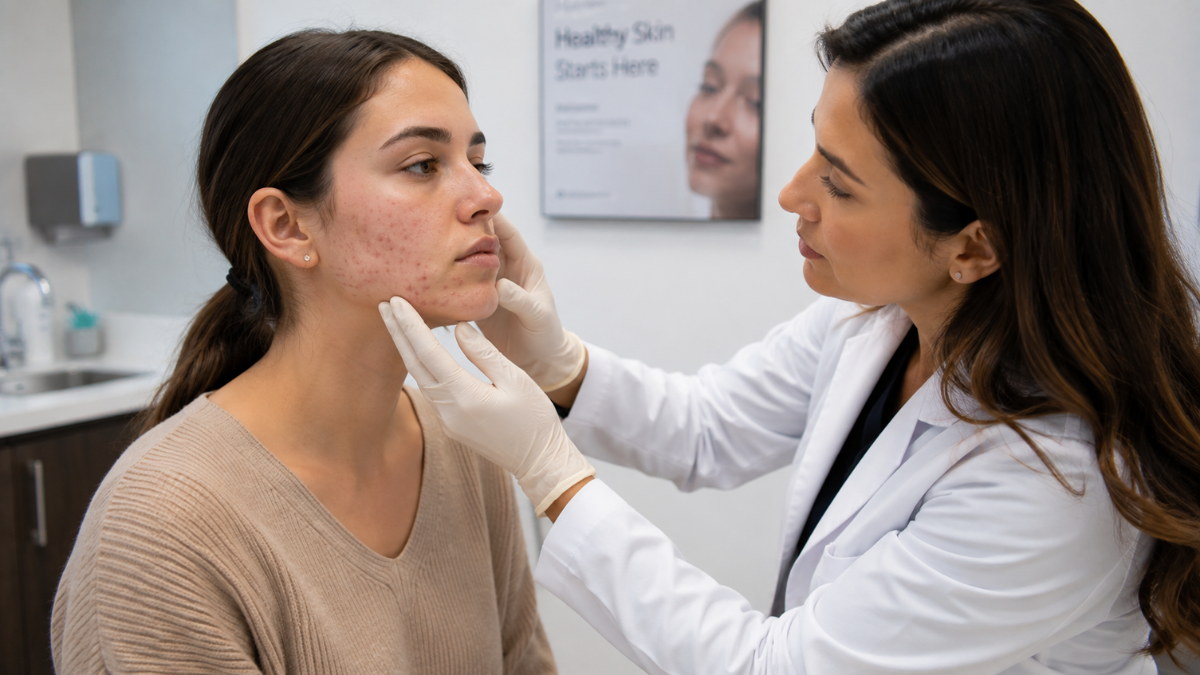
Dealing with persistent acne can be frustrating, especially when cleansers, spot treatments, and other over-the-counter products do not seem to make enough of a difference.
Prescription acne treatment may be an option when acne is moderate to severe, keeps returning, causes painful lesions, or begins leaving scars.
Prescription treatments are available in several forms, including topical creams and gels, oral medications, and combination approaches. The right choice depends on the type and severity of acne, your skin, medical history, and other individual factors.
What Is Prescription Acne Treatment?
Prescription acne treatment refers to medications that require authorization from a licensed healthcare professional.
These treatments may target one or more factors involved in acne, including clogged pores, inflammation, bacteria, and excess oil production.
Common prescription options include:
- Topical retinoids
- Prescription-strength azelaic acid
- Topical or oral antibiotics
- Hormonal treatments for appropriate patients
- Oral isotretinoin for certain cases of severe or treatment-resistant acne
Because these medications vary considerably in their benefits, risks, and potential side effects, they should be used according to a healthcare professional’s instructions.
When Might Prescription Acne Treatment Be Considered?
Mild acne can sometimes improve with over-the-counter ingredients such as salicylic acid or benzoyl peroxide. However, professional evaluation may be useful when acne does not improve after consistent use of appropriate nonprescription products.
You might consider talking with a dermatologist if you experience:
- Frequent inflammatory breakouts
- Painful nodules or cysts
- Acne affecting large areas of the face, chest, shoulders, or back
- Breakouts that leave scars or persistent dark marks
- Acne that does not respond adequately to over-the-counter treatment
- Recurring acne that affects your daily life
Seeking treatment earlier may be particularly useful when there is a risk of permanent scarring.
Common Types of Prescription Acne Treatment
1. Topical Retinoids
Topical retinoids are commonly prescribed for acne. Examples include tretinoin, adapalene at prescription strengths or formulations where applicable, and tazarotene.
These medications influence skin-cell turnover and can help prevent pores from becoming clogged. They may be used for comedonal acne, such as blackheads and whiteheads, as well as inflammatory acne.
Dryness, peeling, redness, and irritation may occur, particularly when treatment begins. Healthcare professionals may recommend gradually increasing use depending on skin tolerance.
2. Prescription Azelaic Acid
Azelaic acid may be prescribed to help manage acne and inflammation. It can also be useful for some people dealing with discoloration left behind after acne lesions heal.
Possible side effects can include temporary stinging, dryness, or irritation.
3. Topical Antibiotics
Topical antibiotics such as clindamycin may be used for inflammatory acne. Because antibiotic resistance is an important consideration, topical antibiotics are generally used for limited periods and commonly combined with benzoyl peroxide rather than used alone.
Your prescriber can determine whether this approach is appropriate.
4. Oral Antibiotics
For moderate or severe inflammatory acne, a healthcare professional may prescribe an oral antibiotic, such as doxycycline.
Oral antibiotics are generally intended for the shortest practical treatment period. A topical treatment, often including benzoyl peroxide, may be used alongside them to improve acne management and help limit antibiotic resistance.
5. Hormonal Acne Treatment
Hormonal therapies may help certain patients whose acne is influenced by hormones. Options can include certain combined oral contraceptives or spironolactone for appropriate patients.
These medications are not suitable for everyone. A healthcare professional needs to consider medical history, pregnancy considerations, current medications, and potential side effects before prescribing them.
6. Oral Isotretinoin
Isotretinoin is a powerful oral medication that may be considered for severe nodular acne, acne at high risk of permanent scarring, or cases that have not responded adequately to other therapies.
Treatment requires medical supervision because isotretinoin can cause significant side effects and carries a very high risk of severe birth defects if taken during pregnancy.
Patients who can become pregnant must follow strict pregnancy-prevention and monitoring requirements.
How Long Does Prescription Acne Treatment Take to Work?
Acne treatment usually requires patience. Improvement may take several weeks, and some treatment plans require a few months before their full effects become apparent.
During the early stages of certain treatments, particularly topical retinoids, irritation or changes in breakouts may occur. Following the prescribed schedule rather than applying extra medication is important because using more does not necessarily produce faster results and may increase irritation.
Prescription vs. Over-the-Counter Acne Treatments
| Feature | Prescription Treatment | Over-the-Counter Treatment |
|---|---|---|
| Medical evaluation | Usually required | Usually not required |
| Best suited for | Persistent, moderate, severe, or specific acne types | Often mild acne |
| Common options | Retinoids, antibiotics, hormonal medications, isotretinoin | Benzoyl peroxide, salicylic acid, adapalene |
| Treatment monitoring | May be necessary | Usually self-managed |
| Potential side effects | Depend heavily on medication | Usually mild but still possible |
| Treatment plan | Individualized by a clinician | Selected by the consumer |
Neither category is automatically better for everyone. Acne severity, skin type, previous treatments, health history, and individual response all matter.
How Much Does Prescription Acne Treatment Cost?
Costs vary considerably depending on the medication, dose, pharmacy, insurance coverage, consultation fees, and whether a generic or brand-name product is prescribed.
As a broad U.S. reference, some generic topical prescription medications may cost roughly $15–$100+, while certain oral prescriptions may range from approximately $10–$150+ per month before insurance or discounts. Dermatology consultations and required laboratory testing can add to the total cost.
Isotretinoin treatment may cost considerably more overall because regular medical appointments, pregnancy testing when applicable, and laboratory monitoring may be required.
These figures are only general estimates. Checking your pharmacy, insurance plan, and healthcare provider is the best way to determine actual costs.
Building a Skincare Routine Around Prescription Treatment
A complicated routine is not necessarily better when using prescription acne medication. In fact, adding too many active ingredients can increase irritation.
A simple routine may include:
Morning
- Gentle cleanser
- Prescribed medication if directed for morning use
- Non-comedogenic moisturizer
- Broad-spectrum sunscreen with SPF 30 or higher
Evening
- Gentle cleanser
- Prescription treatment as directed
- Moisturizer
What Should You Avoid While Using Prescription Acne Medication?
The answer depends on the specific prescription. Some acne treatments can make skin more sensitive or irritated, so combining several exfoliating or drying products without professional guidance may make side effects worse.
Be cautious about adding:
- Strong exfoliating acids
- Abrasive facial scrubs
- Multiple retinoid products
- Alcohol-heavy skincare products
- Additional acne medications not included in your treatment plan
Pregnancy and breastfeeding also require special consideration because some prescription acne medications should not be used during these periods.
Tell your healthcare professional if you are pregnant, planning pregnancy, or breastfeeding before beginning treatment.
Frequently Asked Questions About Prescription Acne Treatment
Do you need a dermatologist for prescription acne treatment?
Not always. Depending on where you live and the medication involved, primary-care clinicians and other qualified healthcare professionals may prescribe acne medications. More severe or complicated cases may benefit from evaluation by a dermatologist.
Can prescription acne treatment permanently clear acne?
Treatment may substantially control acne, but results vary. Some people experience long-lasting improvement, while others require ongoing maintenance treatment to reduce future breakouts.
Can you combine prescription and over-the-counter acne products?
Sometimes. For example, benzoyl peroxide is commonly incorporated into certain prescription treatment plans. However, combining active ingredients without guidance can increase dryness and irritation. Ask your prescriber which products can safely be used together.
What happens if your prescription causes irritation?
Mild dryness or irritation can occur with several topical treatments. Your healthcare professional may recommend adjusting frequency, changing the formulation, or modifying your skincare routine. Severe reactions or concerning symptoms should be evaluated promptly.
Choosing an Acne Treatment Plan With Professional Guidance
Prescription acne treatment can provide additional options when ordinary skincare products are not controlling persistent or severe breakouts.
Topical retinoids, antibiotics, hormonal therapies, and isotretinoin address acne in different ways, which is why treatment should be individualized.
Rather than trying increasingly aggressive products on your own, consider speaking with a qualified healthcare professional when acne is painful, persistent, worsening, or causing scars.
Leave a Reply