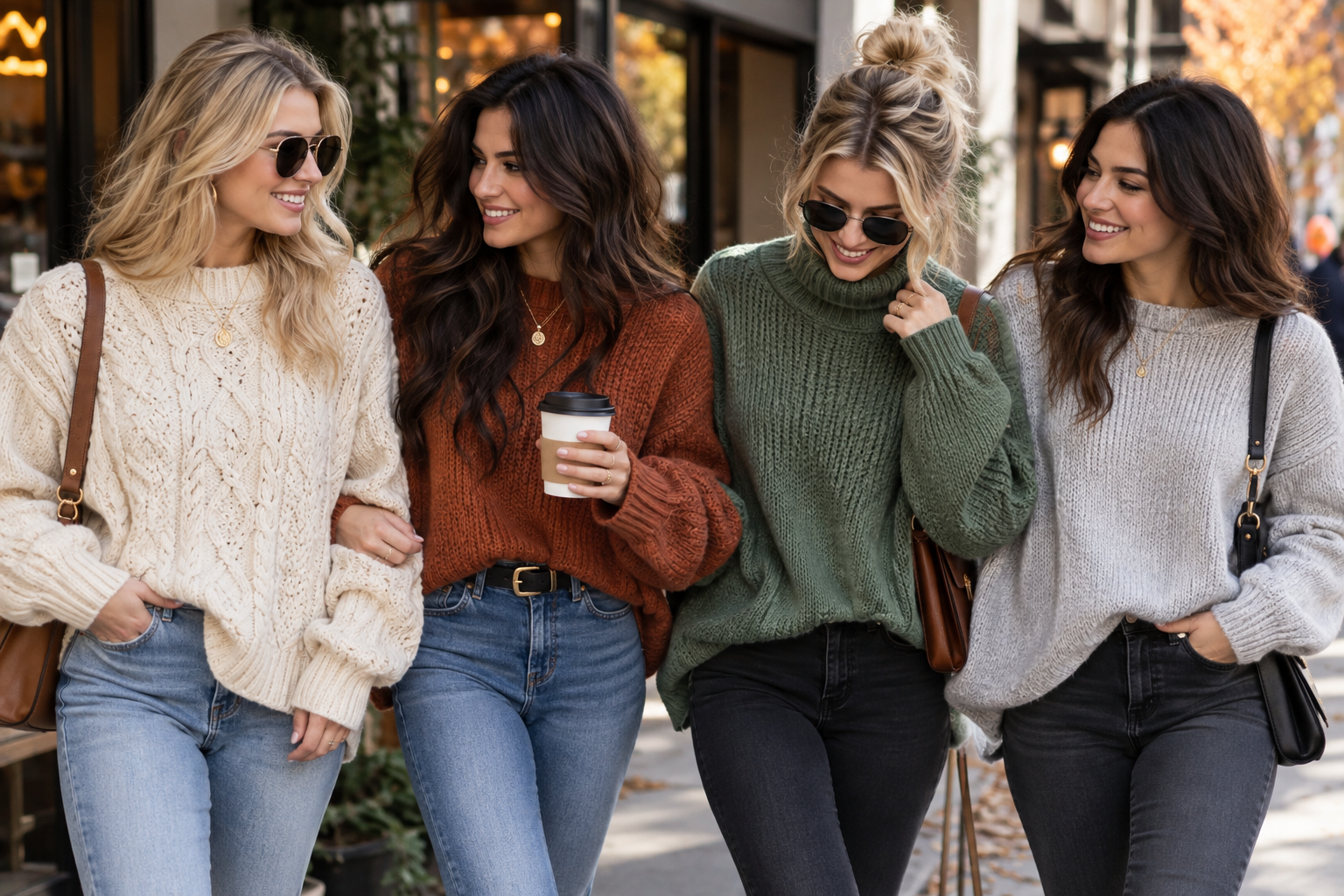
Shopping for women’s sweaters can involve several decisions, from fabric and neckline to fit, weight, care needs, and seasonal use.
A sweater that works well for commuting may feel too structured for relaxed weekends, while a lightweight design may be easier to layer during changing temperatures.
These details can help you compare pieces based on how you actually plan to wear them rather than relying on appearance alone.
What Should You Look for When Buying Women’s Sweaters?
Start by thinking about where and when you expect to wear the sweater. Office clothing, travel layers, cold-weather pieces, and casual weekend clothing can call for different materials and silhouettes.
Key factors worth checking include:
- Fiber composition
- Fabric weight
- Garment measurements
- Neckline
- Sleeve shape and length
- Hem length
- Knit density
- Layering space
- Care instructions
- Construction at seams, cuffs, and hems
Product photos can help with style, yet the written specifications usually give you better information about fabric composition and sizing.
Check the Fiber Label
Fiber content has a major effect on warmth, texture, care, and durability.
Natural fibers commonly found in sweaters include wool, cashmere, cotton, and other animal or plant fibers. Synthetic fibers such as polyester, acrylic, nylon, and elastane may be used alone or combined with natural fibers.
A blended fabric is not automatically inferior to a single-fiber fabric. Its suitability depends on the fibers used, their percentages, the construction of the garment, and what you want from the sweater.
How Fabric Changes the Feel of Women’s Sweaters
Fabric is one of the first details to compare because it affects warmth, softness, weight, maintenance, and how the garment sits on your body.
Cashmere
Cashmere sweaters are made using cashmere fiber obtained from goats. Cashmere is valued for softness and insulation, though quality can differ considerably among garments.
When comparing options, check the stated fiber percentage rather than assuming every product labeled with cashmere uses the same composition. Some garments use 100% cashmere, while others combine it with different fibers.
Care instructions also deserve attention. Some pieces require hand washing or dry cleaning, while care requirements vary by manufacturer.
Wool
Wool sweaters can work well when warmth is a priority. Wool fibers have natural crimp, which contributes to their insulating properties.
Different types of wool can feel noticeably different against the skin. Merino wool, for example, generally uses finer fibers than many traditional wool types. Fiber diameter, garment construction, finishing, and personal sensitivity can all influence comfort.
Check the product label for the specific wool type and recommended care method before purchasing.
Cotton
Cotton sweaters can suit mild temperatures and indoor layering. Cotton generally feels different from wool and cashmere and can be useful for shoppers who prefer plant-based fibers.
Fabric thickness still matters. A fine cotton sweater can function as a lightweight layer, while a heavier cotton knit may feel considerably warmer.
Synthetic Fibers
Acrylic and polyester are frequently used in sweater construction. Nylon may be added to certain garments for strength, while elastane may provide stretch.
Instead of judging a sweater solely because it contains synthetic material, examine the complete fiber composition and construction.
Which Sweater Fit Works for Your Wardrobe?
Fit affects both appearance and practicality. Think about what you normally wear underneath the garment and how much room you prefer through the shoulders, chest, waist, and sleeves.
Relaxed and Oversized Fits
Oversized sweaters generally have extra room through the body and may feature dropped shoulders, longer sleeves, or a wider silhouette.
Check the actual garment measurements when available. Simply buying a larger standard size does not always create the same proportions as a garment intentionally designed with an oversized cut.
If you plan to wear shirts or thin base layers underneath, extra room through the arms and torso may be useful.
Standard Fits
A standard or regular fit generally follows the body with less excess fabric than an oversized design. The exact cut still differs among manufacturers, so size labels alone cannot tell you how a garment will fit.
Compare your measurements with the retailer’s size chart and read any notes describing the intended silhouette.
Fitted Styles
Fitted sweaters sit closer to the body and can be practical beneath jackets, coats, or blazers.
Look at shoulder width, chest measurements, garment length, and stretch content. These factors can influence comfort, particularly if you plan to wear the sweater for long periods.
Which Neckline Should You Choose?
Neckline changes the appearance of a sweater and can affect layering.
Crewneck
Crewneck sweaters have a rounded neckline that sits relatively close to the base of the neck. They pair easily with jeans, trousers, skirts, and jackets.
A crewneck can also work over a collared shirt, although the neckline opening and sweater thickness determine how comfortably the pieces sit together.
V-Neck
A V-neck creates an open neckline that can leave room for a shirt, camisole, or necklace. The depth of the V varies considerably, so check product images and garment specifications before buying.
Turtleneck
Turtlenecks extend upward around the neck and can provide additional coverage in colder conditions. Some have a close-fitting neck, while others use a looser or folded construction.
If you dislike fabric sitting tightly around your neck, check the collar design before purchasing.
Pullover or Cardigan: Which Is Easier to Wear?
Pullovers are simple pieces that can work alone or under outerwear. Cardigans provide an open-front construction, usually with buttons, a zipper, ties, or no closure.
Cardigan sweaters can be practical when temperatures change throughout the day because you can put them on or remove them without pulling the garment over your head.
For workwear, a fine cardigan can pair with trousers, dresses, or skirts. Longer designs may suit relaxed outfits, while cropped versions can work with high-rise bottoms.
How Does Knit Construction Affect a Sweater?
The word “knit” covers many constructions rather than one specific fabric. Knit sweaters can use natural fibers, synthetic fibers, or combinations of several materials.
Fine knits tend to have a smoother, less bulky appearance. Chunkier constructions create greater texture and thickness.
When examining a sweater, check areas that experience frequent movement or friction, including:
- Underarms
- Side seams
- Cuffs
- Elbows
- Neckline
- Hem
Consistent stitching and properly finished seams can help you judge garment construction before purchasing.
Comparing Common Sweater Styles
| Style | Typical Characteristics | Useful For | Buying Detail to Check |
|---|---|---|---|
| Crewneck | Rounded neckline | Everyday outfits and layering | Neck opening and garment length |
| V-neck | Open V-shaped neckline | Shirts, camisoles, and accessories | Depth of neckline |
| Turtleneck | Extended neck coverage | Colder temperatures | Collar height and fit |
| Cardigan | Open front | Adjustable layering | Closure and length |
| Oversized | Roomier silhouette | Relaxed outfits and layering | Actual garment measurements |
| Fitted | Close-to-body shape | Wearing beneath jackets | Stretch and chest measurements |
How Should You Check Sweater Quality Before Buying?
Price alone does not establish quality. A better assessment comes from examining measurable product information and construction details.
Read the Fiber Percentages
Do not rely only on terms used in a product title. Check the fiber-content label or product specifications to see exactly what the garment contains.
For example, two sweaters described similarly may use very different percentages of wool, cotton, cashmere, or synthetic fibers.
Examine the Seams
If shopping in person, inspect seams for consistency and check that they sit flat without obvious gaps.
Online shoppers can zoom in on product photography and check customer-uploaded images when a retailer provides them.
Customer comments can provide personal experiences, although individual reviews should not be treated as controlled product testing.
Inspect Cuffs and Hems
Cuffs and hems receive regular stretching and friction. Look for consistent construction and enough structure for the style of sweater you are buying.
Check Care Requirements
A sweater that requires specialized cleaning may not suit someone seeking simple everyday maintenance.
Always follow the manufacturer’s care label. Fiber type alone does not determine the correct washing method because construction, dyes, finishing treatments, and other materials can affect care requirements.
How Do You Choose the Right Sweater Size?
Start with your body measurements and compare them against the specific retailer’s sizing information.
Useful measurements can include:
- Bust or chest
- Waist
- Shoulder width
- Sleeve length
- Garment length
If garment measurements are supplied, compare them with a sweater you already own that fits comfortably.
Remember that intended fit matters. A relaxed design may intentionally measure considerably wider than your body, while a fitted garment may use stretch to sit closer to your shape.
When Is a Lightweight Sweater a Better Choice?
Fine-gauge designs generally create less bulk under outerwear. They can also be easier to pair with trousers or skirts when you want a cleaner silhouette.
For colder conditions, fabric composition, knit density, garment construction, wind exposure, and the layers worn underneath can all affect warmth.
Why Should You Compare Care Instructions Before Purchasing?
Maintenance can change how practical a sweater feels after several wears.
Some garments can be machine washed according to their labels. Others may require a gentle cycle, hand washing, flat drying, or professional cleaning.
Checking these instructions before purchasing can prevent you from ending up with clothing that requires a level of maintenance you do not want.
Storage matters too. Many sweaters can lose their shape when hung for long periods, particularly heavier pieces. Folding is often practical, though you should follow manufacturer guidance when specific storage instructions are provided.
What About Pilling?
Pilling occurs when fibers work loose and form small balls on a fabric surface due to wear and friction. It can occur in several fiber types and does not automatically prove that a garment is poorly made.
Areas exposed to repeated friction, such as underarms and sides, may show pilling earlier.
Fiber characteristics, yarn construction, fabric structure, finishing, and how the garment is worn can influence pilling. Care instructions should be followed to reduce unnecessary wear.
How Many Sweaters Do You Actually Need?
There is no universal number. Your climate, workplace, laundry habits, personal style, and existing wardrobe determine what makes sense.
Instead of buying several pieces with nearly identical functions, you can assess gaps in your current clothing. For example, you might need a lightweight work layer, a warmer cold-weather sweater, or a relaxed piece for casual use.
This approach can make comparisons easier because each potential purchase has a clear purpose.
Questions to Ask Before You Buy
Before placing an order, ask:
- What fibers and percentages are listed?
- Does the fabric weight suit the temperatures where you plan to wear it?
- Is the intended fit fitted, regular, relaxed, or oversized?
- Are garment measurements available?
- Will it fit comfortably beneath your usual coat or jacket?
- Do the care instructions fit your routine?
- Does the neckline work with clothing you already own?
- Are return and exchange terms clearly stated?
These questions can help you compare practical differences instead of selecting a sweater based entirely on styling photos.
If you are ready to compare pieces, view current women’s sweater styles and check their fabric, sizing, care, and pricing details before deciding which design suits your wardrobe.
Choosing a Sweater That Fits Your Everyday Needs
The right sweater depends on how you plan to use it. Start with fiber composition and fit, then assess neckline, weight, construction, maintenance, and compatibility with clothing already in your closet.
Pay particular attention to product specifications and garment measurements. They provide concrete information that can make online comparisons easier and reduce reliance on styling photographs alone.
Leave a Reply