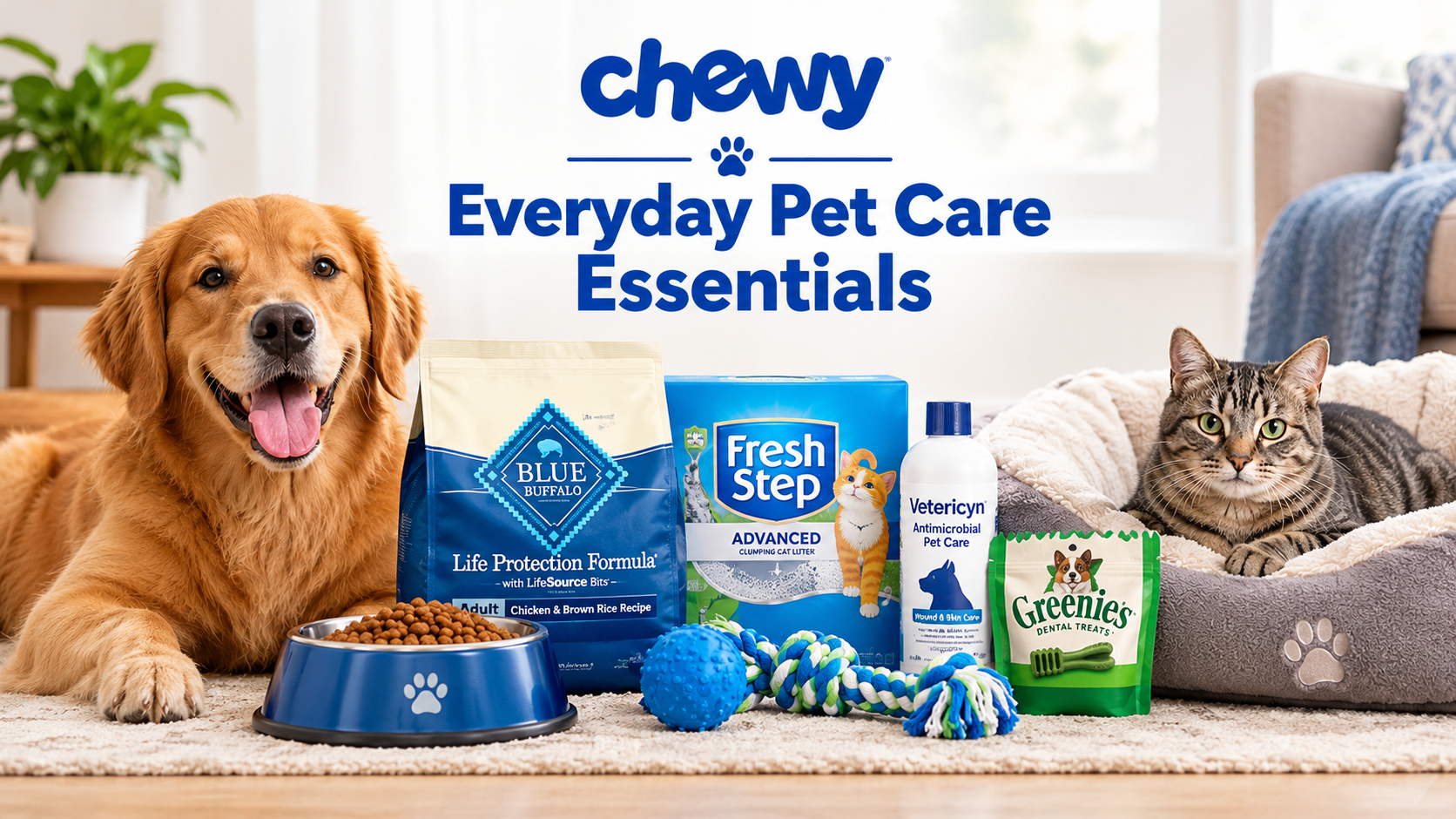
Keeping your pets healthy, comfortable, and happy starts with having the right supplies at home.
From nutritious food and grooming tools to cleaning products and everyday accessories, choosing practical items can make your daily routine easier.
Chewy Everyday Pet Care Essentials brings attention to the products pet owners regularly need, including food, treats, hygiene supplies, and accessories for dogs and cats.
With different brands, sizes, and price points available through Chewy, you can compare products based on your pet’s needs and your household budget.
This guide explains which supplies deserve a place on your shopping list, what features to check, and how to make informed purchasing decisions.
Chewy Everyday Pet Care Essentials: Which Products Should You Prioritize?
When shopping for your pet, it’s helpful to focus on products that support everyday activities such as feeding, grooming, cleaning, exercise, and rest.
Chewy carries supplies across these categories, giving you several choices depending on your pet’s age, breed, size, and preferences.
The most useful categories include:
- Food and treats: Daily nutrition and rewards suited to your pet’s dietary needs.
- Grooming tools: Brushes, combs, shampoos, and nail-care accessories.
- Feeding accessories: Food bowls, water fountains, and food storage containers.
- Cleaning supplies: Litter, waste bags, stain removers, and odor-control products.
- Comfort products: Beds, blankets, crates, and resting accessories.
- Wellness essentials: Dental-care products and other items selected according to veterinary guidance.
The right purchases depend on your pet’s individual needs rather than the number of products in your shopping cart.
1. Food and Treats: Building a Practical Feeding Routine
Food is one of the most important recurring expenses for pet owners. Choosing the appropriate formula can support your pet’s nutritional requirements while helping you maintain a consistent feeding schedule.
Popular Food Brands Available Through Chewy
Purina Pro Plan
Purina Pro Plan produces dog and cat food formulas for different life stages and nutritional needs. Selected recipes include options for puppies, kittens, adult pets, and seniors.
- Best suited for: Pet owners seeking life-stage-specific formulas.
- What to check: Protein source, recipe, feeding guidelines, and package size.
- Buying tip: Compare the price per pound rather than relying only on the bag price.
Hill’s Science Diet
Hill’s Science Diet provides nutrition products designed for different ages, sizes, and dietary requirements.
- Best suited for: Owners who want clearly identified nutritional categories.
- What to check: Life-stage recommendations and specific formula information.
- Buying tip: Ask your veterinarian before changing food for a pet with an existing medical condition.
Blue Buffalo
Blue Buffalo sells dry food, wet food, and treats across several product lines.
- Best suited for: Pet owners comparing ingredient preferences and recipe formats.
- What to check: Nutritional adequacy statements and the complete ingredient list.
- Buying tip: Avoid choosing food based on marketing descriptions alone.
How Much Should You Budget for Pet Food?
Actual costs depend on brand, formula, package size, and promotions. The following figures are illustrative shopping budgets, not verified Chewy listing prices.
| Food category | Illustrative budget |
|---|---|
| Small bag of dry dog food | $15–$35 |
| Large bag of dry dog food | $45–$90 |
| Dry cat food | $15–$45 |
| Multipack of wet pet food | $15–$40 |
| Pet treats | $5–$20 |
When changing your pet’s food, introduce the new formula gradually according to veterinary advice and the manufacturer’s directions.
2. Grooming Products That Help Maintain Everyday Hygiene
Regular grooming can help remove loose hair, reduce tangles, and make it easier to notice changes in your pet’s skin or coat.
The right pet grooming supplies depend on coat type, grooming tolerance, and individual needs.
Brushes and Combs
Short-haired pets may benefit from rubber grooming brushes or soft-bristle tools, while long-haired breeds may need slicker brushes and detangling combs.
When comparing brushes, check:
- Whether the tool suits your pet’s coat length.
- The comfort and shape of the handle.
- The design of the bristles or grooming teeth.
- Cleaning and maintenance instructions.
Avoid using excessive pressure, especially around sensitive areas.
Pet Shampoos
Pet shampoos are formulated for animal skin and coat care. Some products are intended for routine bathing, while others address specific grooming concerns.
For routine use, look for a formula appropriate for your pet’s species and skin condition.
Human shampoos may not be appropriate for pets, and medicated products should be selected with veterinary guidance.
Nail Clippers and Grinders
Nail-care tools help maintain appropriate nail length and can improve your pet’s comfort when used correctly.
Choose a clipper or grinder that matches your pet’s size.
If you are unfamiliar with trimming nails, ask a veterinarian or professional groomer to demonstrate safe techniques.
Illustrative Grooming Budgets
- Grooming brushes: $8–$25
- Pet shampoo: $8–$20
- Nail clippers: $7–$20
- Grooming wipes: $5–$15
These ranges are planning estimates. Check individual Chewy listings for actual prices.
3. Feeding Bowls, Water Fountains, and Food Storage
Feeding accessories are among the most frequently used everyday pet care products.
Although basic bowls may be sufficient for many households, certain designs can make cleaning and feeding routines easier.
Stainless Steel Feeding Bowls
Stainless steel bowls are popular because they are durable, generally easy to wash, and available in several sizes.
Look for a stable base, smooth edges, and dishwasher-safe construction when appropriate.
Pet Water Fountains
Water fountains circulate water through a pump, and many models include replaceable filters.
They may encourage some pets to drink, although individual preferences differ.
Before purchasing, check:
- Water capacity
- Pump noise
- Filter replacement costs
- Cleaning requirements
- Access to replacement parts
A fountain still needs regular washing and fresh water.
Airtight Food Storage Containers
Food storage containers can help protect dry food from moisture and pests.
For food safety, keep the original packaging or its product information so you can retain the lot number, expiration date, and feeding instructions.
4. Cleaning and Waste Management Essentials
Maintaining a clean environment benefits both your pets and your household.
Your shopping list may include waste bags, litter supplies, cleaning sprays, and washable accessories.
Cat Litter and Litter Accessories
Cat owners can compare several litter formats, including clumping clay, non-clumping litter, paper-based products, and plant-based alternatives.
Each has different characteristics related to odor control, tracking, dust, and disposal.
When choosing litter, pay attention to your cat’s preferences. Sudden changes may cause some cats to avoid their litter box.
Dog Waste Bags
Waste bags are a recurring necessity for dog owners.
Look for appropriate bag dimensions, reliable seams, and convenient dispensing options.
If a product is marketed as biodegradable or compostable, check the actual disposal requirements rather than assuming it can go into ordinary compost.
Pet Stain and Odor Removers
Accidents can happen, particularly during house training or when caring for senior pets.
Enzymatic cleaning products may help address certain organic stains and odors when used according to their instructions.
Always check surface compatibility and keep pets away from treated areas until the product is safe for contact.
5. Beds, Toys, and Accessories for Daily Comfort
Choosing the right dog and cat essentials can help provide a comfortable resting environment and appropriate opportunities for play.
Pet Beds
Pet beds come in different shapes, materials, and support levels.
When comparing products, focus on:
- Dimensions suitable for your pet’s sleeping position.
- Removable, washable covers.
- Support appropriate for your pet’s age and mobility.
- Materials suited to your home’s temperature and cleaning routine.
Senior pets or animals with mobility concerns may benefit from supportive bedding, although a bed cannot replace veterinary treatment.
Interactive Toys
Toys can provide entertainment and encourage physical activity.
Dogs may enjoy appropriately sized chew toys, fetch toys, or food-dispensing puzzles. Cats may prefer wand toys, scratching surfaces, or rolling toys.
Always supervise play with toys that could break or be swallowed.
Carriers and Travel Accessories
For trips to the veterinarian or other necessary outings, a secure carrier can make transportation safer and easier.
Check dimensions, ventilation, door security, and cleaning requirements before purchasing.
6. Dental Care and Preventive Wellness Supplies
Some pet health and wellness products can support routine care when selected and used correctly.
However, preventive supplies should complement professional veterinary care rather than replace it.
Pet Toothbrushes and Toothpaste
Regular toothbrushing with pet-safe toothpaste can help maintain oral hygiene.
Never use human toothpaste unless a veterinarian specifically confirms that a product is safe for your animal.
Introduce brushing gradually and use positive reinforcement to help your pet become comfortable.
Dental Chews
Some dental chews are designed to reduce plaque or tartar accumulation.
For products making dental-health claims, check for recognized evaluations such as the Veterinary Oral Health Council’s accepted-product listings.
Choose the appropriate size and supervise chewing.
Supplements
Supplements should be selected according to your pet’s individual nutritional and medical needs.
Not every healthy pet requires additional vitamins or supplements.
Consult your veterinarian before introducing a supplement, especially if your pet takes medication or follows a prescription diet.
7. How to Compare Pet Supplies Before Buying
Choosing the right products involves looking beyond brand recognition and advertised discounts.
A practical comparison should account for your pet’s needs, ongoing expenses, and product quality.
| Shopping factor | What to evaluate | Why it matters |
|---|---|---|
| Product suitability | Species, age, size, and intended use | Helps avoid unsuitable purchases |
| Ingredients and materials | Food formulation or product construction | Supports informed selection |
| Customer reviews | Repeated comments about performance and durability | Helps identify common concerns |
| Cost per unit | Price per pound, ounce, count, or use | Makes package comparisons easier |
| Maintenance | Cleaning frequency and replacement components | Helps estimate ongoing effort |
| Return eligibility | Current retailer policies and exclusions | Helps you understand purchase conditions |
Are Customer Reviews Helpful?
Customer reviews can provide useful information about packaging, product dimensions, durability, and ease of use.
However, individual experiences vary.
For food and health-related purchases, rely on nutritional information, product labeling, and veterinary advice rather than customer ratings alone.
8. Is Chewy Autoship Worth Using for Regular Pet Supplies?
Chewy’s Autoship program allows eligible products to be scheduled for recurring deliveries.
This can be convenient for frequently purchased items such as food, litter, treats, and waste bags.
Potential Advantages
- Scheduled deliveries can reduce the need to reorder frequently.
- Eligible products may qualify for Autoship discounts.
- Delivery frequency can be adjusted to match your household’s consumption.
- Regular purchases may be easier to plan within a monthly budget.
What Should You Check?
Before enrolling, review the current discount terms, eligible products, shipping requirements, and upcoming order details.
Prices and promotions can change. A recurring delivery should still fit your actual usage.
For example, ordering cat litter too frequently may create unnecessary storage problems, while ordering food too slowly could leave you without enough supplies.
Buying tip: Estimate how long your current package lasts before selecting a recurring delivery schedule.
9. How to Build a Practical Monthly Pet Care Budget
A monthly budget helps you manage recurring purchases while leaving room for occasional replacements.
Here is an illustrative budget for one pet. Actual expenses depend on species, size, diet, and household needs.
| Expense category | Example monthly budget |
|---|---|
| Food | $35–$75 |
| Treats | $5–$15 |
| Grooming and hygiene | $5–$20 |
| Cleaning and waste supplies | $10–$30 |
| Toys and accessories | $5–$20 |
| Estimated total | $60–$160 |
This example excludes veterinary appointments, medications, insurance, boarding, and unexpected medical expenses.
You may spend less in months when grooming tools and accessories do not need replacement.
Ways to Control Regular Expenses
- Compare package sizes using unit prices.
- Buy food quantities that can be used before their expiration dates.
- Check recurring delivery discounts against current one-time prices.
- Prioritize necessary supplies before optional accessories.
- Review your pet’s consumption patterns before purchasing in bulk.
- Keep an inventory of food, litter, and hygiene products.
A consistent purchasing routine can help reduce unnecessary spending without sacrificing appropriate care.
Choosing Chewy Everyday Pet Care Essentials for Your Pet
Finding suitable pet supplies becomes easier when you focus on your animal’s daily requirements and your household’s budget.
Chewy Everyday Pet Care Essentials covers several practical categories, from food and grooming tools to cleaning accessories, bedding, and preventive care products.
Before purchasing, compare product specifications, package sizes, customer feedback, and recurring expenses.
Pay particular attention to food suitability, product safety, and maintenance requirements.
The best purchasing decision is one that supports your pet’s individual needs while remaining practical for your daily routine.
You can browse current products, prices, and availability through Chewy’s official website.
Leave a Reply